US Agencies Target 'Anti-Tech Extremism' in Broad Surveillance Shift
Obtained documents reveal a coordinated effort by the FBI and Department of Homeland Security to monitor AI skeptics and data centre protesters under new national security directives.
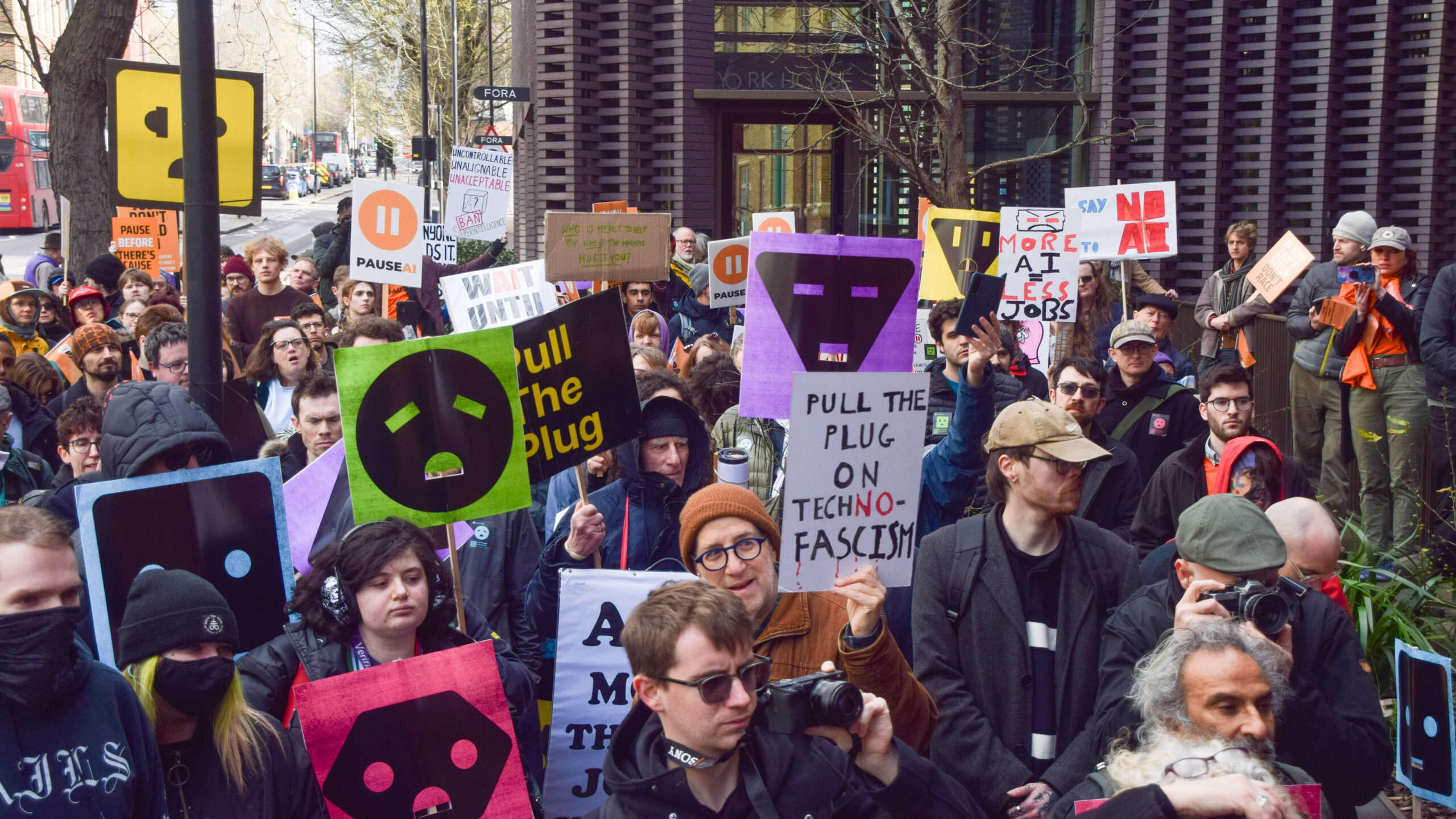
US federal intelligence agencies, including the Federal Bureau of Investigation and the Department of Homeland Security, are circulating reports that classify opposition to artificial intelligence as an emerging domestic threat. This surveillance shift follows a series of attacks on technology executives, nationwide protests against data centres, and growing public concern regarding job displacement caused by AI. Obtained documents reveal a coordinated national effort to monitor individuals and groups with anti-tech sentiments, encompassing both peaceful protesters and AI skeptics.
The initiative aligns with President Donald Trump’s National Security Presidential Memo 7, which directs the Department of Justice to target beliefs deemed anti-American, anti-Christian, or anti-capitalism. Earlier this month, Trump’s counterterrorism czar, Sebastian Gorka, identified left-wing extremists as one of three top counterterrorism priorities. Analysts warn that vague suspicious activity reporting indicators may ensnare constitutionally protected speech and assembly, while open-source intelligence firms monitor online communities for potential threats to critical infrastructure.
A New York Intelligence and Counterterrorism Bureau report warns that emergent AI technology could fuel large-scale protests devolving into civil unrest and anti-tech violent extremist activity, particularly in urban areas like New York City. The term anti-tech violent extremism is novel and does not appear in publicly available DHS or FBI domestic extremism reports. Analysts flagged the Zizian ideology, linked to Ziz Laota, an extreme rationalist whose cult-like group members face murder charges, warning that paranoid views regarding AI may proliferate following the trial.
Fusion centres are gathering intelligence on alleged threats to data centres, with a Western Pennsylvania centre citing risks from state-sponsored entities, criminal groups, and environmental extremists. The Northern Virginia Regional Intelligence Center reported that anti-government, anti-authority violent extremists have engaged in pre-operational planning targeting data centres. Open-source intelligence firm SITE Intelligence circulated bulletins alleging violent conversations in a neo-Luddite Discord server and flagged a non-violent advocacy video by More Perfect Union as a potential threat vector.
Extremism researcher Mauro Lubrano, author of Stop the Machines, is being consulted by fusion centres; he identifies insurrectionary anarchists, eco-extremists, and ecofascists as components of this emerging threat matrix. A January 2025 DHS report linked Luigi Mangione, the alleged assassin of UnitedHealth CEO Brian Thompson, to Ted Kaczynski’s anti-technology beliefs, though it offered no further evidence. Legal experts caution that the broad categorisation risks criminalising legitimate dissent and peaceful protest activities.
