US Agencies Classify Anti-Technology Sentiment as Emerging Domestic Threat
Legal experts warn vague reporting standards could criminalise peaceful assembly as DHS and FBI target ideologies linked to technological disruption
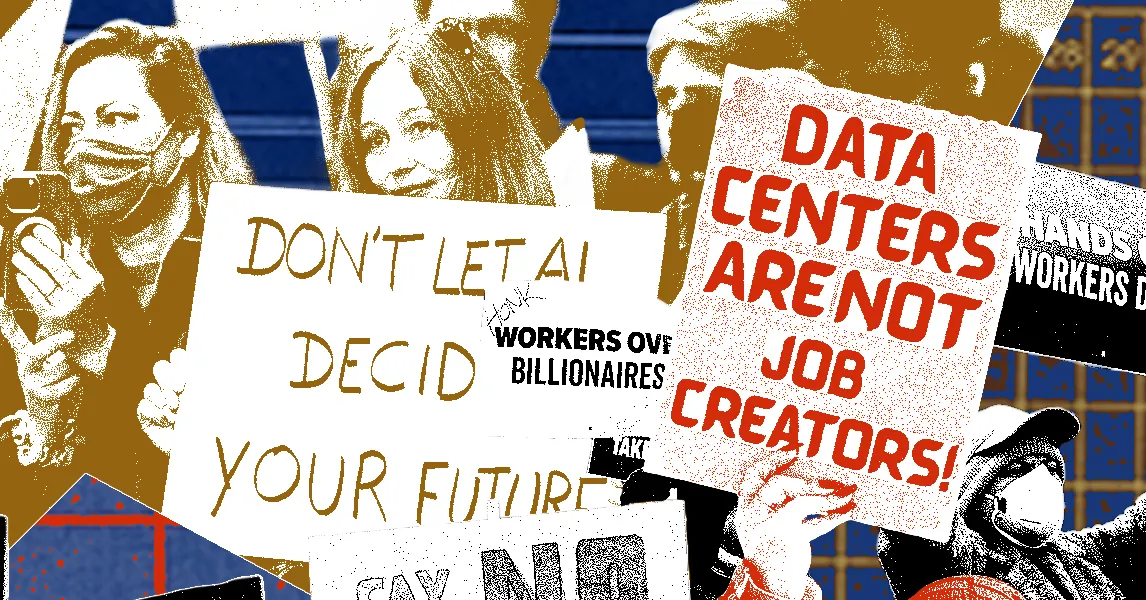
Federal intelligence agencies and domestic law enforcement are circulating reports identifying 'anti-technology extremism' as an emerging domestic threat, according to documents obtained by WIRED. The Department of Homeland Security, the FBI, and local fusion centres are now surveilling activities linked to protests against data centres and concerns regarding artificial intelligence job displacement. This shift follows directives from the Trump administration, specifically National Security Presidential Memo 7, which instructs the Department of Justice to target ideologies deemed 'anti-American', 'anti-Christian', or 'anti-capitalism'.
A new term, 'anti-tech violent extremism', has been introduced in internal reports, such as one from the New York Intelligence and Counterterrorism Bureau, to describe potential civil unrest and violent activity stemming from AI adoption. The report warns that chaotic atmospheric conditions resulting from emergent AI technology in the next five years may fuel large-scale protests that devolve into civil unrest, particularly in large urban areas such as New York City. This classification does not appear in any publicly available DHS or FBI domestic extremism reports, representing a novel grouping of a wide range of ideologies under a single extremist category.
Open-source intelligence firms, including SITE Intelligence, are monitoring online communities for anti-technology sentiment and have circulated bulletins alleging violent rhetoric in 'neo-Luddite' groups. Fusion centres are also tracking in-person assemblies, including town halls and budget meetings where residents dissent against data centre construction. A report from the Northern Virginia Regional Intelligence Center warned that anti-government, anti-authority violent extremists have engaged in pre-operational planning targeting data centres and other critical infrastructure facilities.
Legal experts have raised concerns that vague suspicious activity reporting standards may criminalise peaceful protest and constitutional speech. Spencer Reynolds, senior counsel at the NAACP Legal Defense Fund, noted that suspicious activity reports are often unreliable and issued under permissive standards, allowing officers to inject biases into the interpretation of facts. The Northern Virginia intelligence report lists activities such as photography, observation, and attempted intrusion as suspicious, which experts argue could easily be carried out by peaceful protesters.
The broadening of the threat category encompasses a wide range of ideologies, including eco-extremism and anti-government sentiments. A January 2025 DHS Office of Intelligence and Analysis report attempted to connect Luigi Mangione, the alleged assassin of UnitedHealth CEO Brian Thompson, with Ted Kaczynski, the Unabomber, citing inspiration from anti-technology beliefs. Meanwhile, an open-source report circulated by SITE Intelligence flagged a video from the progressive nonprofit More Perfect Union regarding the destructive effects of a data centre in Georgia, despite the video containing no advocacy for violence.