Urbanisation reshapes bowerbird courtship with human-made decorations
Research published in Royal Society Open Science shows urban great bowerbirds in northern Queensland construct significantly more elaborate bowers using brightly coloured human objects, altering traditional mating displays.
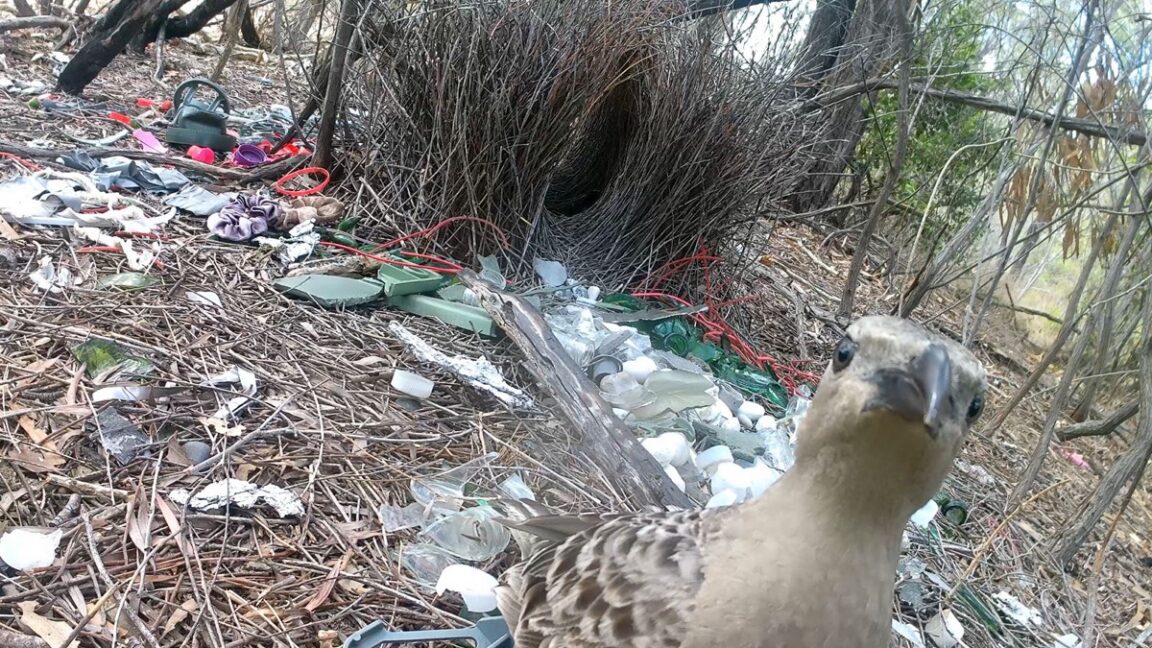
Male great bowerbirds in northern Queensland are increasingly incorporating human-made objects into their complex mating rituals, according to research from the University of Exeter. A study published in Royal Society Open Science found that urban males prefer brightly coloured items such as red wire and plastic for their bowers, marking a distinct shift from the natural materials favoured by their rural counterparts.
The research team monitored 61 male great bowerbirds during the September to December 2023 breeding season across two sites in northern Queensland: the rural Dreghorn Cattle Station and the urban Townsville City. Using visible and ultraviolet light photography to document decorations, researchers noted that bowerbirds can see in the UV range, which influences their selection of display items.
Urban bowers contained over ten times more human-made items and nearly five times as many decorations as rural bowers. Urban males averaged 90 items per bower, with one individual gathering 300 objects, while rural birds averaged just 20 items. The specific human items collected included green glass, red wire, plastic, handcuffs, medicine jars, and fluorescent mouth guards.
To determine if the preference was innate or driven by availability, researchers conducted a controlled experiment. They removed all decorations from selected bowers, created a mixed pile of items from 10 urban and 10 rural bowers, and left the sites for three days. Both urban and rural birds demonstrated a strong preference for human-made items when given a choice, suggesting that urbanisation is reshaping, rather than replacing, natural behavioural patterns.
The study suggests that the ready availability of human items may reduce the energetic costs and risks associated with leaving a bower unguarded. While the current study did not measure mating success, prior research indicates higher display and mating rates in urban environments. Co-author Laura Kelley noted that the findings serve as a reminder of how human activity is changing the natural world in unanticipated ways.
