Uranus Moons May Hold Clues to Ejected Giant Planets
Researchers analysed 122 scenarios of planetary instability, finding that current models of solar system formation struggle to explain Uranus’ moons without the presence of additional, now-missing giant planets.
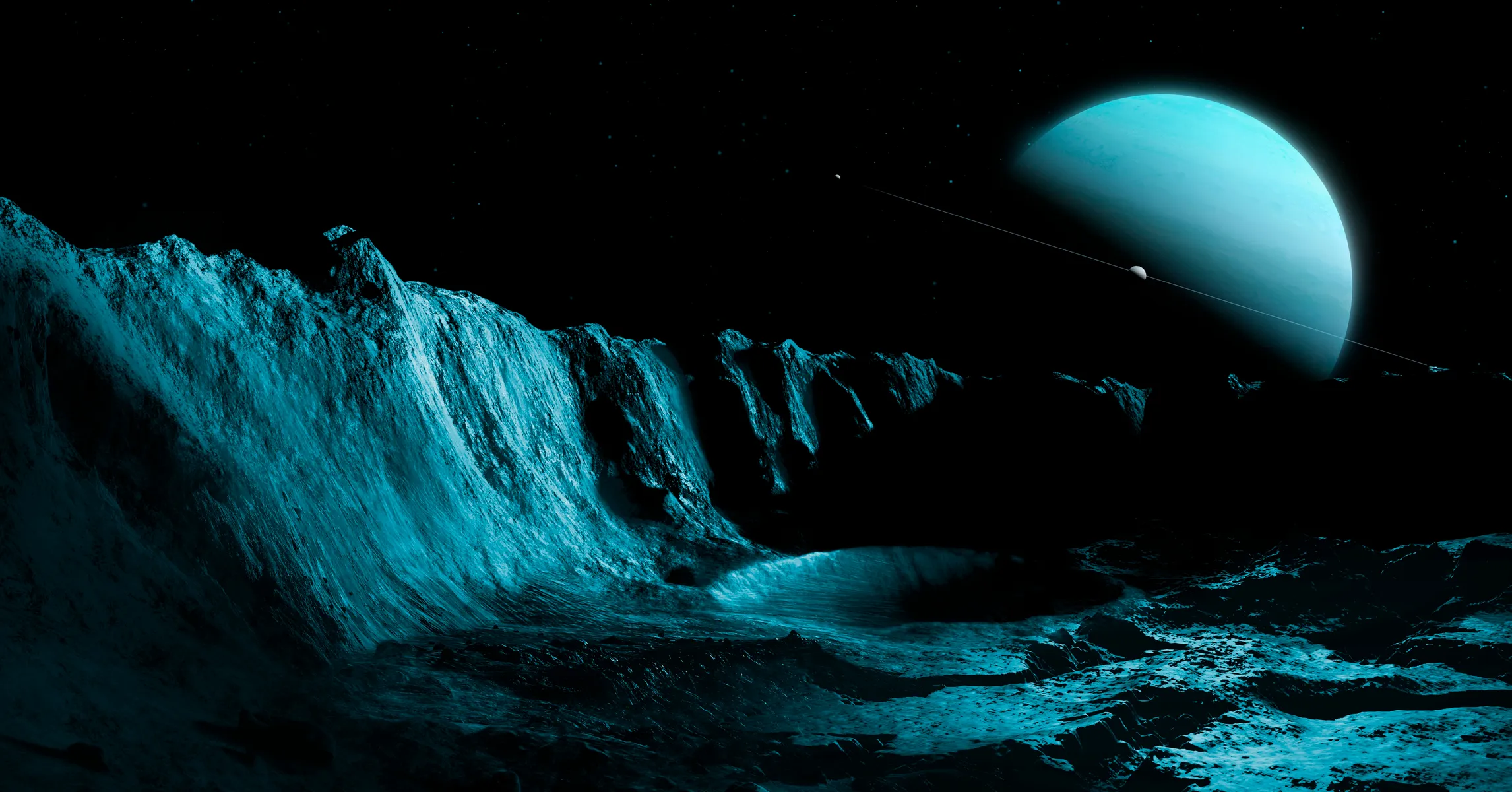
A study published in the journal Icarus suggests that the moons of Uranus may retain traces of giant planets that were ejected from the solar system during a period of violent instability. Researchers analysed 122 simulation scenarios of solar system evolution and found that the current characteristics of Uranus' satellite system are difficult to explain without the presence of additional, now-missing planets. The findings support the hypothesis that the solar system once contained more giant planets, which were later ejected into interstellar space, destabilising the remaining planetary systems.
The research utilised 122 solar system evolution simulations to test the "missing planets" hypothesis. In 85 percent of the scenarios, the Uranus moon system collapsed; however, in the few scenarios where the moons survived, the hypothesis of lost and ejected planets fit very well. This indicates that the chaotic history of the outer solar system is embedded in the orbital and physical properties of its distant moons.
The study indicates that Uranus' moons were likely destabilised at least twice: first by the impact that tilted the planet, and then by close encounters between giant planets during the instability phase. This sequence of events would have destroyed and rebuilt the satellite system, leaving behind the configuration observed today. The data reinforces the idea that the solar system's architecture was reshaped by the loss of these additional giants.
The research points to Miranda, the smallest of Uranus' major moons, as the clearest example of traces of planetary instability. Astronomers consider Miranda to be the most unusual in the solar system, appearing patchy and geologically active. The study reinforces the idea that Miranda is debris from a larger body and serves as the clearest example of traces of planetary instability.
The article notes that a dedicated mission to Uranus, potentially in the 2040s as discussed by NASA and ESA, could confirm whether Miranda is indeed a reconstructed body. If confirmed, such a mission could help determine how many worlds the solar system originally possessed, providing definitive evidence for the missing planets hypothesis.
