University of Vienna study reveals dogs distinguish human emotions via neural activity
Research published in iScience indicates domestication has equipped canines with specific social abilities to interpret human facial cues, challenging assumptions about shared evolutionary ancestry with primates.
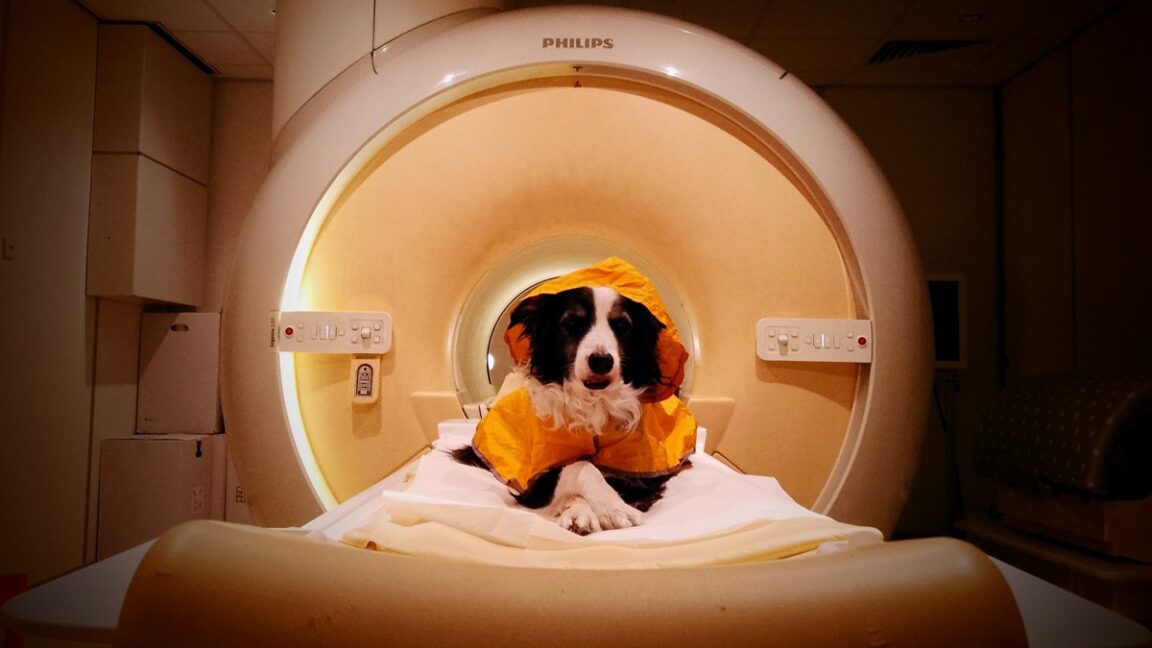
A study published in the journal iScience by researchers from the University of Vienna has confirmed that dogs can distinguish between human facial expressions of happiness, sadness, fear, and anger. Using functional magnetic resonance imaging (fMRI), the team identified distinct neural activity patterns in the canine brain, specifically within the temporal cortex and caudate nucleus, that correspond to these different emotional states.
The research involved two experimental phases designed to map how dogs process human faces. The first phase included eight dogs, comprising six Border Collies, one Labrador, and one Golden Retriever. These animals were shown neutral versus happy faces while undergoing scanning. Analysis revealed that the temporal cortex, associated with higher cognitive functions, and the caudate nucleus, linked to reward processing, exhibited the most significant activity in response to happy faces.
In a second phase involving 12 dogs, including one mixed breed and eight Border Collies, researchers tested the animals' ability to differentiate between happiness and three negative emotions: sadness, fear, and anger. Whole-brain analysis confirmed that dogs display distinct neural activity patterns for each of these negative emotions, suggesting a sophisticated capacity to differentiate between specific human emotional states rather than a generalised response.
Co-author Raúl Hernández-Pérez noted that dogs, like humans, are adept at picking up small facial details. He stated that studying their brains helps researchers understand the adaptations that have developed to support their remarkable social and emotional understanding of humans. This builds on previous behavioural studies showing dogs can choose a box associated with a happy human expression over one linked to fear or disgust.
Co-author Laura Cuaya highlighted that dogs developed these social abilities through domestication rather than shared ancestry with primates. She emphasised that dogs have evolved with humans to understand expressions and cooperate, urging people to view them as emotional beings. The findings suggest that while dogs rely on additional cues such as body language and scent, their neural processing of facial expressions is a distinct evolutionary outcome of living alongside humans.
