Unitree’s $66 billion valuation wobble signals physical AI’s data crunch
China’s Unitree has lost nearly half its market value post-IPO, exposing a sector-wide shortage of high-quality training data as investors debate the path to commercial reliability.
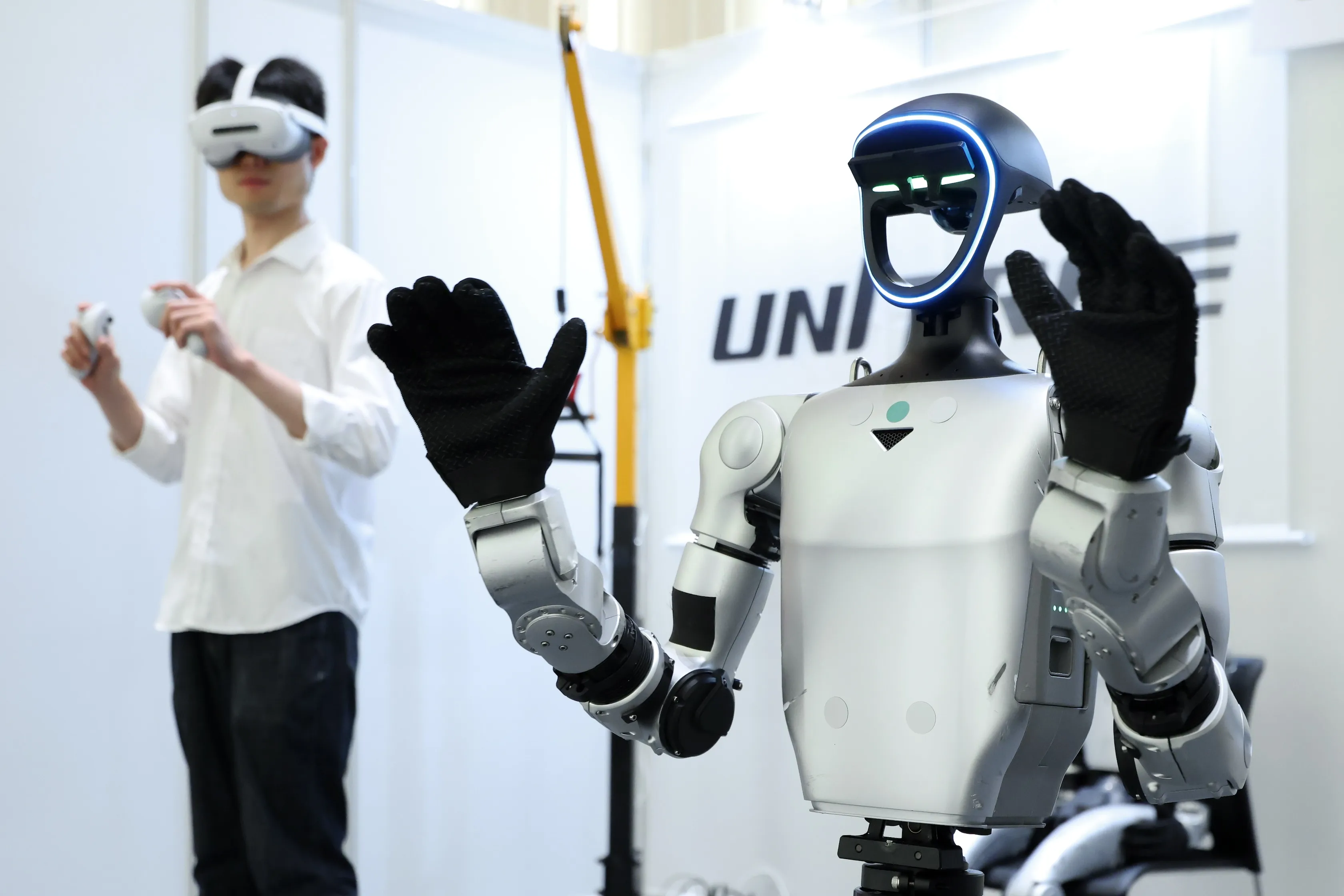
The physical AI sector, a primary focus of venture capital, is undergoing a sharp valuation correction. China’s Unitree, the country’s leading robot maker, saw its market value halve following a $66 billion initial public offering on China’s equivalent of the NASDAQ. While the financial dip has rattled some investors, industry momentum remains robust, evidenced by the Actuate conference tripling in size since 2023 to attract 1,500 attendees.
Analysts describe the current state of the industry as its “GPT-2 era,” a phase characterised by a critical shortage of high-quality training data and a lack of reliable commercial performance. The core challenge is that while robotic hardware is improving, the software “brains” still lack the know-how to perform value-creating work. Developers are now focusing on creating more diverse datasets and refining reinforcement learning scenarios to bridge this gap.
Autonomous vehicle companies are increasingly leveraging their existing machine learning infrastructure to enter the humanoid robotics space. Tesla is applying its self-driving technology to its Optimus robot, while Wayve and Uber have launched robotics labs focused on humanoid form factors. Alex Kendall, CEO of Wayve, argues that the data infrastructure and simulation tools from the automotive sector will provide a significant advantage, though he notes that manipulation robotics is currently five years behind self-driving technology.
A strategic debate is emerging between startups pursuing vertical-specific applications versus general-purpose models. Genesis AI, which raised a $105 million seed round this year, advocates for co-designing hardware and AI for specific tasks, arguing that general-purpose robots currently lack the reliability to provide value. In contrast, task-focused firms like Gritt, Agility, and Bedrock are deploying robots in solar farms, industrial settings, and construction sites to gather real-world deployment data.
Foxglove, a data management company founded by former Cruise employees, has announced a new product built on Nvidia’s Cosmos open-weight world model. The tool allows engineers to search visual and lidar data using natural language queries, aiming to accelerate debugging and simulation. This infrastructure is crucial for managing the density of data required to train models that can operate reliably in the physical world.
The sector’s next milestone remains a subject of intense discussion. While some predict a “ChatGPT moment” for robotics within a few years, others argue that distribution in the real world is far more complex than in software. For now, the focus remains on overcoming the data crisis and achieving manipulation that works reliably without constant human oversight.