Ulanqab: The unlikely city powering China’s AI infrastructure boom
Cheap energy and low latency have turned an Inner Mongolian city into a critical hub for artificial intelligence, with major tech firms pledging 12.5 gigawatts of new capacity.
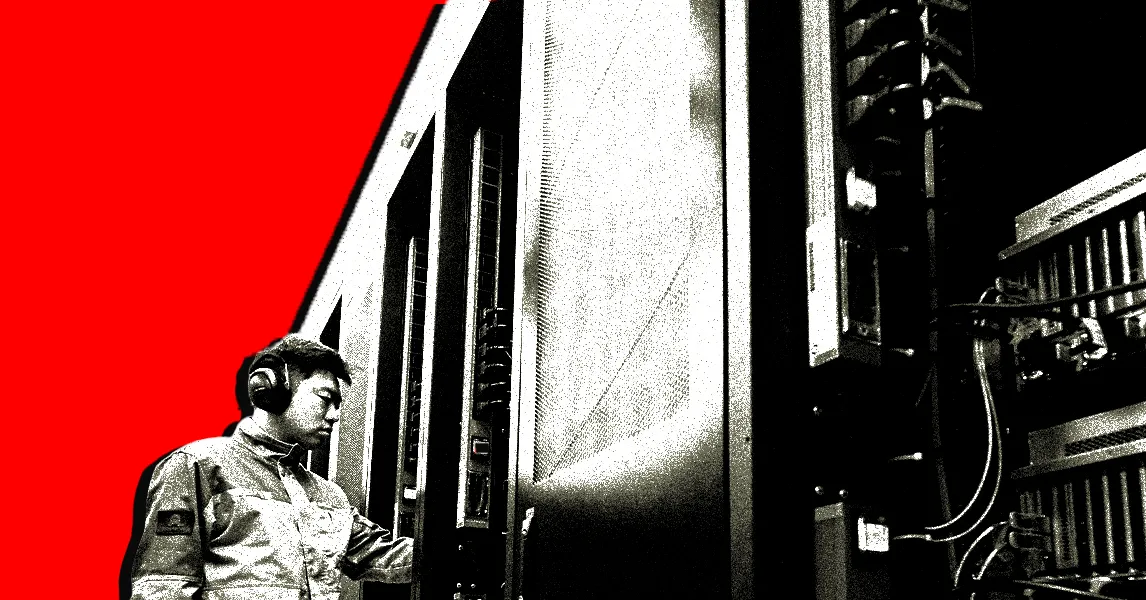
Ulanqab, a city in Inner Mongolia located just two hours west of Beijing by train, has emerged as a central node in China’s artificial intelligence infrastructure build-out. Since 2016, nearly 100 data centers have been opened or begun construction in the region, driven by a combination of cheap energy, abundant land, and proximity to the capital. According to a research note from Goldman Sachs, Chinese companies have pledged a combined estimated capacity of 12.5 gigawatts in the city, with over 70 per cent of these commitments announced in the last year alone. This rapid expansion has made Ulanqab one of the fastest-growing compute clusters in Asia.
The surge in construction marks a significant shift in how Chinese technology firms approach capital expenditure. For years, these companies spent less on physical infrastructure than their American counterparts, relying heavily on third-party cloud providers. Now, major players including DeepSeek, ByteDance, Alibaba, and Xiaohongshu are investing in their own dedicated infrastructure to reduce that reliance. This trend signals that Chinese AI firms are beginning to match the scale of infrastructure investment seen in the United States, where OpenAI’s Stargate Project is set to reach a total capacity of only 10 gigawatts upon completion.
The city’s appeal is rooted in its geographical and economic advantages. Situated at high elevation on the Inner Mongolian Plateau, Ulanqab experiences long, cold winters that reduce the energy required for cooling data centers. Electricity costs in the region are among the lowest in China, supported by a mix of abundant coal and growing wind and solar capacity. Additionally, two dedicated fiber optic cables built in 2017 and 2019 have reduced average latency speeds to less than five milliseconds, enabling real-time data exchanges necessary for AI inference.
Despite these advantages, water scarcity presents a significant operational challenge. Ulanqab receives roughly 14 inches of rain annually, comparable to Denver, Colorado. The local government is already struggling to meet existing residential demand, with the local water company forced to turn off several waterworks for seven hours each night last month to mitigate peak demand. While data centers require additional water for cooling during only two months of the year, the cumulative impact of new infrastructure poses a potential environmental strain on the region.
The development aligns with the national "Eastern Data, Western Compute" project, designated in 2021 to absorb excess renewable energy capacity in western regions. Andrew Stokols, a professor at Singapore Management University, notes that the rise of AI in 2022 gave remote data centers a new purpose, as model training runs do not require the low latency needed for real-time interaction. However, the transition to clean energy is not yet complete; Stokols’ research indicates that approximately 37 per cent of electricity in Ulanqab still comes from coal, a legacy of the region’s history as a major coal mining area.
Envision, a major Chinese wind turbine manufacturer, announced this month that it will build a 2 gigawatt AI data center in Ulanqab connected directly to its own clean power supply. Damien Ma, director of Carnegie China, suggests that while the region is racing to replace coal with wind and solar, operators have traditionally favoured fossil fuels for their reliability. The extent to which Ulanqab can power its growing data center network with renewables remains a key variable for investors and policymakers monitoring the sustainability of China’s AI boom.