UEFA Champions League final: PSG and Arsenal to clash in Budapest amid calls for format reform
Statistical analysis suggests a decline in attacking metrics in recent deciders, with the upcoming fixture offering a rare stylistic contrast between two elite sides.
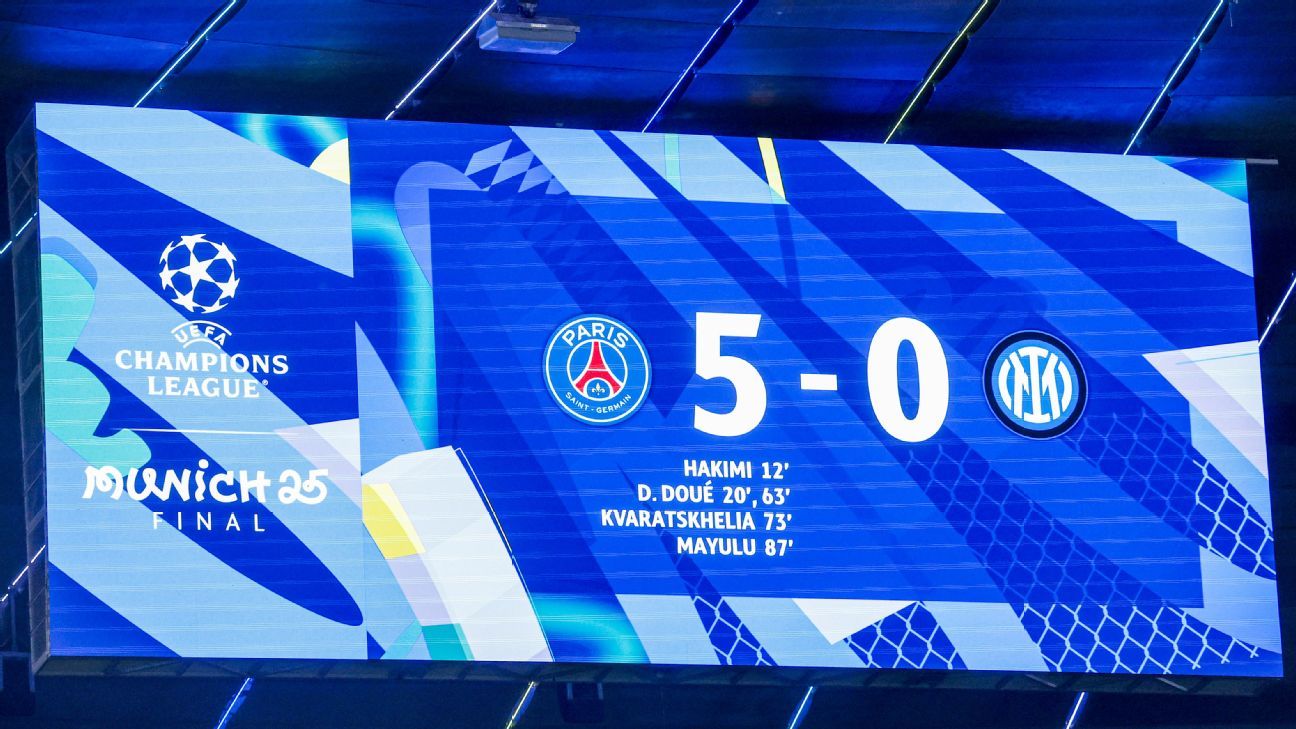
Paris Saint-Germain and Arsenal are scheduled to contest the UEFA Champions League final in Budapest on Saturday, 30 May 2026. The fixture brings together the defending champions, who defeated Inter Milan 5-0 in the previous final, and the current Premier League winners. The match is characterised by contrasting tactical approaches, with PSG employing a high-pressing system against Arsenal’s structured defensive organisation.
The event has drawn scrutiny regarding the competitive quality of recent finals, with data indicating a trend toward conservative play. Statistical analysis from Stats Perform, covering the period from 2010 to the present, reveals that finals consistently feature fewer attacking third possessions, through balls, and touches in the box compared to semi-finals. The last final in which both teams scored was the 2018 encounter between Real Madrid and Liverpool, while the last match decided by a single goal with both sides scoring occurred in 2013.
Pre-match indicators suggest a tightly contested encounter. Betting markets list PSG as the 57% favourite, marking the closest pre-match odds for a final since 2018. According to Club Elo ratings, which account for opponent difficulty and match importance, Arsenal is currently the highest-rated team in the world, while PSG ranks fourth. This parity stands in contrast to recent history, where the average favourite held a 63% win probability, and Real Madrid secured five titles in the last decade despite statistical expectations suggesting a much lower likelihood.
Critics have drawn parallels between the Champions League final and the NFL Super Bowl, noting similarities in the use of neutral venues and entertainment-focused pre-game programming. The 2026 kick-off show will be headlined by The Killers, presented by Pepsi, and will feature a short film starring lead singer Brandon Flowers and David Beckham. This approach mirrors the corporatisation of major sporting events, where the spectacle often overshadows the competitive integrity of the match itself.
The single-match format has been criticised for introducing greater randomness into the outcome and altering team incentives. Unlike the two-legged ties used in earlier stages, the final allows teams to secure victory by maintaining a lead with minimal risk, potentially discouraging aggressive attacking play. While some argue that a two-leg final would restore competitive balance, the current structure remains in place, with UEFA retaining control over host city selections and the tournament calendar.