Two Works, One Artist: Khaled Sabsabi Marks Australian First at Venice Biennale
Khaled Sabsabi has been reappointed as Australia's representative for the 61st Venice Biennale, presenting monumental installations that resolve a controversy while securing a historic dual venue display.
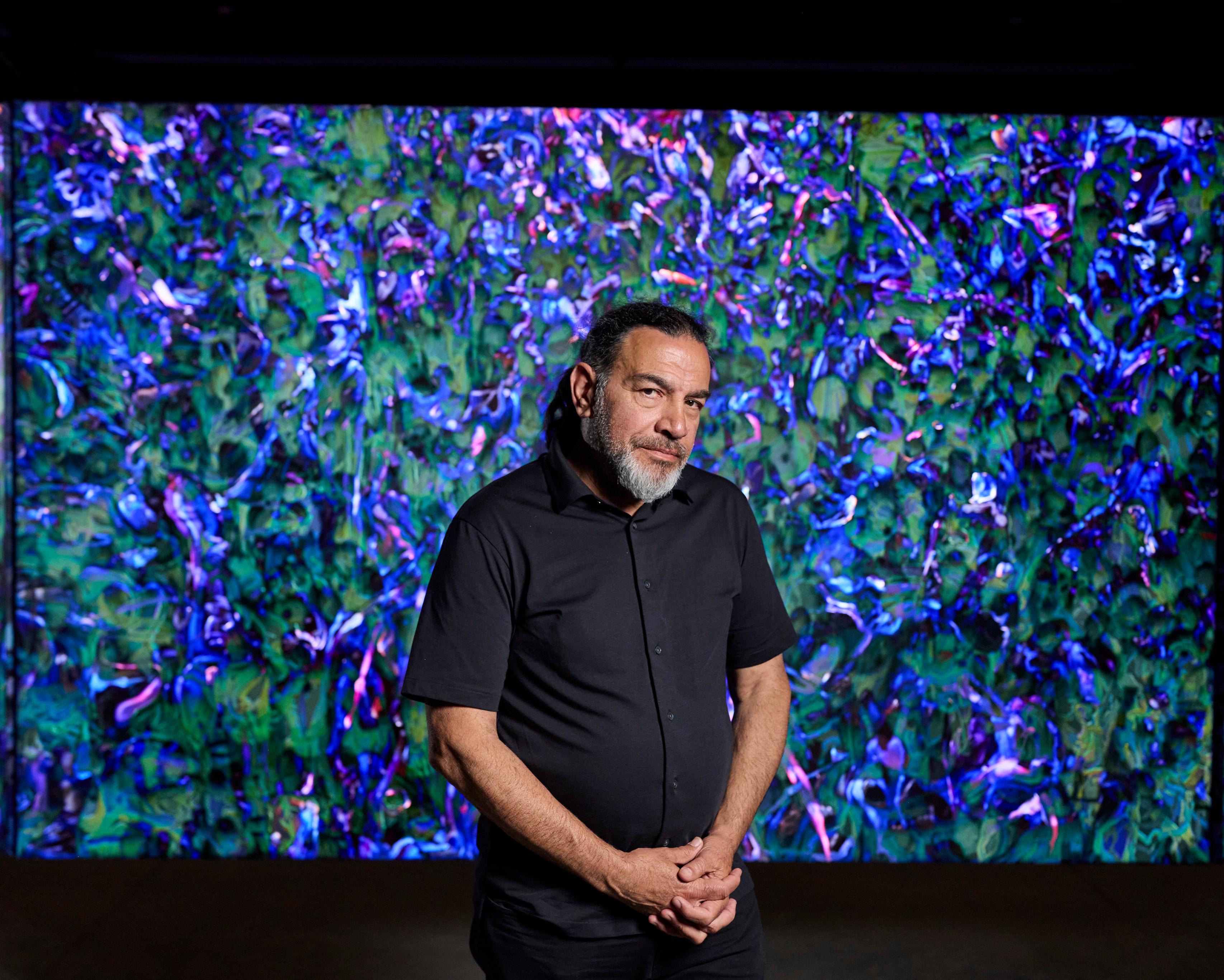
Australian artist Khaled Sabsabi has secured his place at the 61st Venice Biennale following a year of intense controversy surrounding his initial selection. After Creative Australia attempted to rescind his participation in February 2025, the artist was reappointed in July 2025, allowing him to present two monumental multimedia installations. This outcome marks a significant milestone, as Sabsabi becomes the first Australian artist to exhibit simultaneously in both the Australian Pavilion and the Arsenale.
The works, titled 'conference of one's self' and 'Khalil', are deeply rooted in Sufi mysticism and were completed without interruption despite the administrative turmoil. To ensure the project remained on track, Sabsabi relocated to a studio in Bangkok, where he finished the original piece, 'Khalil', ahead of schedule. The second work emerged organically from a dream he experienced after completing the first, resulting in what the artist describes as one body with two limbs.
At the opening ceremony, the chair of Creative Australia, Wesley Enoch, read a message from Arts Minister Tony Burke declaring that the "horrible questioning of Khaled is over." The statement reflected a broader sentiment within the Australian art community, which rallied to defend the artist's right to participate. Curator Michael Dagostino noted that the sector's willingness to defend artistic freedom meant that breaking that bond would have triggered a significant backlash, a sentiment echoed by the collective support that ultimately led to Sabsabi's reinstatement.
The dual exhibition places Sabsabi in rare company, joining only three other artists in the Biennale's 131-year history to show in both official venues. 'conference of one's self', located in the Australian Pavilion, features eight screens arranged in an octagon displaying hypnotising slides of colour and shape, while 'Khalil' is situated in the Arsenale. The latter incorporates the scent of black oud wood and black matte walls, while the former is covered in lustrous script inspired by Ilm al-Ḥurūf, the Sufi science of letters and numbers.
Despite the resolution of the controversy, the prestigious Golden Lion award for best national participation is not on the table for Sabsabi. The jury responsible for the award has resigned following a separate row regarding Russia's participation in the Biennale. When asked about the missed opportunity, Sabsabi paused before stating that being present at the event was already a win, noting that the experience had galvanised the sector rather than diminishing it.
The exhibition serves as a narrative of resilience and redemption for the Australian arts institution. Following a buildup defined by tragedy and protest elsewhere, Sabsabi's presence offers a story of unambiguous positivity. The works, which incorporate droning meditative sound and digitised paintings, stand as a powerful affirmation of the artist's command over his medium and message, concluding a year that began with uncertainty and ended with a historic achievement.