Sinkholes in the digital age: Chris Ames’ satirical take on modern precarity
The Guardian reviews Chris Ames’ debut collection, I Made This Just For You, for its tender exploration of grief and platform capitalism through the lens of absurdity.
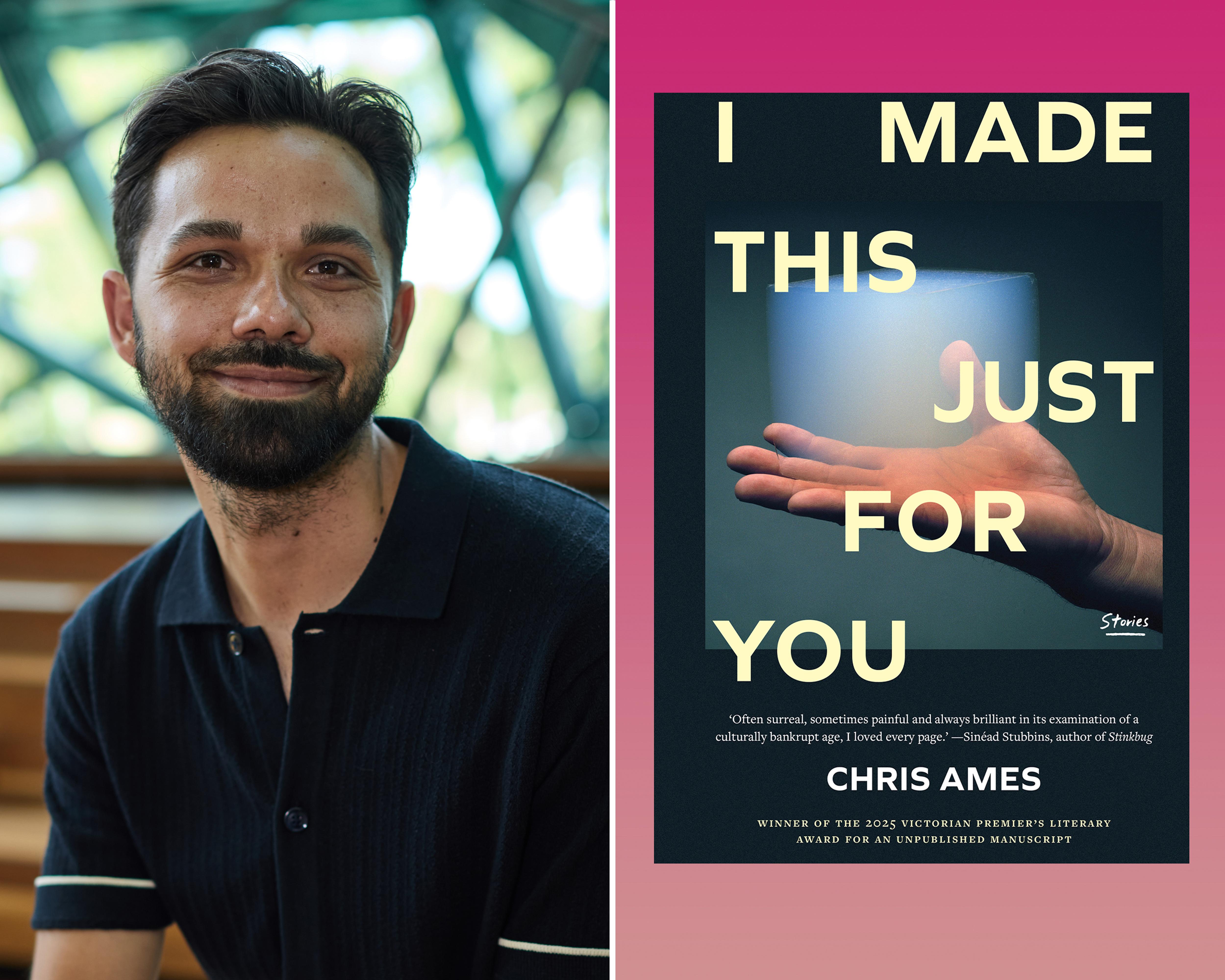
The Guardian has published a review of Chris Ames’ debut short story collection, I Made This Just For You, describing the work as a series of playful and experimental narratives set in a distorted but plausible version of the deeply online world. Published by Hardie Grant, the collection comprises 17 stories that grapple with the melancholy absurdities of contemporary life, utilising sinkholes as a central metaphor for the mediated and precarious experience of millennial knowledge-workers.
The review highlights the tonal complexity of the best pieces, noting how Ames balances bleak satire with genuine tenderness. In the standout story That Is Not A Cat, the narrator Alison navigates caring for a grandmother with dementia, IVF struggles, and an AI program fed with 55 million images of cats. Her discovery of a sinkhole in her backyard serves as a vessel for her existential anxiety, mirroring the digital voids into which users pour their data and identity.
Themes of grief, economic precarity, parenthood, gender, climate anxiety, and platform capitalism recur throughout the collection. Ames is described as particularly attuned to the banality and cruelty of modern media culture, yet his characters remain driven by a yearning for connection. The review notes that while the stories revel in absurdity, they cannot simply post their way through complex emotions such as the desire for intimacy or the loss of a father.
Other notable entries include True Love at the Plastisphere, where a mayoral candidate on a floating plastic island proposes using a volcano as an everything machine to solve residents' problems, and Good Light, in which a depressed narrator is assisted by a creature made of congealed hair and grease. These narratives illustrate a world where literal and figurative ground is constantly giving way, leaving characters to sink into lives they do not fully understand.
While the review praises the collection’s experimentalism, it acknowledges that not every story succeeds, citing instances of tweeness and reliance on over-familiar conceits, such as a narrative revealed through crossword clues. Nevertheless, the unevenness is framed as symptomatic of Ames’ attempt to find the right register for a bewildering world. The collection is described as a search for the right emotional frequency in an era where writers struggle to imagine a future stupider than the present one.