Turkey’s Hair Transplant Sector: Innovation Amidst a Digital Market Shift
A $3 billion industry leverages proprietary technology and deep learning to maintain clinical excellence, even as digital marketers and underground clinics challenge the sector’s reputation.
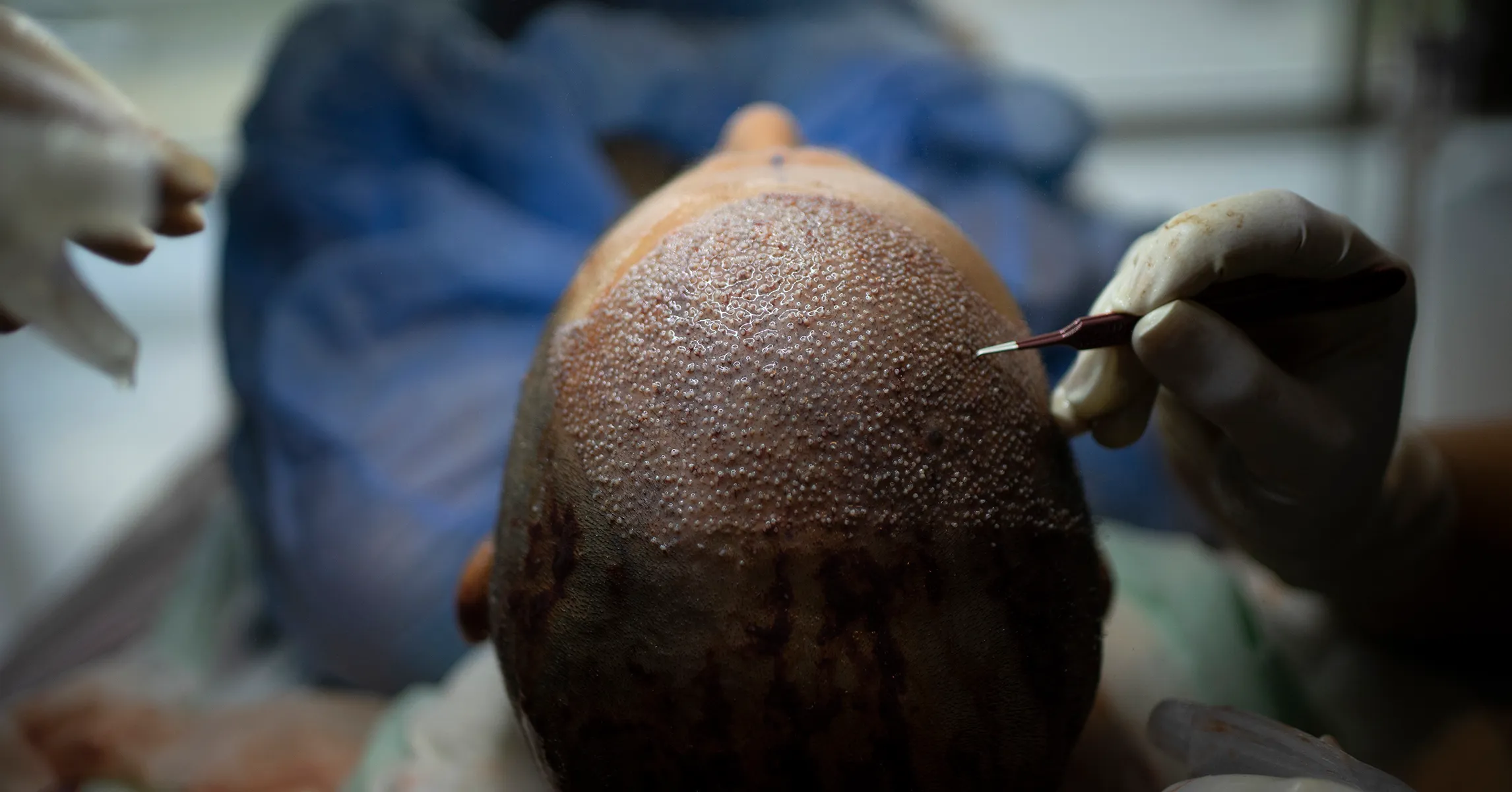
Turkey’s hair transplant industry, generating approximately $3 billion in annual revenue, has undergone a structural evolution marked by three distinct phases. The sector began with Health Tourism 1.0, characterised by high-standard institutional care established in the late 1990s, before transitioning to Health Tourism 2.0, a period of organic growth for boutique clinics. By 2015, the market shifted into Health Tourism 3.0, dominated by digital marketers and unlicensed operators. Despite this fragmentation, the sector remains a critical component of medical tourism, with an estimated one-third of the 1.39 million medical tourists visiting Turkey in 2025 seeking aesthetic treatments.
To address quality control and efficiency demands, Turkish innovators have developed proprietary technologies that blend ancient craftsmanship with modern engineering. Dr. Koray Erdoğan and Dr. Oğuzhan Urhan developed KE-BOT, an AI-driven robotic system utilising a 6-axis arm and deep learning algorithms to map the scalp and calculate graft limits with mathematical precision. This system aims to eliminate human error in harvest planning, addressing the "overharvesting incidents" common in unlicensed clinics where technicians perform procedures without medical oversight.
Operational efficiency has also been significantly enhanced through pragmatic engineering adaptations. Turkish engineers modified inexpensive dental laboratory motors into closed systems to prevent blood damage, reducing procedure times from three days to six hours. This innovation made equipment affordable for individual healthcare workers, allowing them to purchase devices with their own salaries and driving exponential industry growth. The approach contrasts with the high-cost, sterile-only motors used in Europe and America, which were often rendered inoperable by minor fluid exposure.
Specialised tools have been engineered to accommodate diverse anatomical needs, further distinguishing high-quality clinics from underground operations. These include the "Afro Punch" for curly hair follicles and synthetic sapphire blades that have reduced wound healing times from three months to 10 days. Dr. Mustafa Er, CEO of Ertıp Medikal, noted that these innovations allow for the creation of thin, clean channels that prevent tissue damage, a critical factor in maintaining patient safety and satisfaction in a high-volume market.
The pandemic served as a key driver for the surge in demand, as remote work increased self-awareness regarding appearance and led to a global rise in cosmetic procedures. However, experts warn that Turkey’s strategy for success no longer relies on low prices or volume. Instead, it hinges on creating an unshakable brand value through innovation, purpose-built technological equipment, and medical expertise that has proven itself on a global scale, countering the erosion of reputation caused by the rise of "hair mills."
