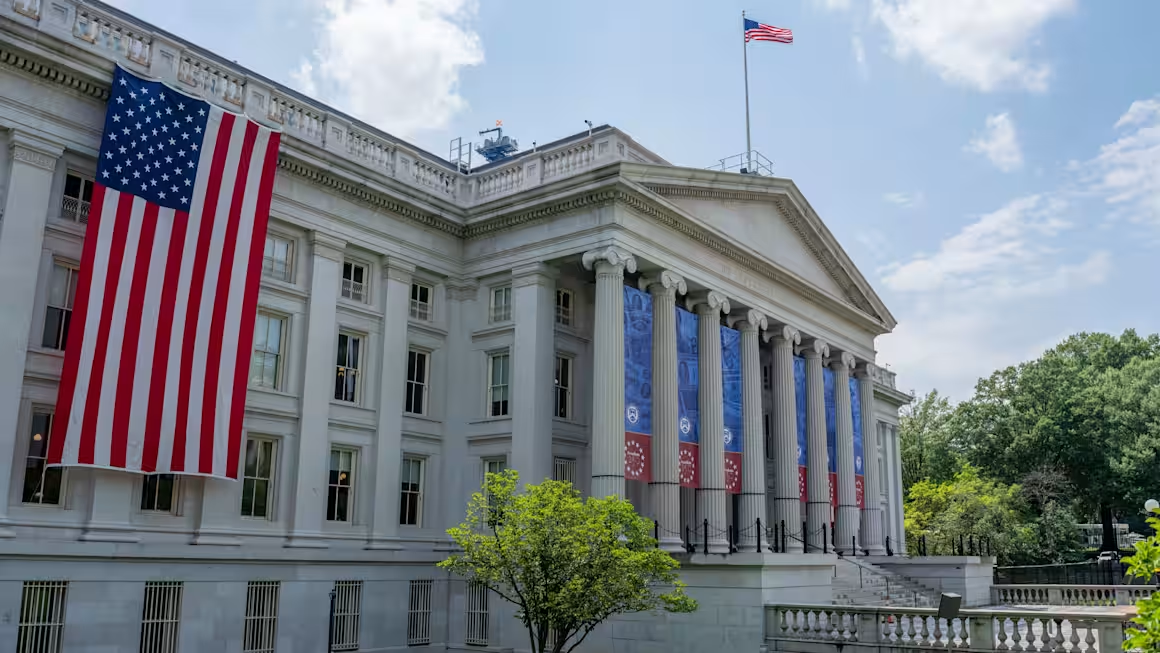
Trump pressures Fed Governor Waller with public call for rate cut
Donald Trump’s public demand for lower interest rates targets Federal Reserve Governor Christopher Waller, raising the stakes for the US central bank’s upcoming policy decisions amid shifting market sentiment.
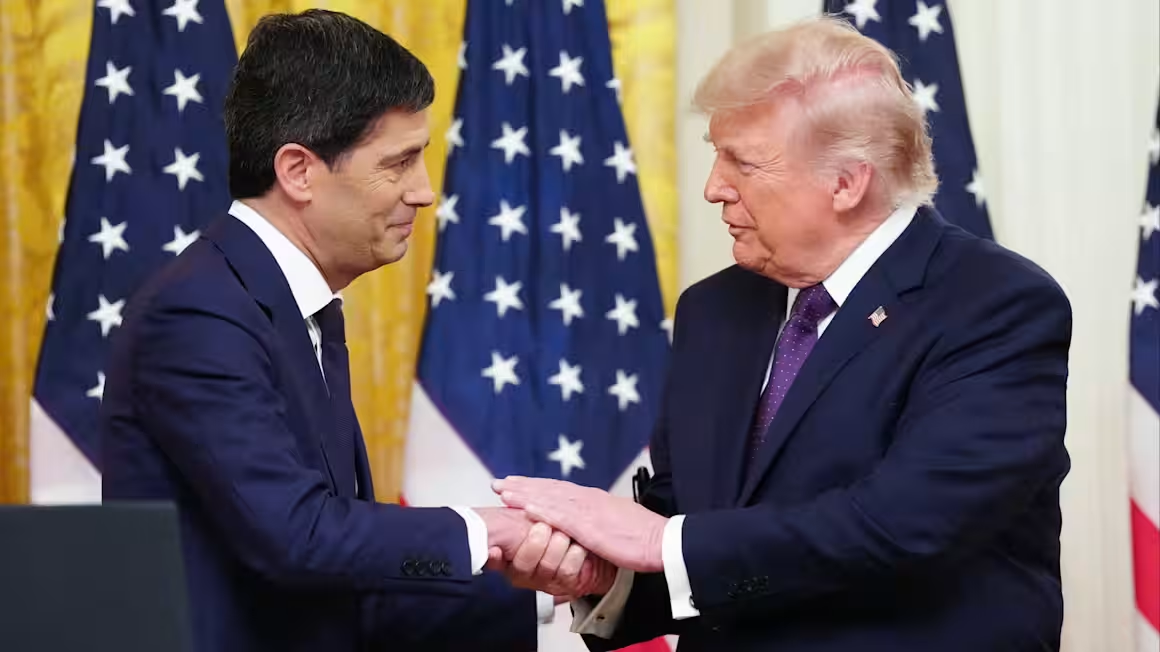
US President Donald Trump has publicly called for an interest rate cut, directing significant pressure towards Federal Reserve Governor Christopher Waller. The intervention marks a notable escalation in political engagement with the central bank’s monetary policy, coinciding with a period where market expectations for rising borrowing costs are growing.
The Federal Reserve, as the United States’ central bank, holds primary responsibility for setting interest rates and managing monetary policy. Governors such as Waller play a pivotal role in these decisions, balancing inflation targets against economic growth. Trump’s direct appeal to cut rates places the Governor at the centre of a developing tension between political preference and institutional independence.
This public call for a rate cut comes as financial markets increasingly price in the likelihood of higher borrowing costs. The divergence between the President’s stated preference for lower rates and the market’s anticipation of tightening conditions raises the stakes for the central bank’s policy direction. It underscores the complex environment in which the Fed must operate, navigating both economic indicators and political scrutiny.
While the President’s actions highlight the political pressure being applied to the central bank, the immediate impact on the Fed’s actual decision-making process remains to be seen. The source material does not specify a timeline for any potential rate cut, nor does it detail how the Federal Reserve’s internal deliberations may be influenced by the public discourse.
The event underscores the ongoing intersection of executive power and central bank autonomy. As market expectations continue to evolve, the Federal Reserve’s response to these political pressures will be closely watched by investors and policymakers alike, who are assessing the implications for future monetary policy adjustments.