Trump frames Taiwan arms sales as leverage tool following Beijing summit
Markets react with disappointment as Dow falls 537 dollars, underscoring the complex trade-offs discussed during the Trump-Xi talks.
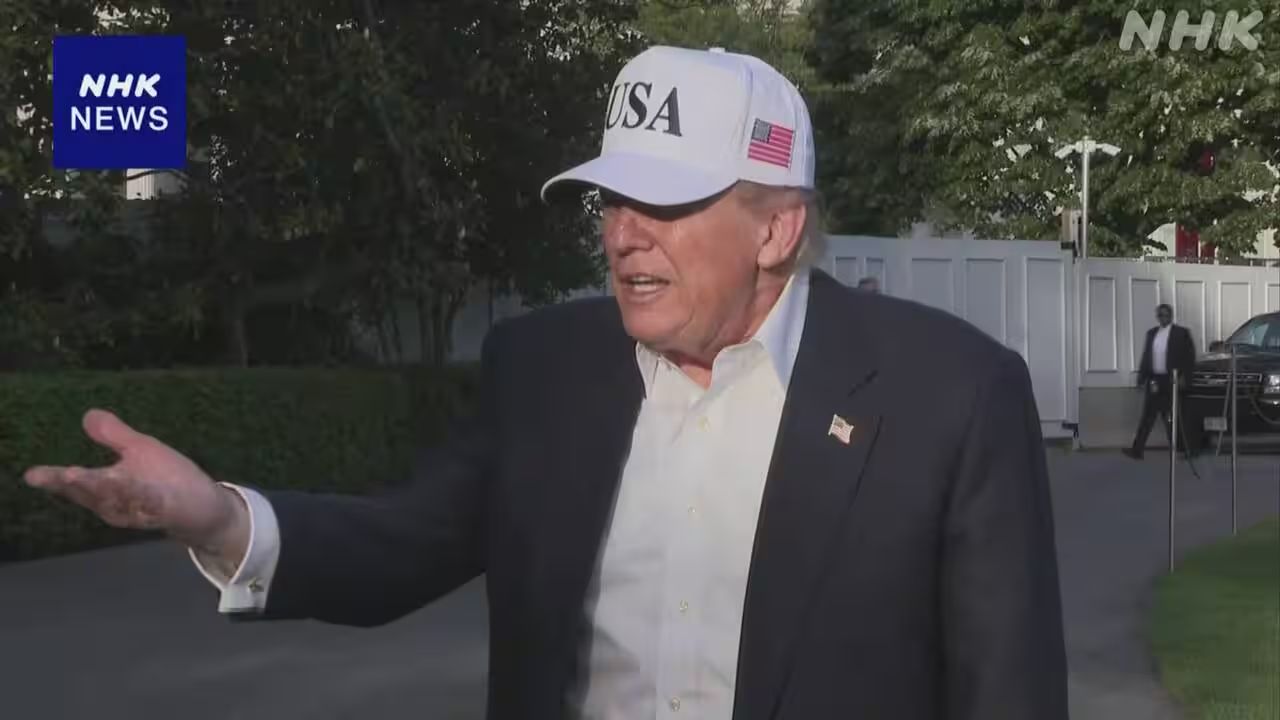
US President Donald Trump has returned to the White House following a three-day diplomatic mission to China, marking the conclusion of a summit with Chinese President Xi Jinping in Beijing. In an interview broadcast on 15 May, Trump characterised arms sales to Taiwan as a strategic asset, stating that the availability of such weaponry "depends on China" and describing the practice as "a very effective negotiation tool" for the United States.
The remarks come at a pivotal moment in US-China relations, as the two leaders concluded discussions covering a broad agenda that included trade disputes, artificial intelligence regulation, and escalating tensions surrounding Iran. The framing of defence exports as a bargaining chip signals a shift in rhetorical posture, positioning military sales not merely as a commitment to regional security but as a variable in broader geopolitical negotiations.
Financial markets reacted swiftly to the developments, with the NY Dow falling by 537 dollars in the wake of the summit. This downturn reflects a growing sense of disappointment among investors regarding the tangible outcomes of the US-China talks, contrasting sharply with the optimism that preceded the event. Prior to the summit, US stock markets had risen, with the Dow Jones Industrial Average gaining 0.8% and Nvidia shares surging more than 2% following the approval of H200 chip sales to Chinese firms.
The specific conditions under which the United States would utilise these arms sales as leverage remain undefined in the source material. However, Trump’s explicit linkage of the decision to China’s actions suggests that future defence transfers to Taiwan may be contingent on Beijing’s behaviour in other areas of contention, including trade and strategic stability.
This development adds a layer of complexity to the diplomatic landscape, as the US navigates competing interests in technology, security, and economic engagement. The market’s negative response indicates that stakeholders are weighing the long-term implications of treating defence commitments as negotiable instruments, a move that could have lasting effects on regional security architectures and bilateral trade dynamics.