Tochigi Prefecture Issues Highest-Level Flood Alerts as River Flooding Confirmed
The Japan Meteorological Agency has issued a linear rainband imminent prediction for the region as local authorities activate Level 5 Emergency Safety Assurance orders.
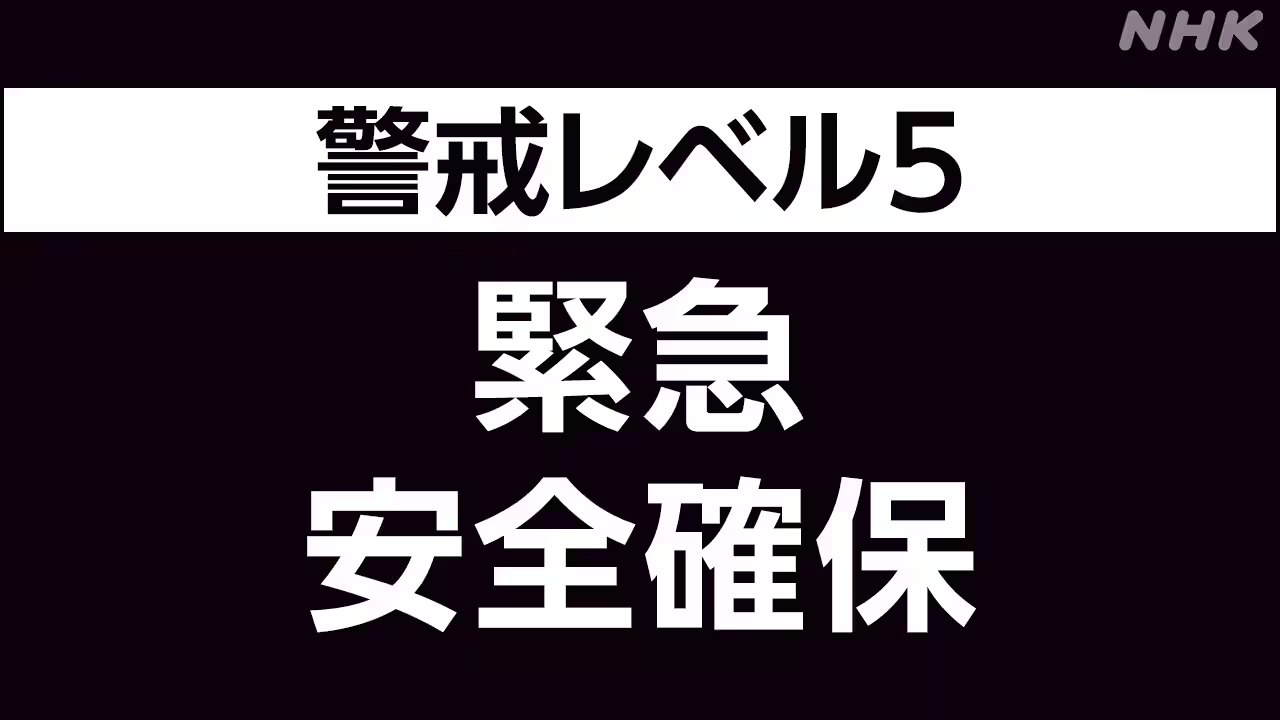
Local authorities in Tochigi Prefecture have activated the highest level of disaster alert following confirmed flooding in the Hagi River. Sano City issued an Emergency Safety Assurance order at 00:49 on July 18, 2026, affecting 2,249 households and 6,520 residents living in the vicinity of the river. The directive, classified as Level 5, mandates that residents immediately check their surroundings and move to nearby shelters due to the imminent risk to life.
Concurrently, Ashikaga City in the same prefecture issued a similar Level 5 order for 17,812 residents across 8,679 households. This measure was triggered by heightened flooding risks associated with the Hata River. The Ashikaga directive took effect at 00:30 on July 18, 2026, preceding the Sano City alert by approximately 19 minutes. Both municipalities are urging affected populations to prioritise immediate evacuation to designated safe zones.
The escalation of emergency measures coincides with severe meteorological conditions identified by the Japan Meteorological Agency (JMA). At 00:50 on July 18, 2026, the JMA issued a 'linear rainband imminent prediction' warning for southern Tochigi and Gunma prefectures. This warning indicates a high probability of a linear rainband forming within three hours, a weather phenomenon capable of producing heavy rainfall and exacerbating flood risks in the region.
Level 5 represents the most critical stage in Japan’s disaster alert system, signifying that lives are at imminent risk and that immediate evacuation is required. The coordination between municipal governments and the JMA highlights the severity of the situation, with local officials relying on real-time hydrological data and weather forecasts to determine the scope of evacuation orders.
Residents in the affected areas of Sano and Ashikaga are advised to monitor official communications from local authorities and the JMA for further updates. The linear rainband warning suggests that weather conditions may deteriorate further in the coming hours, necessitating continued vigilance and adherence to evacuation protocols until the immediate threat subsides.