The Verge tests Qi2 magnetic power banks: Baseus leads in speed, iWalk offers value
The Baseus PicoGo AM52 emerged as the top pick for fast wireless charging, while the iWalk PowerHybrid was recommended as a budget-friendly alternative for consumers seeking value over peak performance.
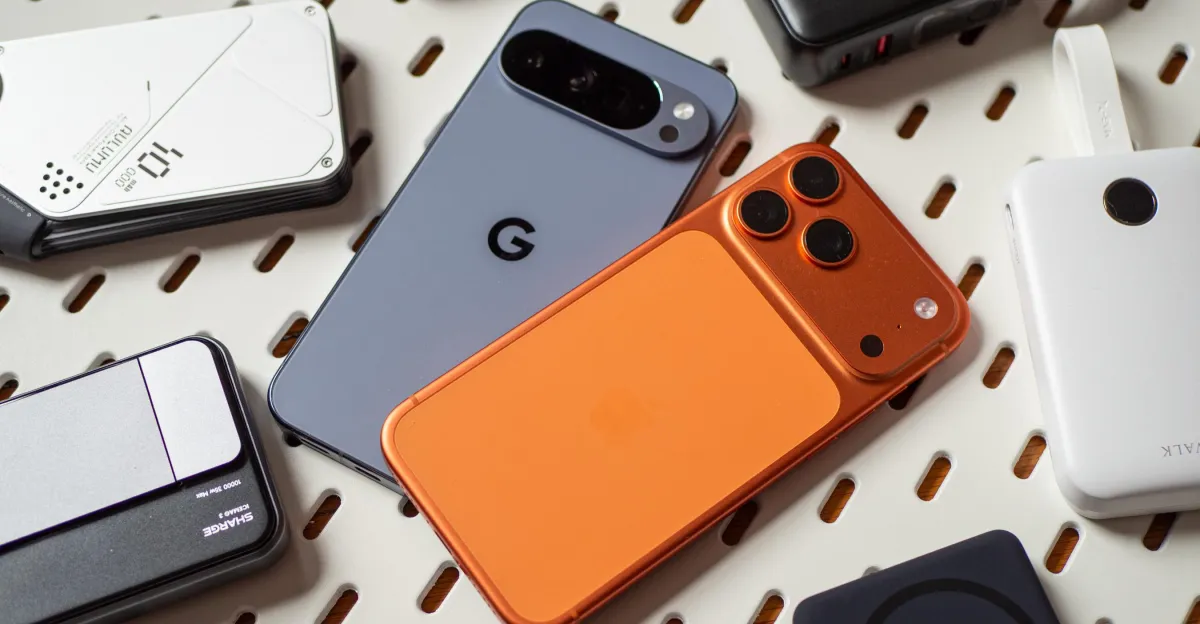
The Verge has published a comprehensive review of seven Qi2 and Qi2.2 magnetic power banks, evaluating their performance across recent iPhone and Google Pixel devices. The testing highlights a significant disparity in charging speeds, with Qi2.2-certified units capable of delivering up to 25W to newer iPhones, while Android support remains largely capped at 15W. The Baseus PicoGo AM52 emerged as the top performer for speed, whereas the iWalk PowerHybrid was recommended as a cost-effective option. The review also underscores the inherent inefficiencies of wireless charging, noting that real-world speeds often fall short of advertised ratings and that energy loss is approximately 25% compared to USB-C wired charging.
The review tested devices on iPhone 17 Pro Max and Google Pixel 10 Pro XL models, noting that Qi2.2-certified power banks can charge newer iPhones at up to 25W. The Baseus PicoGo AM52 charged an iPhone 17 Pro Max to 65% and a Pixel 10 Pro XL to 50% in one hour via wireless charging. The iWalk PowerHybrid, priced at approximately $35, charged the iPhone 17 Pro Max to 55% and the Pixel 10 Pro XL to 46% in one hour. The article clarifies that the iPhone 17E supports 15W Qi2 charging, while the iPhone 16E does not support wireless charging at all.
Google’s Pixel 10 Pro XL supports Qi2.2 at up to 25W, whereas the Pixel 10, 10 Pro, and 10 Pro Fold support Qi2 at up to 15W. Samsung’s Galaxy 26 lineup is described as “Qi2 Ready,” requiring a magnet case to utilise Qi2 charging at up to 15W. Real-world wired charging speeds for the Baseus AM52 topped out at 38W for the iPhone and 33W for the Pixel, below its advertised 45W rating. Wireless charging loses approximately 25% of energy compared to USB-C wired charging.
The Baseus PicoGo AM52 is identified as the top pick for fast wireless charging, reaching 65 percent on an iPhone 17 Pro Max in one hour. The iWalk PowerHybrid is recommended as a budget alternative at approximately $35. The article notes that wireless charging is less efficient than wired charging and that advertised speeds often exceed real-world performance. The review also highlights that modern phones adjust charging rates dynamically based on temperature and battery level, meaning speeds are rarely consistent throughout the charging cycle.
The Verge’s analysis confirms that while Qi2.2 technology offers faster charging for compatible iPhones, the broader ecosystem remains fragmented. Android support is limited, with most Pixel models supporting Qi2 at up to 15W, except the Pixel 10 Pro XL which supports Qi2.2 at 25W. Consumers are advised to consider Watt-hours rather than milli-Ampere-hours when comparing battery capacities, as the latter can be misleading depending on voltage. The review concludes that for maximum efficiency and speed, wired charging remains the superior option, despite the convenience of magnetic wireless solutions.