The Verge reviews third-party controllers for Nintendo Switch 2
A recent assessment by The Verge identifies affordable alternatives to Nintendo’s official Pro Controller, highlighting drift-resistant joystick technology and varying degrees of native operating system support across five key models.
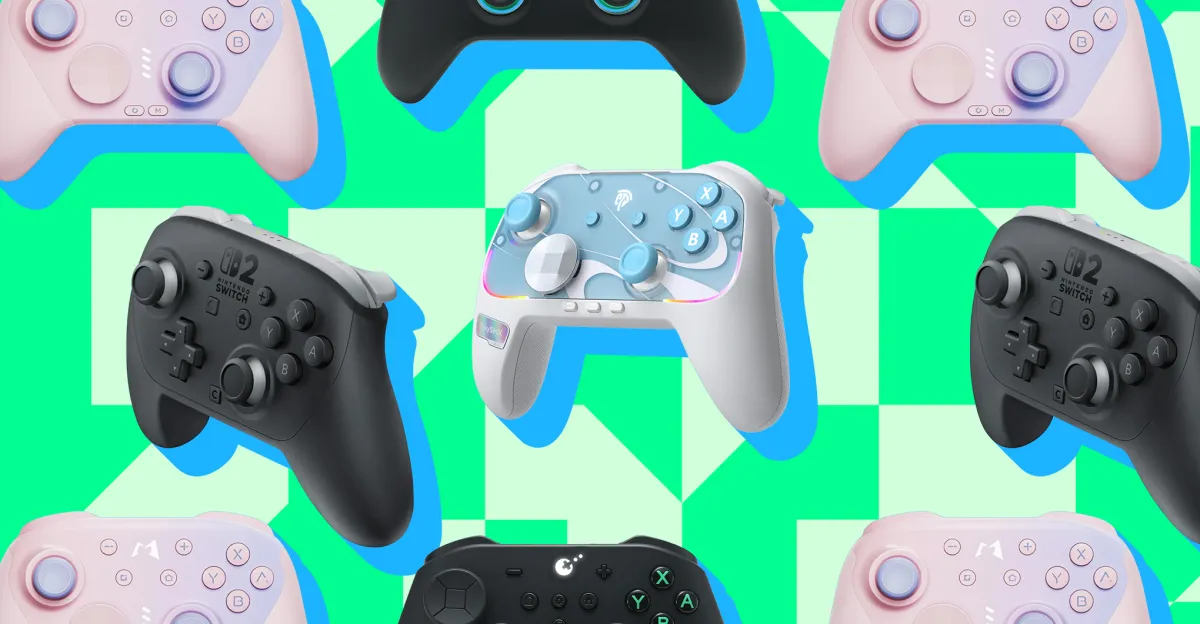
The Verge has published a comprehensive review of third-party controllers for the Nintendo Switch 2, recommending the EasySMX S10 as the optimal choice for most consumers. Priced at $59.99, the S10 provides features comparable to Nintendo’s $89.99 Pro Controller, including HD rumble, amiibo support, and remote wake-up capabilities. This recommendation positions the third-party option as a significant value proposition for investors and consumers monitoring the peripheral market for the new console.
The review underscores a technological shift in the gaming hardware sector, with tested controllers utilising drift-resistant Hall effect or tunneling magnetoresistance (TMR) joysticks. This contrasts with Nintendo’s flagship Pro Controller, which relies on potentiometer-based sticks prone to degradation and stick drift over time. All five models assessed by The Verge are compatible with the Switch 2, the original Switch, and PC, indicating a broadening standard for cross-platform peripheral utility.
The EasySMX S10 Lite, priced at $39.99, emerged as a notable exception in terms of software integration. While it lacks amiibo support and HD rumble, it is the only tested controller offering native Switch 2 OS support. This allows users to map rear buttons via the console interface without requiring complex pairing sequences or Joy-Con removal, a feature The Verge noted as a significant advantage for user experience despite the hardware compromises.
Other models assessed included the GuliKit TT Pro, which features adjustable stick tension and a tool for swapping face button layouts, and the Mobapad Chitu2 HD, praised for its ergonomic similarity to the Nintendo Pro Controller and quiet TMR sticks. The 8BitDo Pro 3, priced at $69.99, offered extensive customisation including swappable button caps and trigger locks, though it was criticised for poor rumble feedback.
The assessment highlights that while third-party controllers generally lack native OS support, the market is evolving to meet consumer demand for durability and cost-efficiency. The Verge’s findings suggest that consumers can achieve functionality comparable to the official $89.99 Pro Controller at a lower price point, provided they accept minor trade-offs in features such as rumble quality or button layout flexibility.
