The shrinking arena: How coordinated misogyny traps CMAT and Olivia Rodrigo
When CMAT and Olivia Rodrigo face vitriol for polar-opposite fashion choices, the backlash signals a calculated campaign to limit how women can exist in the public eye.
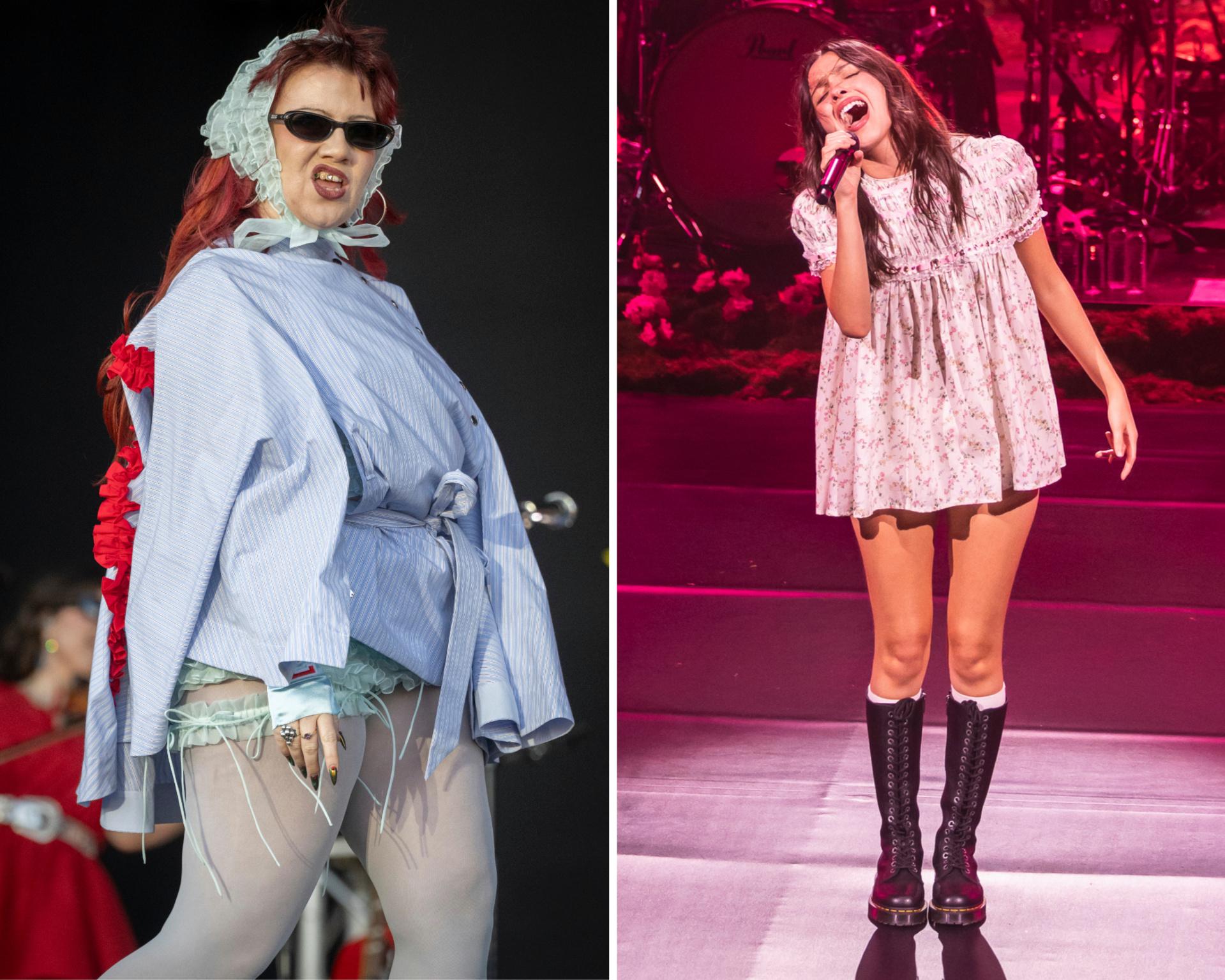
Irish-American musician CMAT and US pop star Olivia Rodrigo have become the latest casualties of a coordinated online harassment campaign targeting female artists’ fashion choices. The backlash, which has manifested in vile body-shaming and predatory accusations, suggests a deliberate strategy to shrink the acceptable realm of public expression for women. Both artists have publicly addressed the distress caused by these attacks, highlighting the contradictory societal expectations that trap them regardless of their style.
CMAT faced intense scrutiny following her performance at BBC Radio 1’s Big Weekend in Sunderland. The broadcaster was forced to disable comments on Instagram clips of her set due to the volume of vile remarks about her body, a measure not applied to clips of smaller-bodied female performers at the same festival. CMAT described the experience as causing her “deep sadness,” noting that she endured identical backlash at the same festival two years prior. That earlier incident inspired her song Take a Sexy Picture of Me, which satirises the impossible beauty standards women face.
Despite CMAT’s intent to critique these standards, some online commentators misinterpreted her lyrics as advocating for the sexualisation of young girls. CMAT has rejected being claimed as a figurehead of the body positivity movement, stating she does not view her body as a “punk-rock act of liberty.” She emphasised that she would prefer to fit in to avoid abuse but has had extreme difficulty changing her appearance, underscoring that she does not choose her body size.
Olivia Rodrigo, 23, faced similar hostility after wearing a puffy floral dress during a concert in Barcelona, where she was labelled “pedo bait” and “Lolita.” In an interview with the New York Times’ Popcast, Rodrigo expressed how upset the criticism made her, pointing out the illogical nature of the comments. She noted that she faced no outcry when performing in a bra and shorts previously, arguing that the backlash normalises paedophilia in culture and reinforces rhetoric that blames girls for men’s sexualisation of their bodies.
The article argues that both artists are caught in a trap where their styles are criticised as either affronts to or indulgences of the male gaze. Laura Snapes suggests that this groundswell of comments carries the distinct tang of bot farming and coordinated attacks by bad actors with a vested interest in restricting women’s public existence. The harassment represents a conservative retrenchment around femininity, where success is increasingly tarnished by the hostile environments artists are forced to navigate.
The incident highlights how every possibility for how a woman in the public eye might look has been co-opted by an agenda that seeks to define her rather than listen to her. CMAT’s countrified burlesque and Rodrigo’s nod to 90s female punks are both intentional artistic choices, yet they are drowned out by malicious commentary. The coordinated nature of the abuse suggests a calculated effort to limit the ways women can exist in public, masking misogyny as moral outrage.