The containerisation era is hitting its ceiling, Financial Times argues
Shipping containers fundamentally reshaped global trade and urban infrastructure, but a new analysis suggests this transformative phase is now concluding.
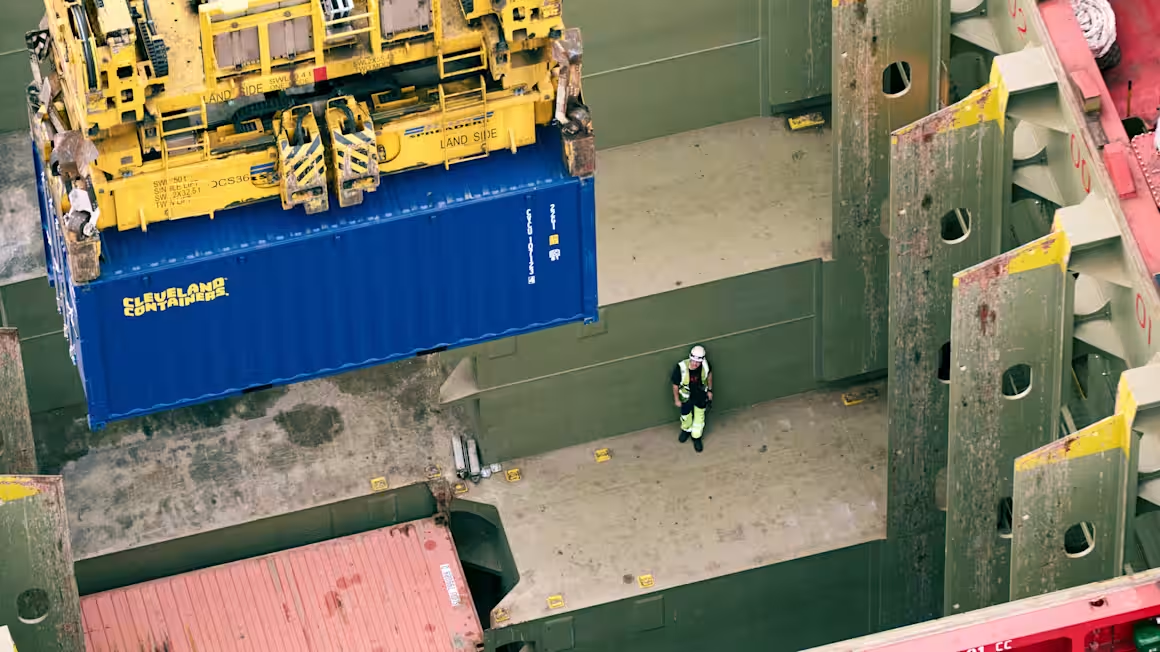
The Financial Times has published an analysis asserting that the era of containerisation, which historically reshaped global ports, urban landscapes, and international trade efficiency, is now reaching its limits. The publication argues that while shipping containers have been a primary driver of globalisation, the specific phase of transformative growth associated with this technology is concluding.
For decades, the standardisation of shipping containers has served as a cornerstone of modern commerce. The FT notes that these units fundamentally transformed the physical layout of ports and the efficiency of international trade. This infrastructure revolution altered the economic geography of cities and enabled the rapid movement of goods across borders, underpinning the expansion of global supply chains.
However, the analysis posits that this specific phase of impact is now hitting a ceiling. The article suggests that the transformative capacity of containerisation is no longer expanding at the same rate as in previous decades. This assessment frames the current period as a maturation of the technology rather than a new wave of disruption.
The Financial Times does not detail the specific factors causing this limit in the provided summary. The source material identifies the claim as an analytical assertion regarding the trajectory of global trade infrastructure. It highlights the shift from a period of rapid, structural change to one of stabilisation or saturation.
This perspective is significant for investors and policymakers monitoring the evolution of global logistics. If the transformative power of containerisation is indeed reaching its limit, it may signal a shift in how trade flows are managed and where infrastructure investment is directed. The FT’s analysis invites scrutiny of whether new technologies or logistical models are required to drive the next phase of globalisation.
The publication’s argument underscores the importance of understanding the lifecycle of major industrial innovations. As the containerisation revolution reaches its limit, the focus may turn to the next set of drivers that will shape the efficiency and structure of international trade.