The Boys concludes with Homelander’s downfall, reflecting real-world power dynamics
The finale saw Kimiko strip Homelander of his powers, allowing Billy Butcher to defeat him, capping a season criticised for length but praised for its satirical edge on contemporary politics and media.
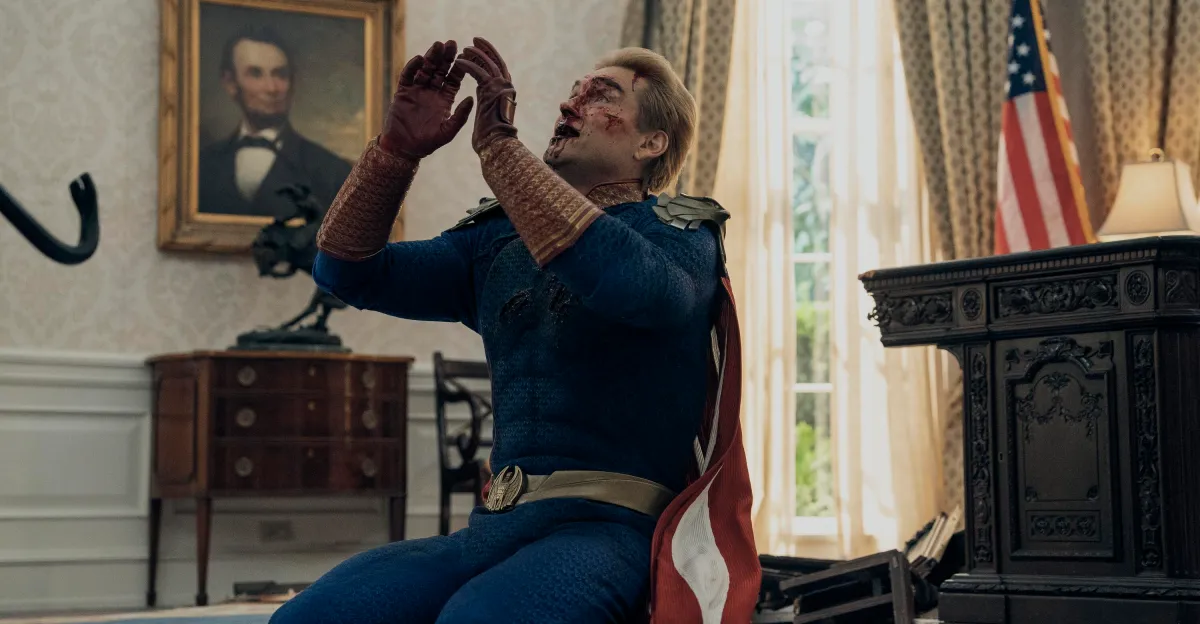
Amazon Prime’s The Boys concluded its final season with a series finale on 22 May 2026, bringing to a close a narrative arc in which the character Homelander had seized control of the US executive branch. The episode marked the end of the series, which is based on the comic by Garth Ennis and Darick Robertson, and featured the character Kimiko undergoing radiation treatment to gain the ability to strip superheroes of their powers. She used this ability on Homelander, allowing Billy Butcher to defeat and kill him.
The final season was noted for its satirical engagement with contemporary themes, drawing comparisons to the reactive style of South Park. Although written prior to Donald Trump’s second term in office, the season depicted events mirroring current US news stories, including the rise of the manosphere, the imprisonment of political opponents, and AI dominating creative fields. Homelander’s supporters were shown using woke as a pejorative and spreading misinformation about immigrants and political rivals.
The season faced criticism for meandering plotlines and unnecessary length, with some reviewers describing it as a bloody mess that felt like it should have been a single film rather than eight episodes. Despite this, the finale was widely regarded as a satisfying conclusion that brought the show back to its strengths. The narrative highlighted how propaganda is created and perpetuated, with Starlight confronting her stepbrother, who consumes manosphere podcasts and Homelander-controlled news networks.
Unlike the source material, the TV series features the main human characters without permanent superpowers, relying on their individual skills and collective ingenuity to defeat bulletproof, highly destructive people. The show has historically addressed contemporary themes, often emulating the satirical style of South Park by reacting to fresh headlines. Previous seasons established the characters of Billy Butcher, Hughie Campbell, Starlight, and Homelander within the context of Vought’s superhero corporation.
The finale’s depiction of Homelander’s vulnerability resonated with themes of narcissism and power, with the reviewer noting that the scene may have annoyed Elon Musk. The show’s writers focused on the idea of Homelander becoming immortal through a drug utilized by his father, Soldier Boy, but this plotline did not play into the finale. Instead, the resolution came down to Kimiko’s ability to remove superheroes’ powers, allowing Butcher, a trained soldier, to easily overpower the powerless Homelander.
