Thai rail authorities mandate drug testing after fatal Bangkok collision
Preliminary black box data reveals emergency brakes were activated too late to prevent collision at one of the city’s busiest intersections, prompting sweeping safety reforms.
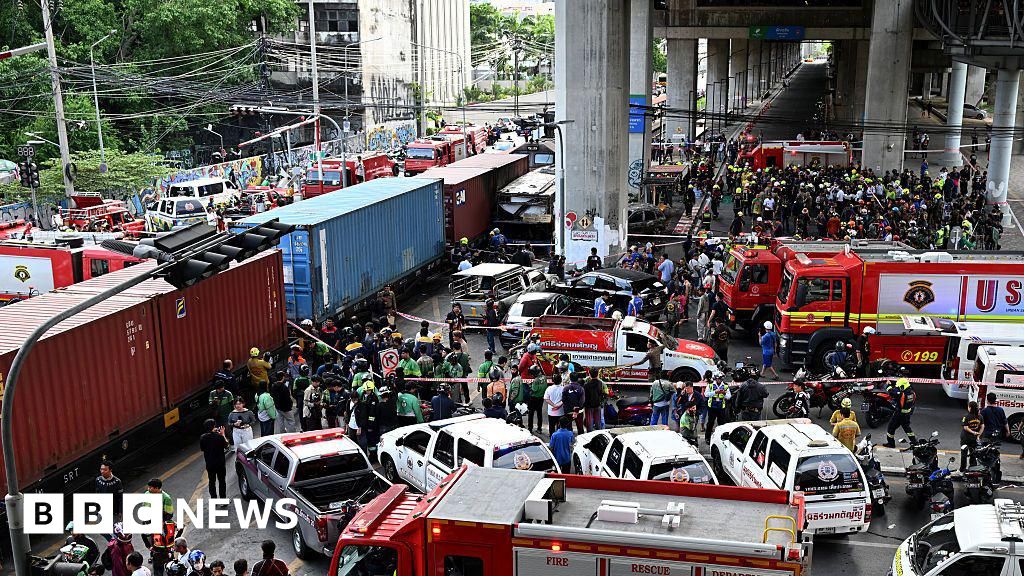
Thai authorities have ordered mandatory drug and alcohol testing for all railway staff following a fatal collision in Bangkok that claimed eight lives. The directive comes after the driver of a freight train involved in the crash tested positive for drugs and was charged with reckless driving. Pichet Kunadhamraks, director-general of Thailand's rail transport department, confirmed the new protocols, which require screening before shifts, in the wake of the disaster at the Asoke-Din Daeng railway crossing.
The incident occurred on Saturday afternoon when the freight train struck a public bus that had become stranded on the tracks. The bus subsequently burst into flames, resulting in eight deaths and dozens of injuries. Initial reports indicate that heavy traffic prevented the crossing barriers from lowering properly, leaving the bus trapped. Police have also charged the bus driver and the guard responsible for manually operating the barriers.
Preliminary findings from the train’s black box indicate that the emergency braking system was activated approximately 100 metres from the bus. This distance proved insufficient to prevent the collision. While police confirmed the driver tested positive for drugs, they have not specified which substances were detected in the urine sample.
The Asoke-Din Daeng crossing is located at one of Bangkok’s busiest intersections and is described as notoriously hectic. Dr Amorn Phimarnmas, president of the Structural Engineers Association of Thailand, estimates that more than 100,000 road vehicles pass through the crossing daily. This volume exceeds established safety thresholds for such infrastructure.
Dr Phimarnmas attributes the high risk to "risk normalisation," a phenomenon where dangerous behaviours become routine due to the historical layout of the area. The railway tracks were constructed before the surrounding road infrastructure, leading to a situation where motorcyclists frequently weave through safety barriers to avoid traffic delays. This structural mismatch has contributed to a culture where risks are routinely ignored until a catastrophic failure occurs.