Tesla’s motion to dismiss racial discrimination lawsuit rejected by California court
The California Civil Rights Department’s case proceeds to a July 2026 trial after the court found Tesla’s written policies and limited data insufficient to prove an absence of systemic discrimination.
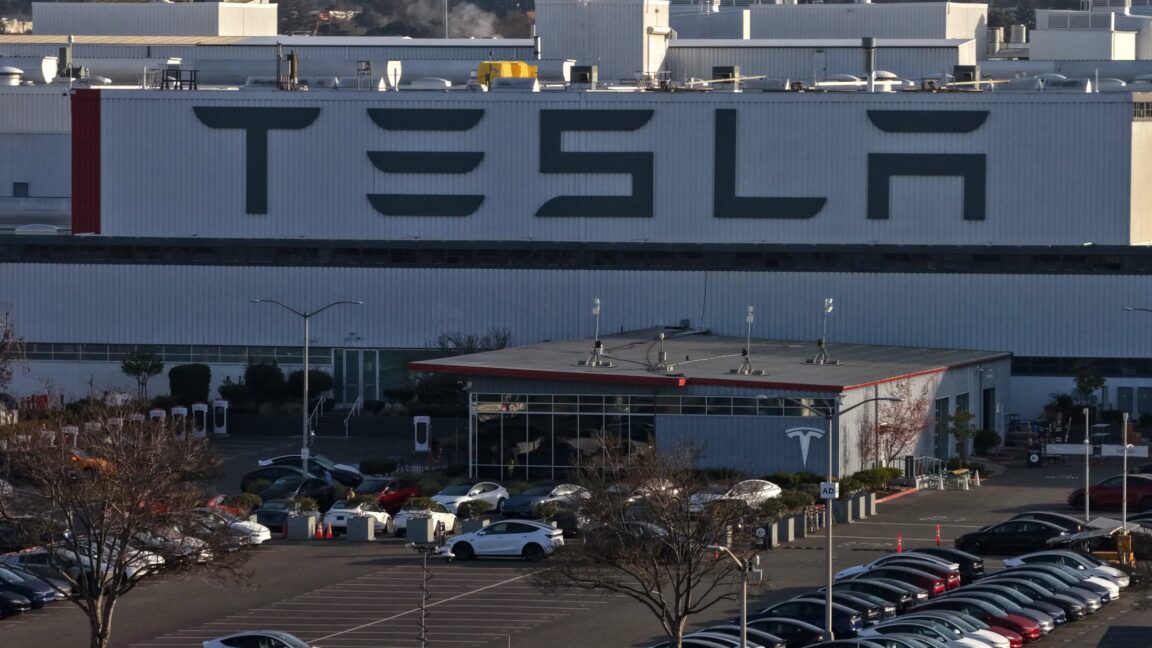
An Alameda County Superior Court judge has dismissed Tesla’s motion to throw out a racial discrimination lawsuit filed by the California Civil Rights Department (CRD), clearing the path for a trial scheduled for July 20, 2026. The ruling determines that the electric vehicle manufacturer failed to provide undisputed evidence to defeat the agency’s claims of a pattern of racial harassment, pay inequality, and retaliation against Black workers, particularly at its Fremont factory.
The lawsuit, originally filed in March 2022 following a three-year investigation, alleges that Tesla’s employment practices remain rooted in systemic bias. CRD Director Kevin Kish stated that Black workers are paid less for their work, subjected to racist slurs, and face threats of termination for speaking out. The agency accused the company of failing to stop racial harassment despite knowing about the problem, with allegations including the pervasive use of racial slurs and the use of terms like "plantation" and "slaves" to describe the factory and its workforce.
Judge Peter Borkon ruled that Tesla’s reliance on written policies and training programmes was insufficient to prove an absence of discrimination. The judge noted that evidence indicated at least 339 Black workers, representing 2.8 per cent of the 12,000 Black employees at the Fremont factory, had heard the n-word at work based on declarations from both plaintiffs and Tesla employees. Tesla’s evidence was deemed inadequate because it appeared to be a non-representative sample limited to the Fremont factory and defined only the minimum number of workers who heard slurs rather than the total.
Regarding allegations of discriminatory assignments and pay inequality, Borkon found that Tesla did not present its own expert statistical testimony regarding applicant pools, pay, promotions, or discipline. The judge stated that Tesla’s assertion that the CRD had no evidence was not undisputed proof that the agency could not prove an element of the claim. Tesla also failed to provide undisputed evidence to rebut claims of retaliation, with the judge noting that data from a related case, Vaughn v. Tesla, did not constitute proof of no California-wide pattern of retaliation.
While the judge partially granted Tesla’s request to block claims under the statute of limitations for incidents that occurred before June 18, 2018, the majority of the case proceeds. The CRD seeks financial damages and injunctive relief, and the trial will address claims dating back to June 2018. The ruling comes as other legal challenges against the company continue, including a pending case with the US Equal Employment Opportunity Commission and a separate class action that was decertified last year.
