Tesla unveils Cybercab design with integrated SpaceX Starlink V5 connectivity
The Cybercab’s built-in Starlink V5 dish offers speeds of 375+ Mbps, complementing existing 5G LTE and GPS systems in a move that raises questions about necessity in urban environments.
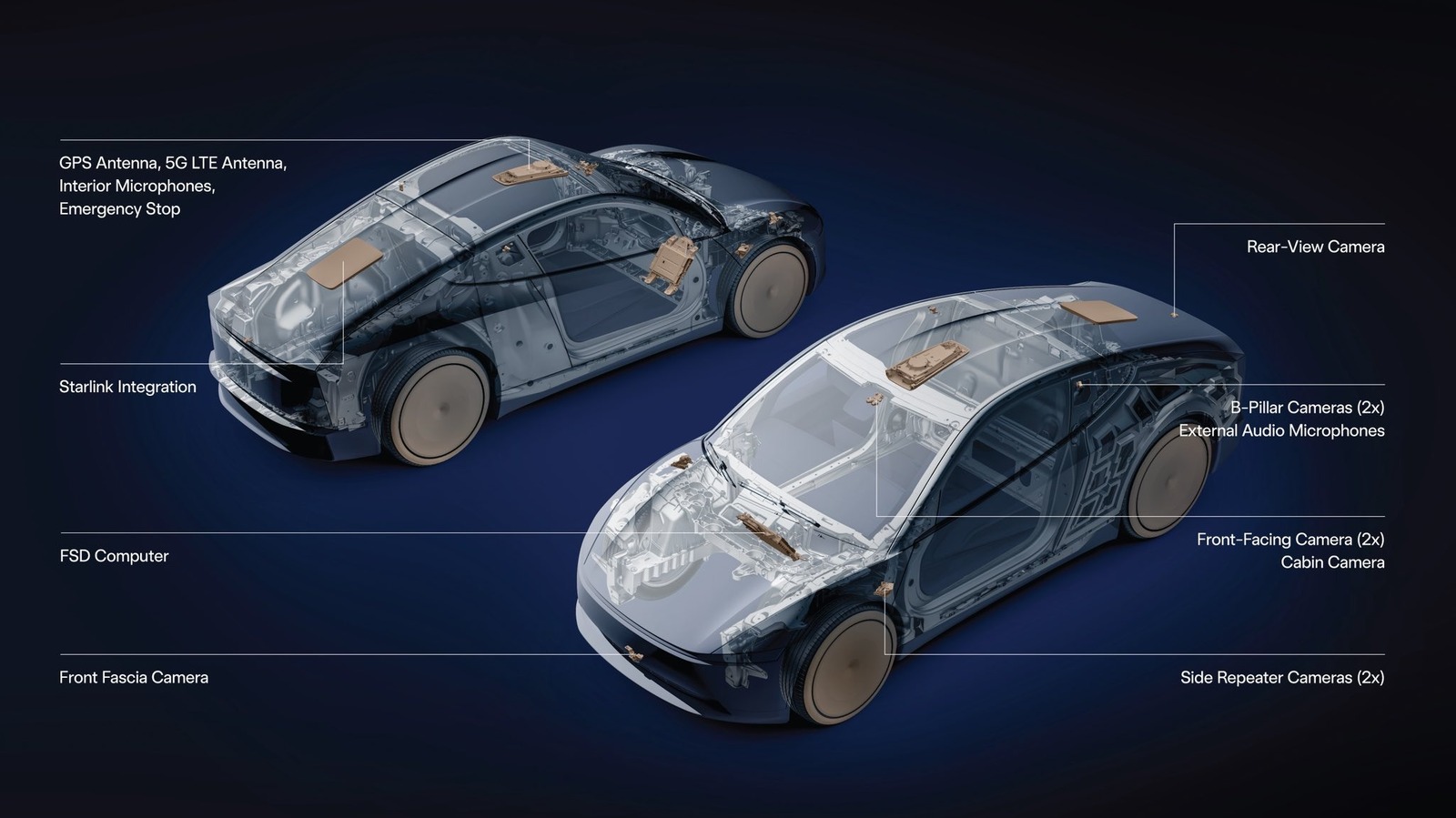
Tesla has revealed the design for its upcoming Cybercab, confirming the integration of a built-in SpaceX Starlink V5 satellite dish alongside standard GPS and 5G LTE connectivity. The announcement, made via a post on X, showcased a cutaway view of the vehicle highlighting the multiple methods available for external communication. Tesla described the feature as providing "high-speed internet from space for the future of autonomous vehicles," signalling a deeper technical crossover between the electric car manufacturer and Elon Musk’s spaceflight company.
The integrated hardware is the Starlink V5 antenna, which SpaceX announced last week. According to company specifications, the V5 dish is smaller and more energy-efficient than its predecessors, though it delivers slightly lower peak speeds of 375+ Mbps compared to the 400+ Mbps offered by the V4 model. Notably, SpaceX has classified the V5 as having "home internet" capabilities only, distinguishing it from the Starlink Mini which is designed for mobile use. This classification raises questions regarding how the hardware will function within a moving autonomous vehicle, although software updates may expand its utility.
The decision to include satellite internet in a vehicle designed primarily for urban operation has drawn scrutiny. The Cybercab operates in cities where 5G cellular networks are widely available, with US cities averaging speeds of 175 Mbps. With the vehicle also equipped with a 5G LTE antenna, the addition of Starlink provides redundant internet access. Critics have noted that this level of connectivity appears excessive for relatively short urban trips, given the robustness of terrestrial networks in operating areas.
However, the integration may offer strategic advantages beyond basic internet access for fleet operations. Starlink connectivity could facilitate inter-vehicle communication, enhance navigation accuracy, and provide remote support capabilities without reliance on cellular signals. The move also represents a transfer of business benefits between Musk’s two major enterprises. This follows SpaceX’s record-breaking initial public offering on the Nasdaq on 11 June 2026, where shares opened at $150 after being priced at $135, raising approximately $75 billion and valuing the company at around $1.77 trillion.
Tesla has not provided a confirmed release date for the new Cybercab model. The company’s current autonomous fleet remains small, comprising just 39 unsupervised rider vehicles, according to the Robotaxi Tracker site. The total number of vehicles in the program, including supervised units, stands at 770. As Tesla prepares for broader deployment, the integration of SpaceX technology will be a key factor in the vehicle’s operational resilience and connectivity architecture.
