TechCrunch review highlights privacy concerns in Amazon’s Bee AI wearable
Hands-on testing reveals effective summarisation capabilities alongside significant data privacy risks and transcription inaccuracies.
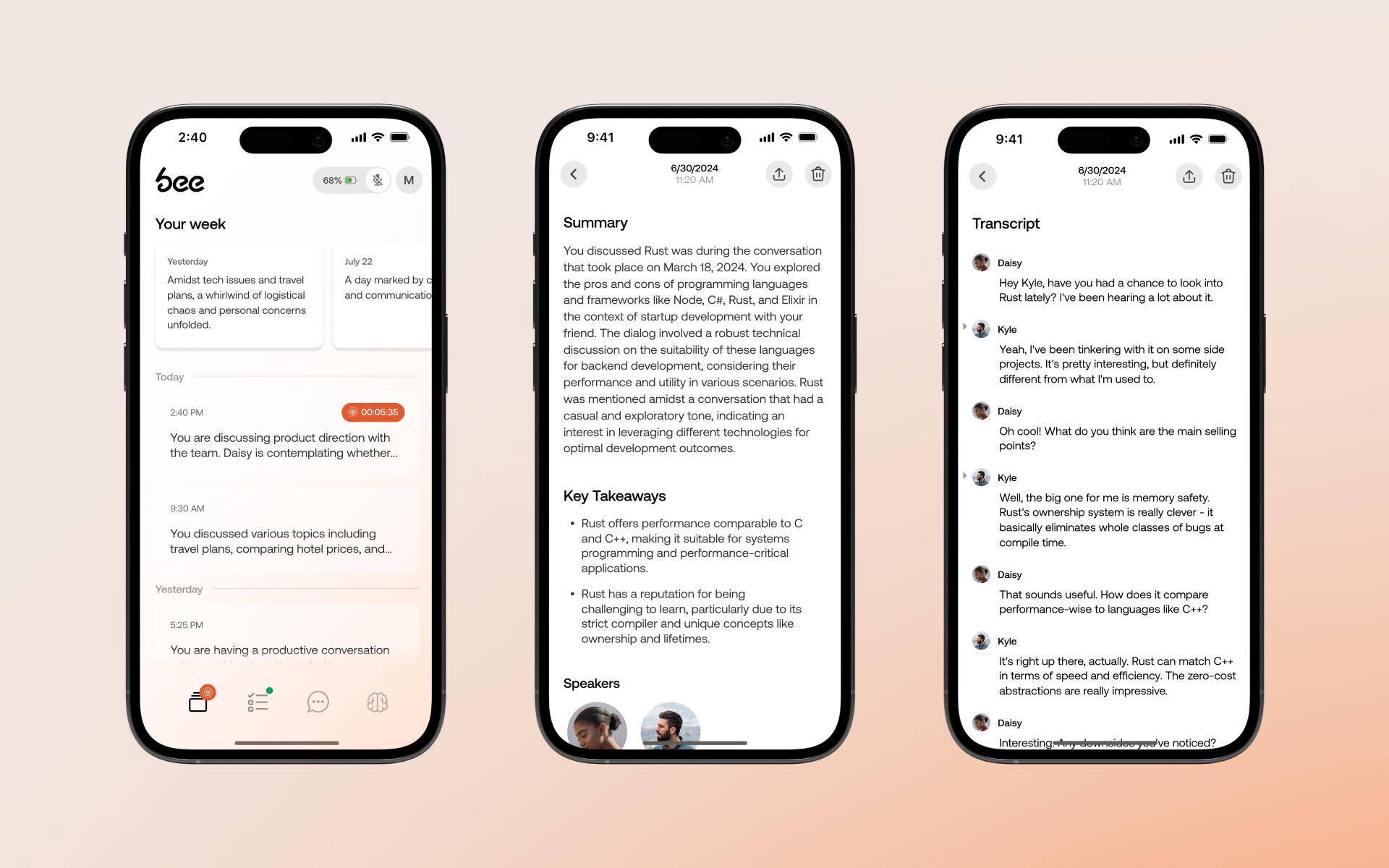
TechCrunch has published a detailed review of Amazon’s Bee, an AI-powered wrist wearable acquired by the tech giant last year. The device is designed to record, transcribe, and summarise conversations, positioning itself as a digital assistant for both professional and personal use. While the review acknowledges the device’s utility in managing busy schedules, it raises significant concerns regarding the extensive mobile permissions required and the reliance on cloud data storage.
The reviewer tested the device during a business phone call and a personal movie night, providing a dual perspective on its functionality. During the professional engagement, the device successfully summarised the conversation after explicit consent was obtained, breaking down the talk into segments for easy review. This capability mirrors other transcription services such as Otter and Granola, suggesting a viable niche for professionals who need to navigate multiple meetings without manual note-taking.
However, the transcription accuracy was noted as imperfect. The reviewer observed that the device often omitted sections of conversations and failed to automatically identify speakers, requiring users to manually enter names. Despite these flaws, the AI demonstrated contextual awareness during a personal session watching the film Reservoir Dogs. Rather than flagging the on-screen violence as real-world bloodshed, the device correctly identified the context, labeling the summary as a “Tarantino Film Scene Analysis.”
Privacy remains the primary drawback of the wearable. To function effectively, Bee requires expansive mobile permissions, including access to location, photos, contacts, calendar, notifications, and health data such as sleep patterns and heart rate. The reviewer, identifying as a privacy enthusiast, expressed discomfort with the prospect of a device constantly recording and transmitting such intimate details of daily life.
Data collected by the device is stored in the cloud with encryption at rest and in transit. Amazon states that it undergoes rigorous third-party security audits and employs continuous monitoring, though the reviewer noted the company’s history of data security issues. While a demo of a fully local-processing version was shown to YouTuber Becca Farsace, Amazon has not confirmed plans to release a model that processes data entirely on the device, leaving cloud dependency as the current standard.