TechCrunch review finds Vertu Alphafold’s $6,880 AI premium hard to justify
Testing reveals significant discrepancies in AI autonomy and context retention, while hardware similarities to mid-range devices undermine the value proposition for executive buyers.
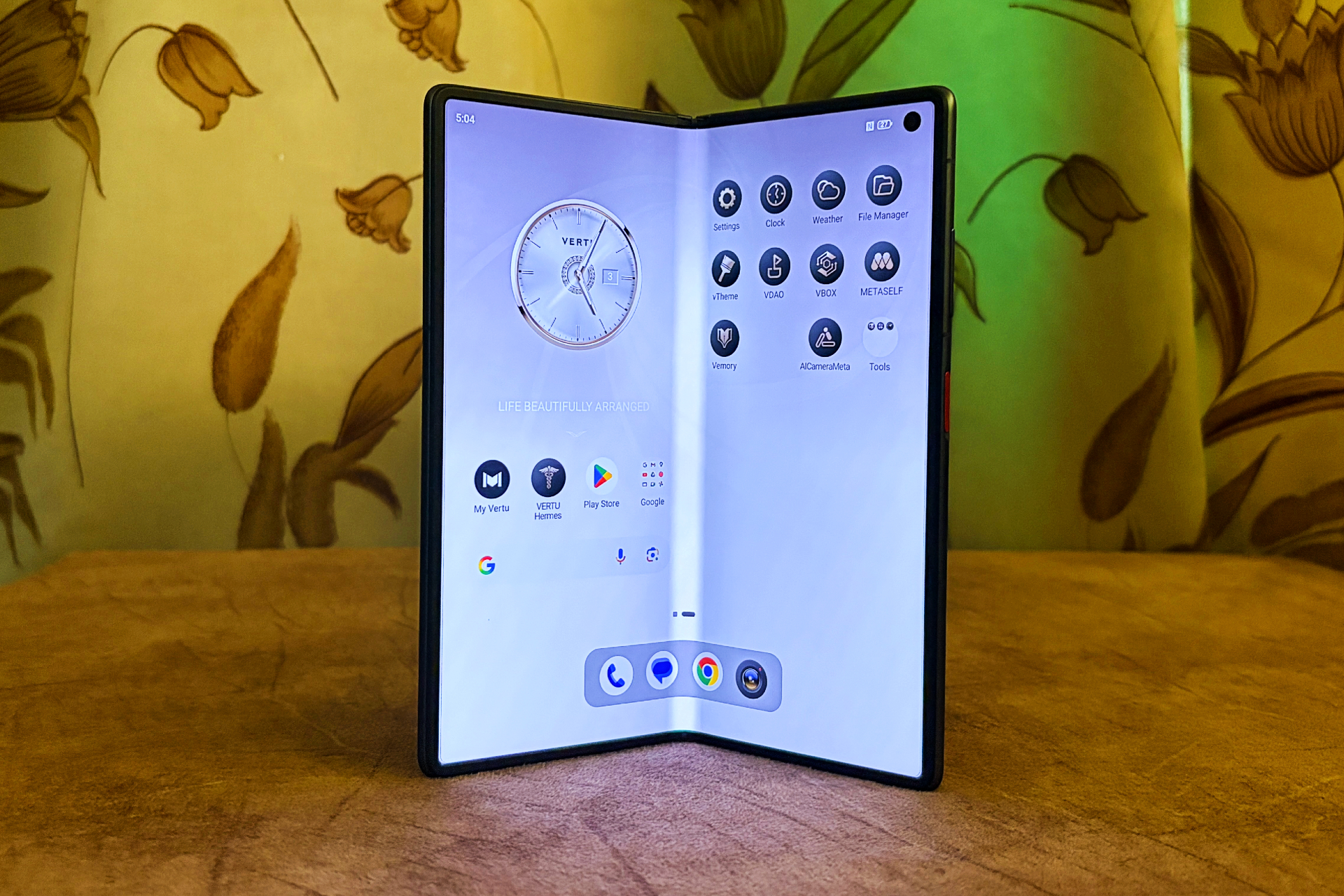
TechCrunch has published a detailed assessment of the Vertu Alphafold, a luxury foldable smartphone priced at $6,880, concluding that the device’s premium cost is difficult to defend given its hardware foundations and the immature state of its artificial intelligence software. The review, which targeted affluent buyers and chief executives, found that while the handset offers distinct luxury materials, its core functionality relies heavily on an unrefined AI agent and a supply chain partnership with ZTE/Nubia.
The Alphafold’s hardware is built on a ZTE Nubia platform, with Vertu responsible for the luxury materials, software experience, and quality control. The review unit featured genuine calfskin leather and titanium accents, weighing 264 grams, which is noticeably heavier than the 215-gram Samsung Galaxy Z Fold 7 used as a reference device. Despite the premium finish, the review noted striking similarities in hinge design, dimensions, and internal component placement to the $1,100 ZTE Nubia Fold. Vertu confirmed the specialist supply-chain partnership but maintained that it controls the software and after-sales service.
At the centre of Vertu’s pitch is the Hermes Agent, an AI assistant built on the open-source Hermes project designed to automate executive workflows. Testing revealed mixed results regarding its autonomy and accuracy. While Hermes demonstrated greater willingness to execute multi-step tasks independently compared to Google’s Gemini on the Samsung device, it frequently produced errors. In one test, the agent set a reminder for 9:08 p.m. instead of 15 minutes after a 2:32 a.m. request. In another scenario involving a business trip to Pune, the agent scheduled the itinerary for incorrect dates and handed the task off to a human concierge rather than offering alternative travel options.
The review also highlighted inconsistencies in the AI’s context retention. Hermes Agent failed to recognise documents shared in previous sessions, requiring users to re-upload files for analysis. In contrast, Gemini on the Samsung Galaxy Z Fold 7 retained the context of previously shared spreadsheets, allowing for seamless follow-up questions days later. Vertu did roll out server-side fixes during the review period to address early issues with file uploads and concierge connectivity, suggesting the platform is still evolving.
Beyond the AI shortcomings, the device lacks wireless charging, a feature present on the Samsung competitor, and its camera document scanning mode offers only parity with mainstream alternatives. Vertu claims the Alphafold includes an “A5” security chip for hardware-level protection, though this could not be independently verified. With Samsung’s next-generation Galaxy Z Fold 8 expected imminently, the review suggests the Alphafold’s value proposition is further weakened, asking buyers to pay a substantial premium for branding and an unfinished AI ecosystem.