Tech giants pivot data centre cooling strategies amid water scarcity scrutiny
With seven in ten Americans citing water availability as their primary concern over new developments, hyperscalers are adopting divergent approaches to cooling, balancing energy efficiency against local watershed constraints.
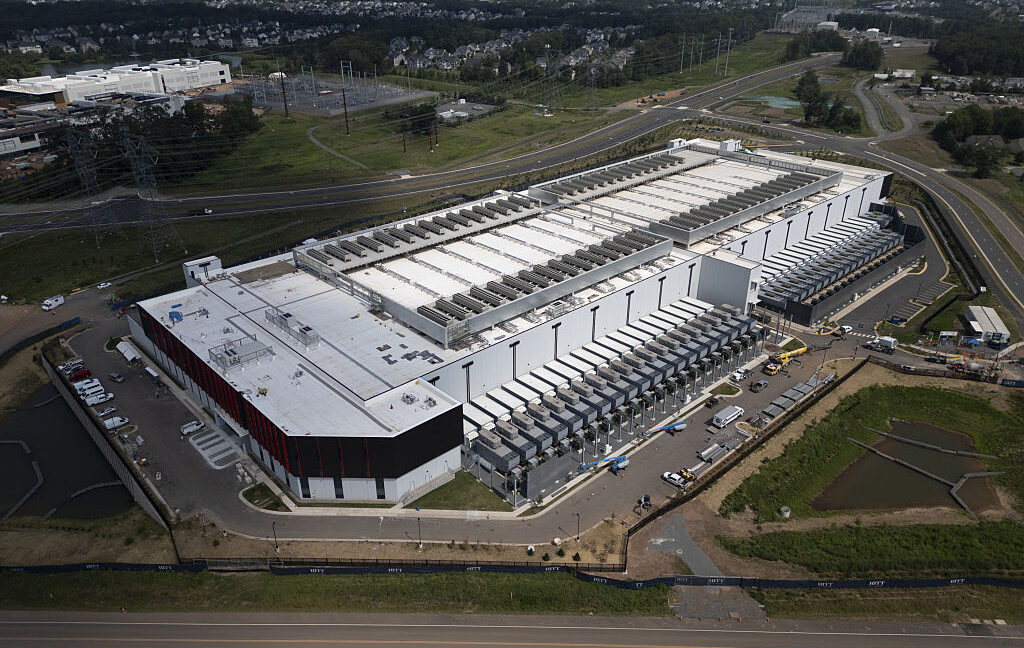
SpaceX has amended its initial public offering to explicitly identify water scarcity, drought conditions and regulatory constraints as potential bottlenecks for data centre development. The filing underscores a broader industry reckoning, as major technology firms including Google, Microsoft, OpenAI and Oracle reassess their infrastructure strategies in response to intensifying public scrutiny over water usage.
A recent Gallup poll indicates that seven out of ten Americans oppose new data centre projects, with water scarcity ranking as the top resource concern. This public resistance has compelled operators to demonstrate that they are addressing the issue directly, particularly as data centres consume vast quantities of water to cool server racks that generate significant heat.
Microsoft, OpenAI and Oracle have announced moves to abandon evaporative cooling entirely, a technique that uses fresh water to absorb heat before it evaporates in cooling towers. This shift includes the Stargate expansion, which spans several states including water-stressed regions of Texas. Despite these conservation efforts, internal records suggest that Microsoft’s overall water consumption is projected to rise significantly.
Google is pursuing a different trajectory, arguing against a one-size-fits-all approach. The company has pledged to replenish more freshwater than it consumes, increase the use of reclaimed water and disclose annual usage figures. Ben Townsend, Google’s global head of infrastructure and sustainability, stated that the company employs a data-driven framework to determine optimal cooling designs based on local watershed conditions, defending evaporative cooling in water-abundant regions as necessary for sustainable development.
The debate highlights a complex trade-off between water conservation and energy efficiency. Research from the University of California, Riverside, suggests that widespread adoption of evaporative cooling during peak demand could free up 10 to 30 gigawatts of power, reducing stress on the grid. Experts warn that avoiding evaporative cooling entirely could increase carbon emissions and electricity costs, particularly in areas where grids are already strained.
Operational risks are already materialising. In 2024, Google halted plans for a data centre outside Santiago, Chile, after a court partially revoked permits due to water concerns. Transparency remains a contentious issue; Google fought a lawsuit in Oregon in 2021 to avoid disclosing water usage for an expansion, but began including specific data centre water use in annual reports in 2023.
As the industry navigates these challenges, independent consultants note that public pushback and regulation are crucial for driving smarter design. The challenge lies in simplifying operations to use less water and energy simultaneously, a task that becomes increasingly difficult as the AI boom drives demand for computing power.