Sydney’s new art dig invites the public to unearth 80 buried works
Heap at Carriageworks transforms the foyer into an archaeological site, challenging visitors to excavate artworks hidden beneath 120 tonnes of earth.
A Hitachi earthmover recently buried a suitcase in a mound of dirt inside the cavernous foyer of Carriageworks, marking the final stages of preparation for Heap. This weekend, the public will be invited to dig deep into 120 tonnes of earth to uncover 80 artworks created by eight Australian artists. Commissioned by the Festival of Dangerous Ideas, the event functions as a hybrid exhibition, installation, and archaeological dig that serves as the centrepiece for a broader program of panels, performances, and screenings.
The installation is anchored by the festival’s current theme of revelation. Festival director Danielle Harvey describes a “dangerous idea” as a concept with the potential to change the world if taken seriously. Harvey notes that the setup draws on a powerful Australian metaphor: a nation built on mining and excavating. The physical act of digging prompts audiences to consider how society values what it finds, whether it is deemed interesting or dangerous.
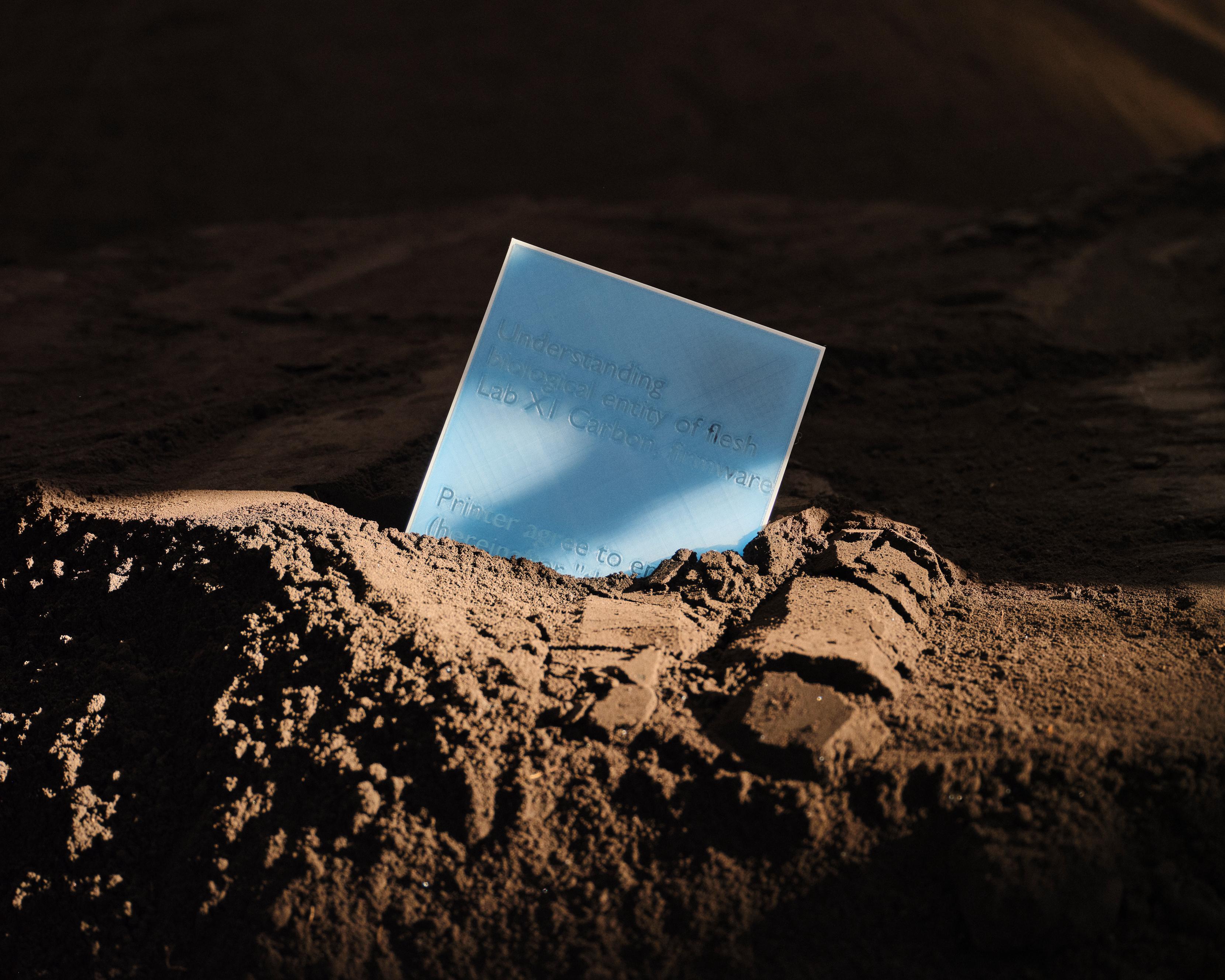
Among the buried works is a piece by Sophie Penkethman-Young, consisting of 25 tiles bearing the text of a labour agreement between the artist and her 3D printer. The agreement limited the machine to a 38-hour work week, capping output at one tile per day. Penkethman-Young’s work challenges the notion of machines as an endless source of production, inviting viewers to reflect on invisible labour and ethical production standards.
Wiradjuri artist Brook Andrew contributes a series of canisters containing medicinal and edible plants, including Lebanese wild thyme, Australian murnong, and hallucinogenic Brugmansia. Sourced with botanical specialists and Indigenous medicine people, the works explore knowledge systems that are thousands of years old. Andrew argues that opening ourselves to these systems is inherently dangerous in a highly pharmaceuticalised era, particularly when western framing often relies on racism and ignorance.
Aretha Brown’s commission reimagines the Australian flag through a queer, Gumbaynggirr lens. Working with her queer women’s collective Kiss My Art, Brown created a quilt that was sealed in a suitcase before burial. The piece questions the representational power of the national flag and proposes alternative visions for the country’s identity.
Other works in the installation address more poetic themes of mortality and emotional distress. Tim Silver’s human figure, cast in hardened dirt, represents withdrawal, while Tarryn Gill’s funerary urn, made from gold fabric and bearing the faces of Janus, reflects on mutability. Gill was inspired by the theories of Freud and Jung, as well as the recent death of her cat, to create a personal funerary ornament.
Unlike traditional mining, diggers at Heap are required to relinquish any treasure they unearth. The artworks are progressively added to a nearby display as they are recovered. Heap is open at Carriageworks, Sydney, on 22 and 23 August, as part of the Festival of Dangerous Ideas, which runs until 30 August.