Subaru updates 2026 Solterra with NACS port and higher range
The revised model features a native North American Charging Standard port, increased battery capacity, and a new high-performance XT variant, though it remains built on Toyota’s e-TNGA platform.
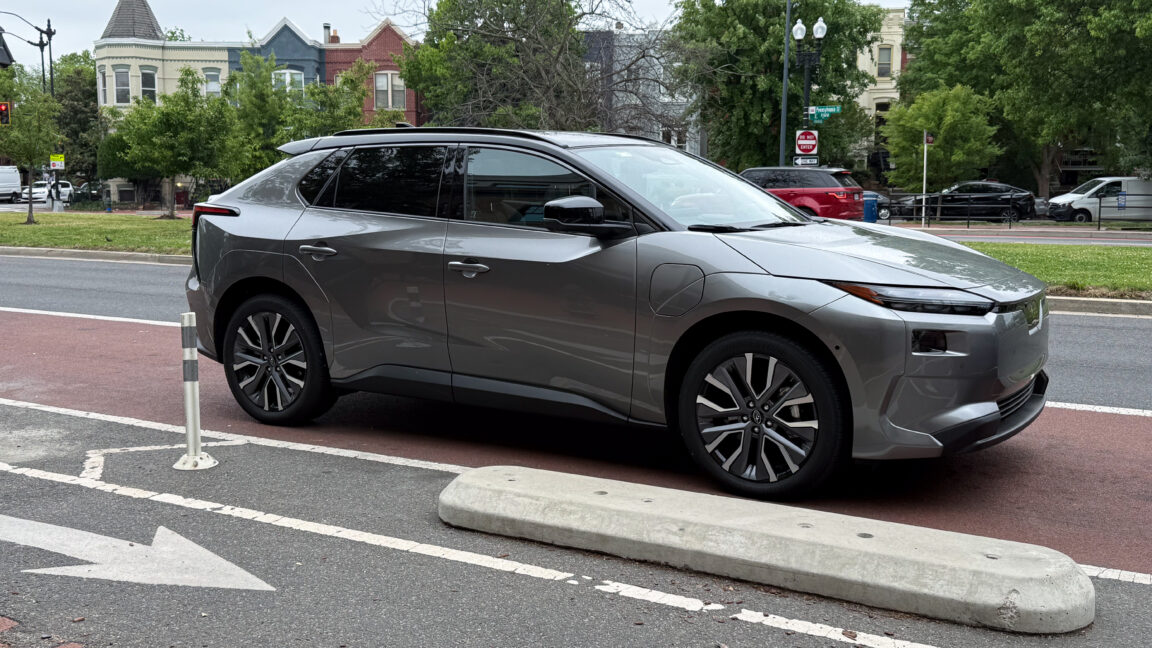
Subaru has released a midlife update for its 2026 Solterra electric SUV, introducing significant improvements to efficiency, power output, and charging infrastructure compatibility. The revised model, which remains badge-engineered on Toyota’s e-TNGA platform, addresses previous criticisms regarding range and charging speeds while maintaining its position within the brand’s expanding electric vehicle lineup alongside the Uncharted and Trailseeker.
The standard Solterra now features a battery capacity of 74.7 kWh, an increase of less than 2 kWh from the previous iteration. Despite the modest capacity gain, the EPA range estimate has risen substantially from 227 miles to 288 miles. Power output for the standard model has also increased to 233 hp, delivered through identical front and rear motors. The vehicle retains its all-wheel-drive configuration, a stance that contrasts with the front-wheel-drive options available in the smaller Uncharted model.
Subaru has also introduced a new Solterra XT variant, which doubles the power of the front motor to 223 hp, resulting in a combined output of 338 hp. This performance-oriented version offers an EPA range of 278 miles and starts at $42,895, compared to the base model’s starting price of $38,495. The XT variant can accelerate to 97 km/h in less than five seconds, providing a noticeable uplift in performance over the standard configuration.
Charging capabilities have been modernised with the inclusion of a native North American Charging Standard (NACS) port, replacing the previous CCS1 socket. DC fast-charging speeds have increased to a maximum of 150 kW, up from 100 kW, allowing for a 10 to 80 percent charge in approximately 30 minutes. The vehicle also features manual battery preconditioning to optimise fast-charging performance, although charging times may extend if the battery state of charge exceeds 50 percent.
Beneath the revised exterior, which reviewers have noted resembles an Autobot, Subaru has updated the suspension and chassis control software to improve handling on rougher terrain. Increased body stiffness and additional sound-absorbing material have been added to reduce noise, vibration, and harshness. While these refinements enhance the daily driving experience, some observers note that the vehicle’s character may differ from traditional Subaru models with their distinctive boxer engines and mechanical all-wheel drive.
