Study suggests Iron Age Scots removed brains and crafted tools from human remains
Research in the journal Antiquity details methodical brain scraping and potential bone tool use from remains dated between 50 BCE and 70 CE.
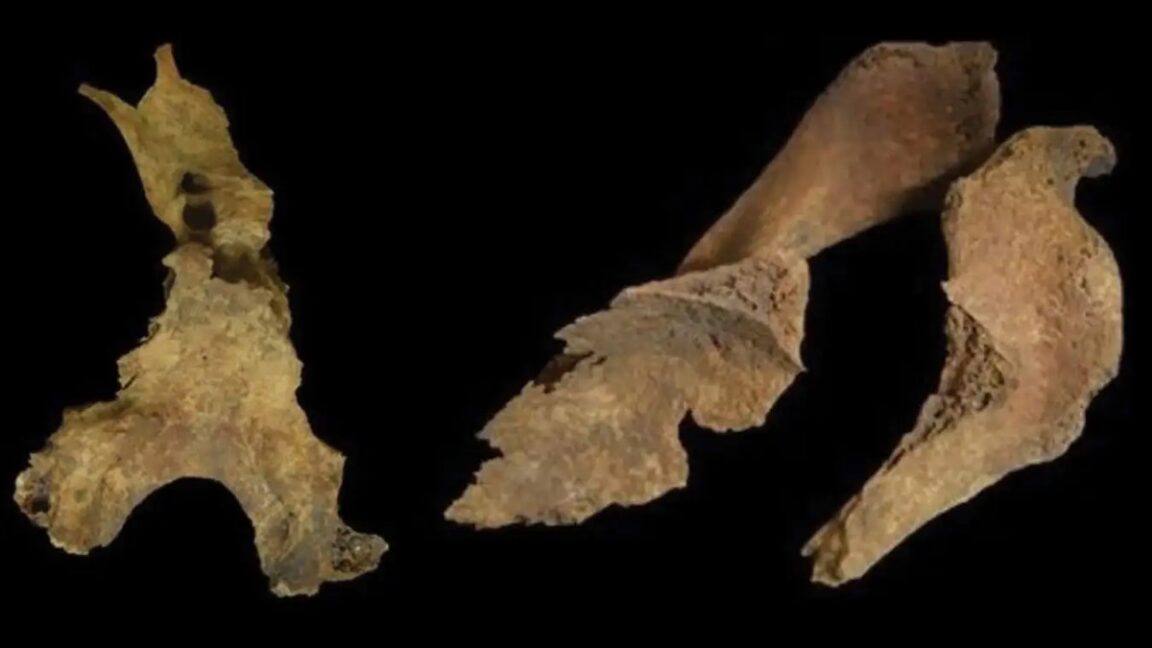
A study published in the journal Antiquity presents new evidence of complex mortuary practices in Iron Age Scotland, suggesting that individuals from a burial cairn at Loch Borralie underwent postmortem brain removal and that their bones may have been repurposed as tools. The research focuses on two individuals, an adult female and a juvenile male, whose deaths are radiocarbon dated to between 50 BCE and 70 CE. The findings, based on a fresh osteoarchaeological analysis of remains originally uncovered in 2000, challenge previous interpretations of the site and highlight the cultural significance of the dead in northern Scotland.
The female’s cranium exhibited an unusual break at the base, which authors attribute to a targeted impact rather than accidental trauma or post-depositional damage. Inside the skull, researchers identified straight, parallel striations consistent with the methodical scraping of brain matter using a sharp instrument shortly after death. This marks the first known instance of such a practice in the region, although similar postmortem bone modifications have been documented in southern France and Bulgaria. Additionally, perimortem fractures were observed on both of the woman’s scapulae.
Perhaps more controversially, the study re-evaluates marks on four of the female’s long bones, previously identified as rodent gnawing. The authors argue these marks are consistent with whittling using a sharp implement. Three of the bones were sharpened into points, while one showed signs of wear from use. Despite this modification, all four bones were returned to their correct anatomical positions within the grave, a detail that underscores the deliberate nature of the treatment.
Isotopic and ancient DNA analysis revealed that the two individuals were close biological relatives, possibly maternal second cousins. Both spent their early lives in a coastal environment, likely the east coast of Sutherland, before moving to the Loch Borralie area. The juvenile male, aged between 14.5 and 15.5 years at death, showed signs of growth disruption and vitamin C deficiency. The authors suggest these movements reflect long-term interconnectedness among maritime communities in northern Scotland, facilitating the spread of cultural ideas.
Not all experts are convinced by the interpretation of the bone marks as deliberate tool manufacture. Richard Madgwick of Cardiff University, who was not involved in the research, told New Scientist that while the marks suggest manipulation, linking them definitively to brain removal is uncertain. He noted that the long bones may have been broken and repurposed, finding it remarkable that they were subsequently buried in anatomical order. The study, however, maintains that the treatment of the woman’s bones demonstrates the compelling presence of the Iron Age dead in the world of the living.
