Street Child United Brazil project claims global title amid favela security challenges
The Street Child United Brazil project has led a team of ten youths to an undefeated victory at the Street Child World Cup in Mexico, highlighting the organisation’s role in providing structure and opportunity in one of the city’s most volatile communities.
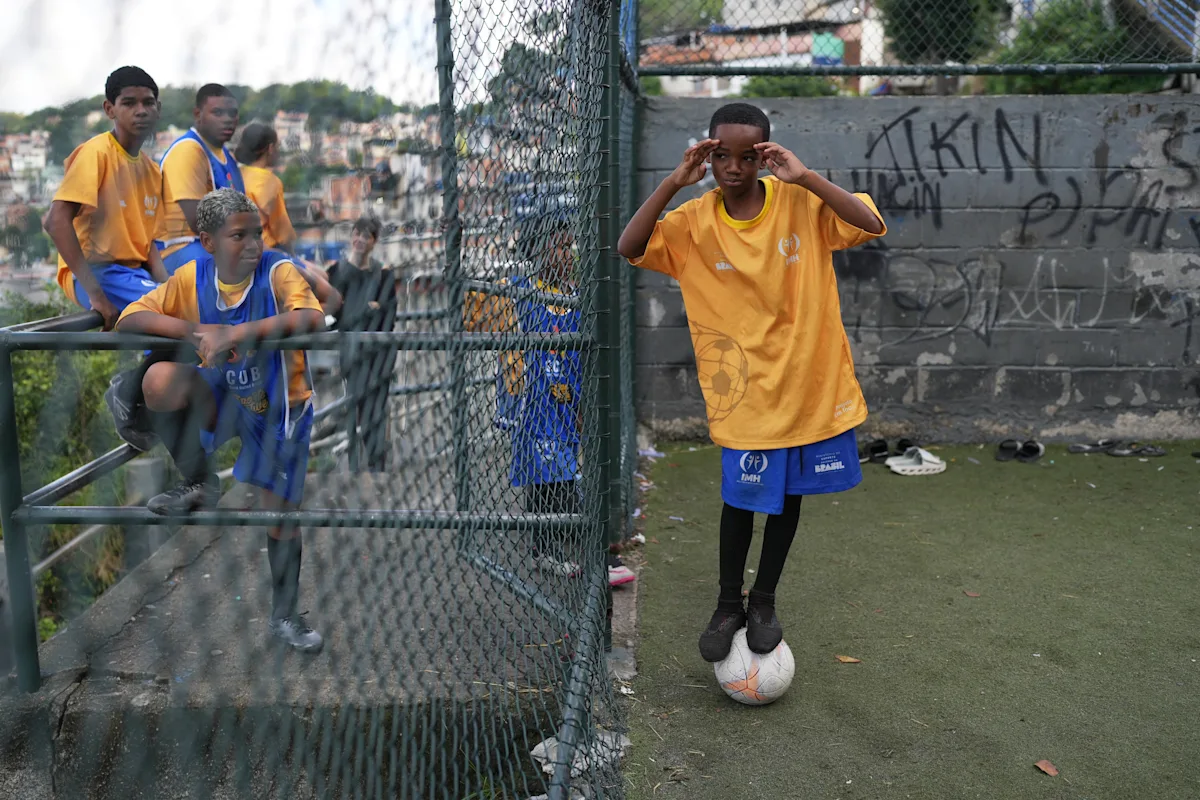
A team of ten youths from the Penha complex in Rio de Janeiro has secured victory at the Street Child World Cup in Mexico, completing the tournament with an undefeated record. The competition, organised ahead of the current FIFA World Cup, featured squads from 30 countries, all composed of young people from impoverished backgrounds. The Brazilian squad’s success underscores the operational reach of the Street Child United Brazil project, which has been active in the region since 2014.
The participants, including 18-year-old João Victor Gonçalves, represent a demographic often marginalised in national sporting narratives. The project provides year-round soccer training four days a week for boys and girls aged six and above, currently engaging approximately 100 youths. For participants like Gonçalves, who expressed hope that the Seleção would win the upcoming FIFA World Cup, the initiative offers a structured alternative to the deprivation and violence that characterise life in the Penha complex.
However, the programme operates within a volatile security environment. Rafael Gomes, a 17-year-old participant, reported that police operations in the favela have recently interrupted training sessions, forcing players to take cover during gunfire. This reflects the broader instability in the area, where more than 120 people died during a police operation last year targeting the Red Command criminal group. The Red Command, which the Trump administration recently classified as a foreign terrorist organisation, exerts control over parts of the favela and is viewed as a significant temptation for minors seeking quick financial gains.
Drica Santos, a project coordinator, emphasised the initiative’s preventive function. She stated that the project aims to divert children from drug-trafficking networks, noting that without such interventions, many lives would be lost. While acknowledging that they cannot save everyone, Santos described the prevention of recruitment into criminal groups as the organisation’s primary victory. The project’s existence is seen by community leaders as a critical stabilising force.
Carlos Cassiano da Silva, a community leader in the favela, noted that parents value the programme for keeping children occupied and out of trouble. He added that the initiative also serves to improve the community’s external image, countering the negative perceptions often associated with Penha. As the global spotlight shifts to the main FIFA World Cup, the success of the Street Child United Brazil team highlights the intersection of sport, social policy, and community safety in Rio de Janeiro’s most challenging neighbourhoods.