Starcloud secures $250 million extension to build orbital AI infrastructure
The startup has raised additional capital to expand manufacturing and secure launch capacity as SpaceX phases out its Falcon 9 rocket, valuing the company at $2.3 billion.
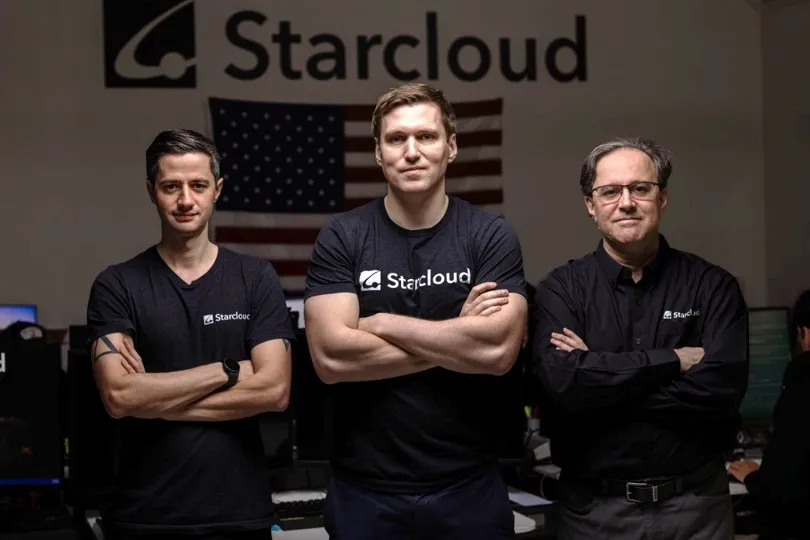
Starcloud, a startup developing satellites for artificial intelligence inference in orbit, has secured a $250 million extension to its Series A funding round. The additional capital values the company at $2.3 billion and will be used to expand its manufacturing facilities and advance the Starcloud-3 spacecraft, which is intended to launch on SpaceX’s Starship rocket.
CEO Philip Johnston stated that the company is amassing capital to secure launch capacity as the market tightens. With SpaceX’s Falcon 9 program scheduled to end in 2028, Johnston noted that securing launch capacity has become one of the company’s biggest costs. He said the company aims to get under contract with Starship as soon as possible, citing the constrained nature of the current launch market.
The funding round was led by Manhattan West Ventures and included participation from Nvidia, which invested $25 million, and Cisco. Other participants included Benchmark, EQT, Soma, NFX, 776, Cedar Capital, Goanna Capital, and Standard Capital. Johnston pointed to the Nvidia investment as a key signal of Starcloud’s advantages in the nascent space compute sector, noting that the chipmaker conducted extensive technical due diligence.
Starcloud is currently the only company operating a Nvidia H100 terrestrial data centre GPU in orbit. The company is sharing its operational data with Nvidia as the chipmaker develops its first purpose-built GPU for space, the Vera Rubin Space-1 chip. Starcloud hopes to fly this new chip into orbit sometime in late 2028, with engineers currently tracking design choices related to heat dissipation, radiation shielding, and launch ruggedisation.
In the near term, the company plans to launch two Starcloud-2 satellites on rideshare flights in 2027. These satellites will perform orbital inference tasks for customers, including US government agencies. Starcloud has also requested permission from the FCC to operate 88,000 spacecraft, a move that underscores its long-term ambitions for an orbital inference layer.
The startup is developing production lines at a 100,000 square foot facility in Woodinville, Washington, near where SpaceX and Amazon build satellites for their communications networks. Currently 25 employees strong and growing, Starcloud is positioned to compete with terrestrial data centres, relying on the potential for Starship to drive down launch costs significantly.