Spain claim historic World Cup double as controversy overshadows US-hosted tournament
Spain defeated Argentina to become the first nation to hold both men’s and women’s titles, while former US President Donald Trump’s involvement and ‘hydration breaks’ sparked global criticism.
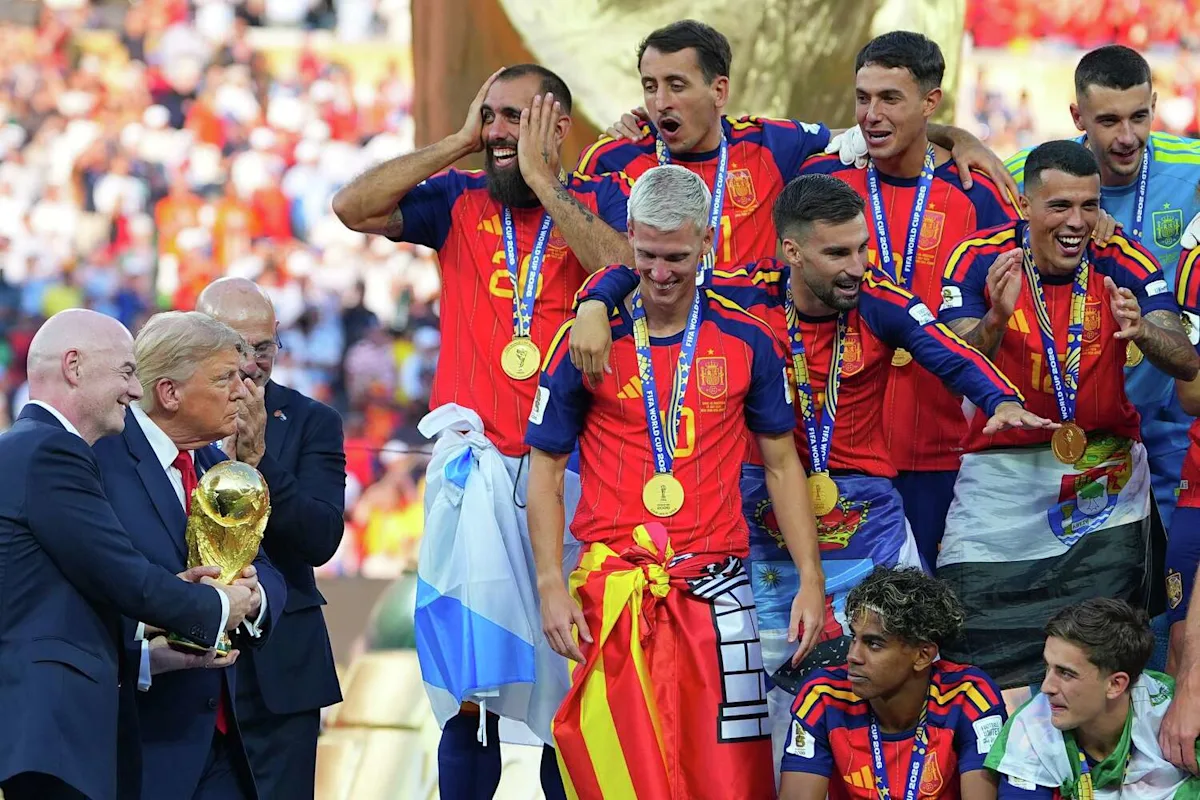
Spain has secured the 2026 FIFA World Cup title with a victory over Argentina, marking the first time in history that a single nation has held both the men’s and women’s championships simultaneously. The triumph, achieved on the pitch at MetLife Stadium in New Jersey, concluded a tournament that set new records for attendance and revenue across the United States, Canada, and Mexico. However, the sporting success was eclipsed by significant controversy surrounding political interference and the commercialisation of the event.
The final match itself was marred by poor sportsmanship from the defending champions. Following the defeat, the Argentine team broke protocol by turning their backs on the Spanish players and departing the venue without adhering to mandatory media requirements. Reports indicated that tensions ran high, with post-game scenes suggesting near-brawls instigated by Argentine players, representing an ungracious exit for the previous title holders.
Off the field, the tournament concluded with a chaotic scene involving former US President Donald Trump. Trump drew boos from the crowd and attempted to join the Spanish team’s celebration, requiring intervention from FIFA president Gianni Infantino to remove him from the stage. The incident was so contentious that Trump was subsequently photoshopped out of the official team photograph, a stark contrast to the draw ceremony seven months prior where Infantino presented Trump with a "FIFA peace prize" trophy at the Kennedy Center.
Allegations of political meddling further tarnished the event’s integrity. Trump reportedly pressured FIFA to overturn a red card issued to US striker Folarin Balogun, allowing him to play in the round of 16 match against Belgium. The decision outraged the international football community and contributed to the disappointment of the US team, who were eliminated in that round alongside co-hosts Canada and Mexico.
Criticism was also directed at the "Americanisation" of the sport, particularly regarding "hydration breaks" that interrupted the flow of play and were viewed as a mechanism for increased advertising revenue. Ticket prices for the final reached five figures, described as the most expensive in sporting history, fueling resentment among fans who felt shut out by the commercial model. Despite these issues, the expansion to 48 teams was deemed a competitive success, with new favourites like Cape Verde emerging and stars such as Erling Haaland gaining global prominence.
England secured third place with a 6-4 victory over France in Miami, with Jude Bellingham scoring the winning goal. As Spain prepares to co-host the 2030 World Cup alongside Portugal, Morocco, and three South American venues, the focus now shifts to the women’s World Cup, which begins in Brazil next June.