SpaceX to invest up to $100 billion in Louisiana spaceport
The rocket maker plans to build a self-sustaining facility near Abbeville, aiming to replicate its Texas operations on a far larger scale.
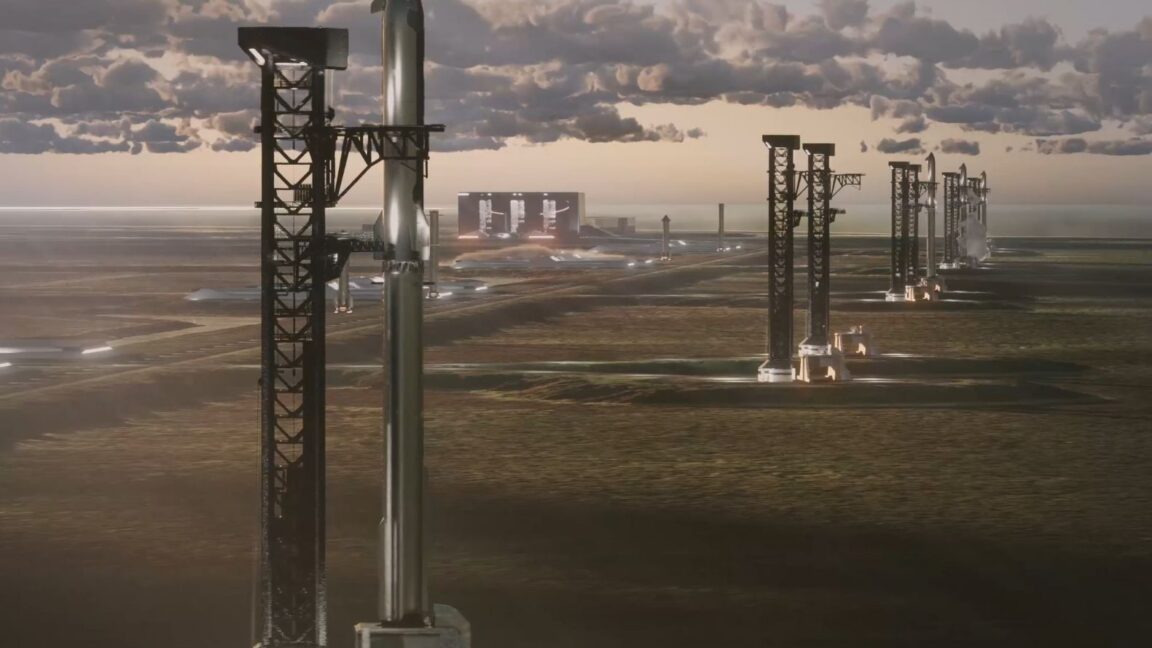
SpaceX has announced an intention to invest up to $100 billion in the development of a massive spaceport in coastal Louisiana, a move that signals a significant expansion of its launch infrastructure. The project, dubbed “Starbase Louisiana,” is designed to replicate and expand the company’s existing Starbase facility in southern Texas. Louisiana Governor Jeff Landry confirmed the commitment, noting that the investment will fund the construction of Starship factories and launch pads in the state’s coastal regions.
The site, located near Abbeville in the Pecan Island area, offers SpaceX approximately 125,000 acres of land, a stark contrast to the roughly 350 acres available at its Texas facility. Gwynne Shotwell, the company’s president and chief operating officer, described the new hub as a self-sustaining spaceport. It will feature on-site propellant production, power generation, deep-water shipping capabilities, vehicle processing facilities, and an airport.
Strategic advantages for the location include its proximity to the Intracoastal Waterway, which provides deep-water access for transporting rockets and payloads. The site is also relatively close by barge to SpaceX’s Starfactory in South Texas. Crucially, the southward-facing orientation of the Louisiana site offers direct access to polar orbits, a key requirement for SpaceX’s planned constellation of orbital data centre satellites.
The company faces environmental challenges in an area that supports diverse wildlife and is subject to coastal erosion of one to three metres per year. SpaceX intends to partner with state and federal agencies to expand Louisiana’s Coastal Master Plan, including the construction of breakwaters to slow erosion. Shotwell stated that the company would use only a small portion of the available acreage, seeking to preserve the wetlands for wildlife and recreational purposes.
Construction of the first launch facilities is scheduled to begin in 2027, with an initial launch from Louisiana targeted for 2029. The land became available through a legal settlement resolving lawsuits against ExxonMobil regarding pollution and coastal land loss. The project is expected to create at least 3,000 local jobs, with the potential to reach 10,000 as the company builds out the supporting infrastructure.
For investors and institutions, the scale of the investment highlights the capital intensity of next-generation space infrastructure. While the $100 billion figure represents an upper limit, the commitment to a self-sustaining model reduces reliance on external supply chains. The move also alleviates the land constraints currently affecting SpaceX’s operations in Texas and Florida, where it competes for range access with other private launch providers.