SpaceX Starship Flight 13 Targets Critical Reliability Fixes Ahead of Orbital Push
The 13th test flight of the Starship spacecraft and Super Heavy booster is scheduled for 16 July 2026, aiming to validate payload deployment and engine relighting capabilities following recent technical setbacks.
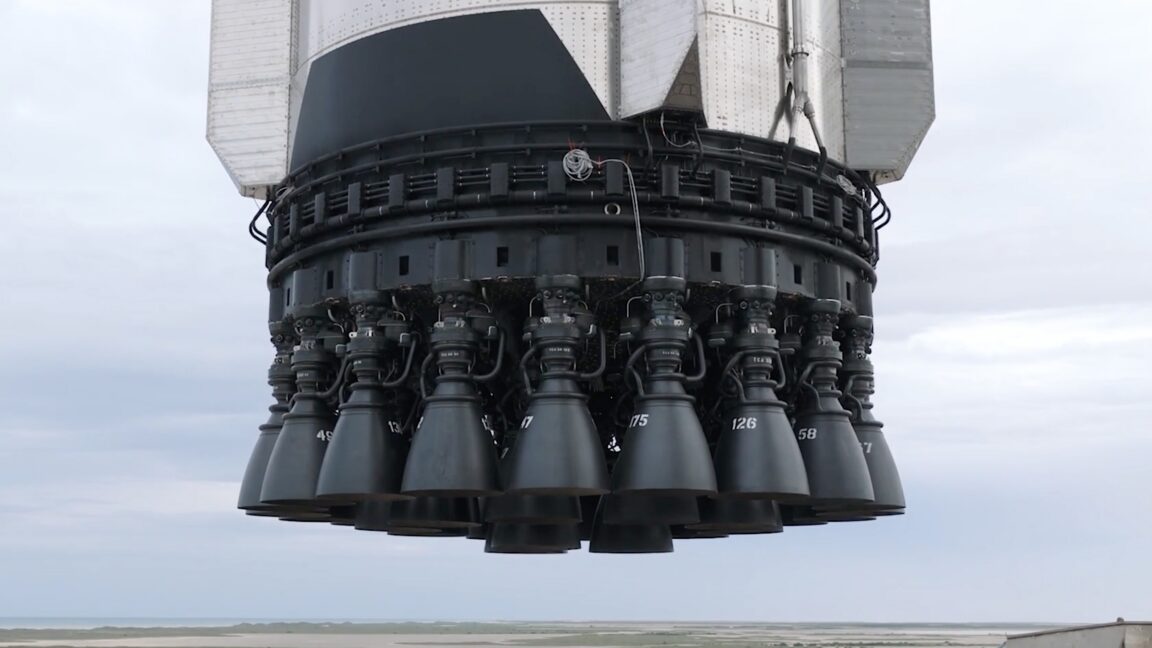
SpaceX is preparing for the 13th test flight of its Starship spacecraft and Super Heavy booster, scheduled for Thursday, 16 July 2026, at 22:45 UTC. The hour-long suborbital mission will carry 20 operational Starlink Version 3 satellites to test payload deployment, laser communication interoperability, and heat shield tile durability under higher dynamic pressure. The Starship upper stage targets a controlled splashdown northwest of Australia, while the satellites will burn up during reentry. The flight aims to resolve previous test failures involving Raptor engine relighting and Super Heavy booster stage separation.
This mission marks the second flight of SpaceX’s newest Starship Version 3 configuration. Technicians have installed 20 real Starlink V3 satellites into the ship’s deployer, replacing the simulators used in previous tests. Engineers will attempt to establish laser communication links between the Starlink V3s and other spacecraft in low-Earth orbit to validate interoperability with previous generations. Six of the Starlink V3s are equipped with cameras to scan Starship’s heat shield and transmit imagery to ground teams during nighttime reentry.
The flight includes modified heat shield tiles with "load sensing" capabilities to measure stress under higher dynamic pressure. Hardware modifications have been made to the Super Heavy booster to improve engine relight reliability and adjust engine alarms for multi-engine flight environments. These changes address specific failures from the previous launch, where a Raptor engine shut down prematurely and the Super Heavy booster lost control during stage separation due to timing variability.
SpaceX recently completed its initial public offering on the Nasdaq, raising $75 billion and valuing the company at approximately $1.77 trillion. The successful execution of this test flight is critical for the company’s roadmap, which includes achieving an orbital launch, demonstrating in-orbit refueling, and eventually supporting NASA’s Artemis program for lunar landings.
The Starlink satellites will attempt to connect with ground stations in South Africa as they pass overhead. A near-perfect test flight would position the company to move toward bona fide satellite launches and the first return of Starship to Starbase, Texas, for future reuse, provided the technical hurdles regarding engine reliability and heat shield durability are overcome.
