SpaceX stakes trillion-dollar valuation on Starship V3 return
The upcoming launch of the Starship V3 rocket follows a turbulent 2025 marked by failed ascents and booster explosions, with success vital for NASA’s Artemis programme and SpaceX’s projected $2 trillion market capitalisation.
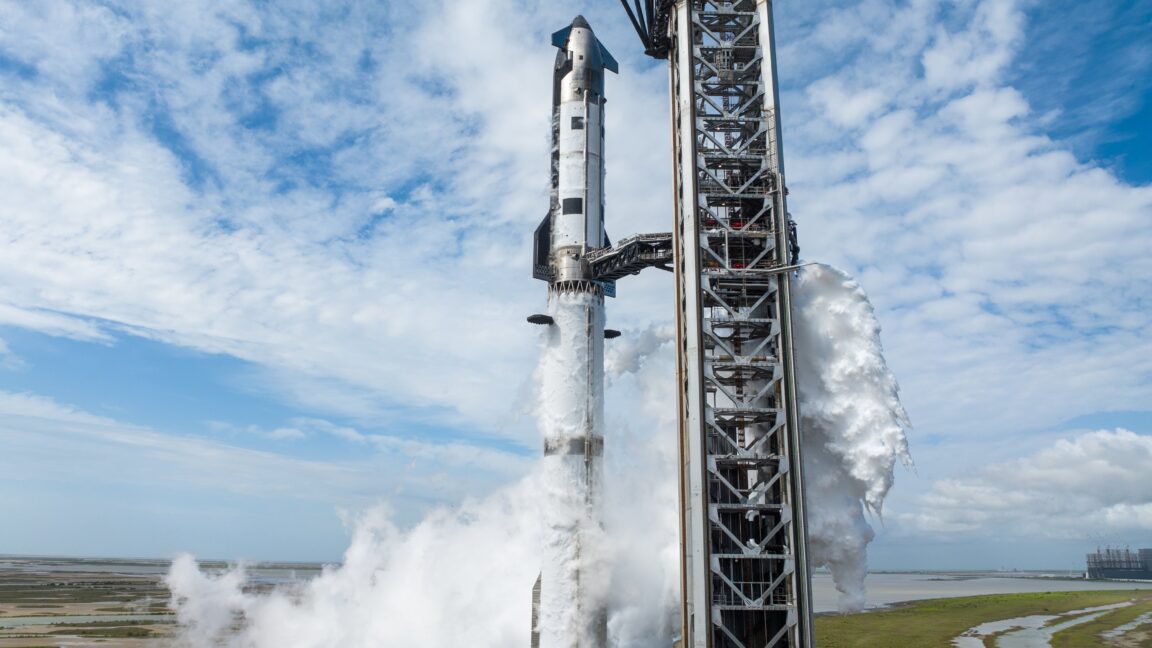
SpaceX is preparing for the test flight of its Starship V3 rocket, a mission that arrives seven months after the vehicle last launched. The launch follows a challenging development period in 2025, which included three consecutive failed ascent attempts and a booster explosion in November. The V3 iteration incorporates significant engineering improvements, including a redesigned propulsion system, lighter Raptor engines, and a new launch pad infrastructure. Success is critical for SpaceX’s broader ambitions, including the deployment of large Starlink satellites, achieving orbital refueling capabilities for NASA’s Artemis programme, and sustaining market dominance against competitors.
The company has invested approximately $15 billion in the Starship programme over the last decade, funding 11 test flights and infrastructure expansion. The company recently released a video detailing the V3 development, highlighting advances and setbacks encountered during the process. SpaceX has built a second launch tower at Starbase with more rugged ground systems to support faster fueling operations. The V3 Raptor engine has been reduced in mass to 1,525 kg (from 1,630 kg), with overall vehicle-level mass savings of nearly 1 ton per engine. The number of grid fins on the booster has been reduced from four to three, and they have been lowered to protect them during hot staging.
SpaceX retired one of its two Florida-based seagoing landing platforms to repurpose it as a transporter for Starships and Super Heavy boosters. Falcon 9 launch costs have been pared back to about $15 million internally, with a base price of $74 million for external customers. Tom Patton estimates that Starship may not become widely available for commercial purposes until 2028 or 2029.
The stakes are elevated as SpaceX transitions toward a public listing, with an impending initial public offering potentially valuing the company at between $1.5 trillion and $2 trillion. While recent deals involving wireless spectrum, orbital data centres, and a merger with xAI have generated significant financial attention, the company’s core identity remains rooted in launch capabilities. The Starship vehicle serves as the foundation for these wider aspirations, including the deployment of large Starlink satellites and the delivery of NASA’s Artemis lunar lander.
A successful V3 flight would demonstrate the vehicle’s ability to handle the complex requirements of orbital refueling and heavy payload delivery. Conversely, further delays or failures could impact the timeline for NASA’s lunar return and the commercial availability of the rocket for other space businesses. The launch team has addressed previous technical issues, including ground system aborts and pressure sensor anomalies, to prepare for this high-profile test.