SpaceX shatters Wall Street norms with $135 IPO price, targeting $75 billion raise
The company aims to allocate up to 30% of shares to retail investors and push for early index inclusion, defying traditional price-discovery conventions as it prepares for a Nasdaq debut.
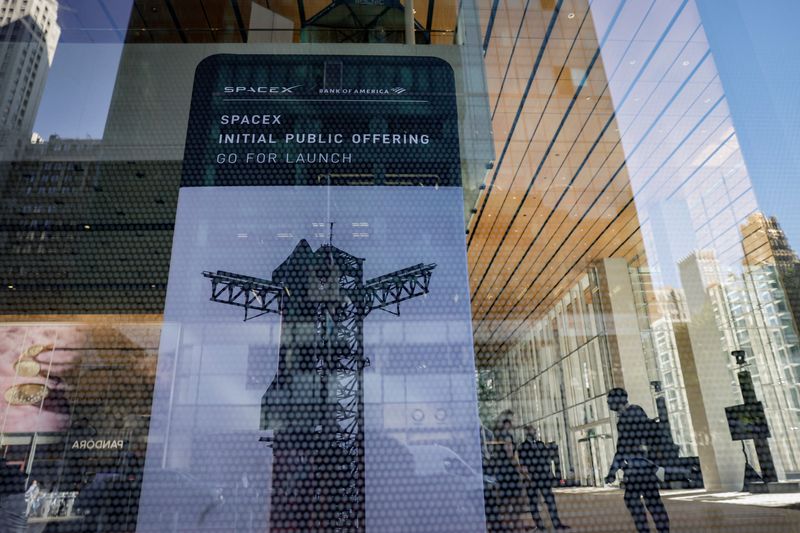
SpaceX has publicly set a $135 price for shares in its initial public offering, a move that breaks with longstanding Wall Street price-discovery conventions. The company aims to raise $75 billion, the largest sum ever for an IPO, which would value SpaceX at $1.75 trillion. The decision to publish the price a week ahead of the offering reflects Elon Musk’s determination to raise capital on his own terms. SpaceX will begin an investor roadshow on Thursday, with pricing expected on June 11 and trading to commence on the Nasdaq on June 12. The company posted a net loss of $4.94 billion in 2025, despite revenue rising 33% to $18.67 billion.
The decision to announce the price a week before the landmark offering has few precedents among major US initial public offerings. This approach underscores Musk’s standing in the financial world as an adventurer with a golden touch, even as the capital raise values the company at lofty multiples. An amended IPO filing confirms a Reuters report from earlier in the week regarding the $135 price, solidifying the company’s intent to bypass the traditional banking apparatus that typically guides price discovery.
The prospective valuation would immediately place SpaceX among the top 10 most valuable US-listed firms. However, the company lacks a clear public market benchmark due to the paucity of public space companies and its diverse interests in aerospace, telecom, and defence. Tim Hatt, head of research and consulting at GSMA Intelligence, noted that while a revenue multiple of over 90 times is high by any standard, SpaceX is not traditional in any way and there are no true public comparables.
Musk has rewritten the IPO playbook in several other ways, including a push for retail investors to receive a larger role in allocations. The company is considering allocating as much as 30% of the offering to individual investors, an unusually large retail tranche aimed at tapping into Musk’s following and broadening ownership. Major international banks, including Mizuho, Deutsche Bank, UBS, and Barclays, have been urged to focus on lining up wealthy individual buyers in their home countries, shifting focus away from the large asset managers and hedge funds that typically dominate such deals.
Despite the excitement, some investors have expressed caution regarding the valuation. During testing-the-waters meetings, SpaceX indicated a target of about $1.75 trillion, while some investors sought a valuation of $1.5 trillion or less. One institutional investor claimed that IPO allotments are a "David Solomon level decision," referring to Goldman Sachs CEO, a claim Goldman Sachs has denied. As the roadshow begins, the market awaits to see if the unconventional pricing and allocation strategy will hold up once trading commences.