SpaceX IPO Valued at $1.8 Trillion as AI Potential Overshadows Space Ambitions
Shares close at $160.95 on Nasdaq debut, valuing founder Elon Musk’s stake at over $700 billion while shifting investor focus to orbital data centres.
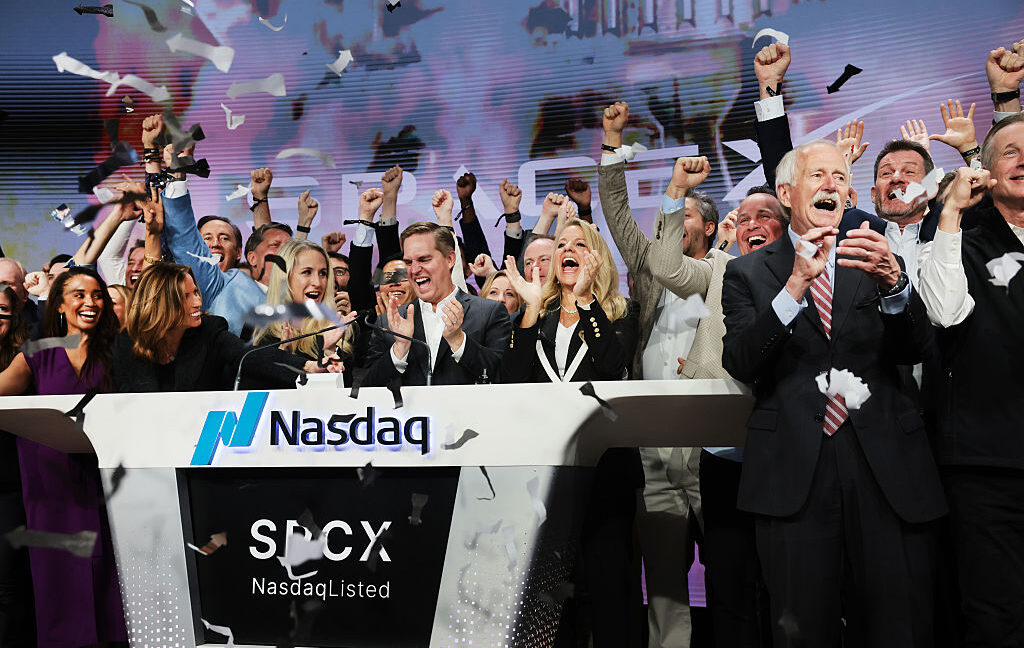
Space Exploration Technologies, widely known as SpaceX, commenced trading on the Nasdaq exchange on Friday, 11 June 2026, following a record-breaking initial public offering that raised approximately $75 billion. The company was valued at nearly $1.8 trillion, with shares closing at $160.95 after rising more than 19 percent from the initial $135 offering price. Founder Elon Musk’s personal stake is now valued at over $700 billion, making him the world’s first paper trillionaire, while thousands of current and former employees became millionaires through stock options.
The valuation reflects a significant strategic shift in how the market perceives the company’s future. According to the S-1 document filed in May, space-enabled solutions and the Starlink constellation comprise less than 7 percent of the company’s total addressable market. Instead, the majority of SpaceX’s projected value lies in providing artificial intelligence services, primarily from space, for enterprise applications. This pivot places the company in direct competition with terrestrial tech giants, leveraging its orbital infrastructure to serve the growing demand for AI compute power.
This commercial focus introduces complex dynamics for NASA, which historically served as SpaceX’s most important backer. While the $2.9 billion Human Landing System contract signed in 2021 for the Artemis programme remains critical, it is now regularly dwarfed by AI compute contracts signed with companies such as Anthropic and Google, which are worth tens of billions of dollars. Revenues from Starlink have already begun to significantly outstrip NASA contracts, a trend expected to accelerate as the company prioritises profitable ventures to satisfy its new shareholder base.
Investors are expected to prioritise financial returns through the development of orbital data centres, potentially creating tension with NASA’s need for SpaceX to deliver on Artemis milestones. The massive Starship rocket, close to operational status with the ability to lift approximately 100 metric tons into low-Earth orbit, will be central to this conflict. Questions remain regarding whether SpaceX will prioritise launches for commercial AI satellites and Starlink expansion or dedicate resources to the tanker flights and lander tests required for NASA’s lunar campaign.
The IPO coincided with modest gains in US equity markets and a drop in oil prices, partly attributed to hopes for an interim peace deal between the United States and Iran. As SpaceX transitions from a privately held entity to a publicly traded giant, it will be subject to significant public disclosures. While Musk retains complete autonomy through ownership and voting rights, the price of the company’s stock will now be the primary metric by which its performance is judged, forcing a balance between space exploration ambitions and the immediate demands of the capital markets.
