SpaceX files for IPO revealing AI losses and Musk's control
The aerospace giant’s prospectus highlights a stark divergence between profitable Starlink operations and heavy spending on artificial intelligence, while cementing Elon Musk’s voting dominance ahead of a potential June listing.
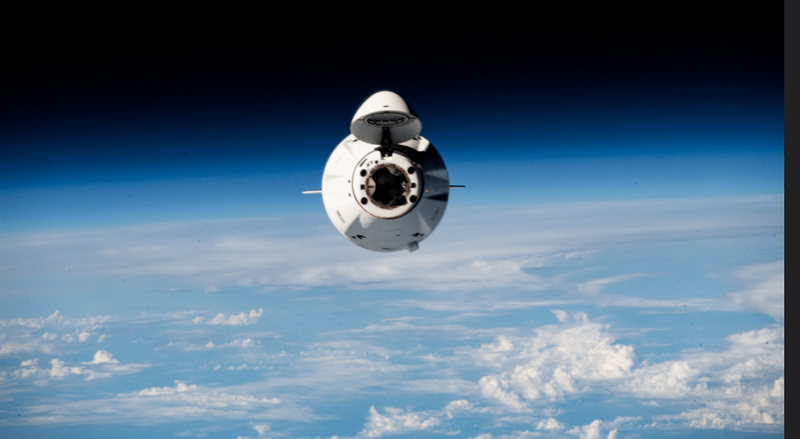
SpaceX has released its initial public offering filing, providing investors with a detailed view of the company’s financial landscape and governance structure ahead of a potential listing on Nasdaq and Nasdaq Texas. The prospectus reveals that while the Starlink connectivity segment generated an operating profit of $1.19 billion in the first quarter, the wider company reported a total operating loss of $1.94 billion on revenue of $4.69 billion.
A significant driver of these losses is the artificial intelligence division, which recorded a $2.47 billion loss on $818 million in revenue. This deficit is largely attributed to the February acquisition of xAI, which accounted for 76 per cent of SpaceX’s $10.1 billion in capital expenditure during the quarter. The filing notes that the deal provided expanded AI capabilities but introduced substantial costs and fresh losses to the balance sheet.
Elon Musk will retain 85.1 per cent of the combined voting power through a dual-class share structure. Under this arrangement, Class B shares carry 10 votes each, while Class A shares sold to public investors carry a single vote. Governance provisions in the filing limit shareholder influence, including restrictions on legal claims and protections preventing Musk’s removal except by his own authority.
The company aims to begin its public market debut as early as June 12, with a roadshow starting June 4 and a potential share sale on June 11. A successful listing could value the company at approximately $1.75 trillion, surpassing the record valuation achieved by Saudi Aramco during its 2019 IPO. Goldman Sachs, Morgan Stanley, Bank of America, Citigroup, and J.P. Morgan are serving as lead underwriters for the transaction.
SpaceX’s strategy extends beyond its core rocket and satellite operations, targeting future opportunities such as space-based AI data centres. The filing estimates these emerging markets could eventually represent a $28.5 trillion opportunity. The company has also disclosed major commercial agreements, including a deal for Anthropic to pay $1.25 billion per month through May 2029 for computing capacity at its data centre facilities in Memphis, Tennessee.