SpaceX Falcon Heavy returns to flight as Russia debuts Soyuz-5 rocket
The US firm deployed a ViaSat satellite from Florida, while Roscosmos conducted a suborbital test of a new vehicle designed to replace the Zenit rocket with fully domestic hardware.
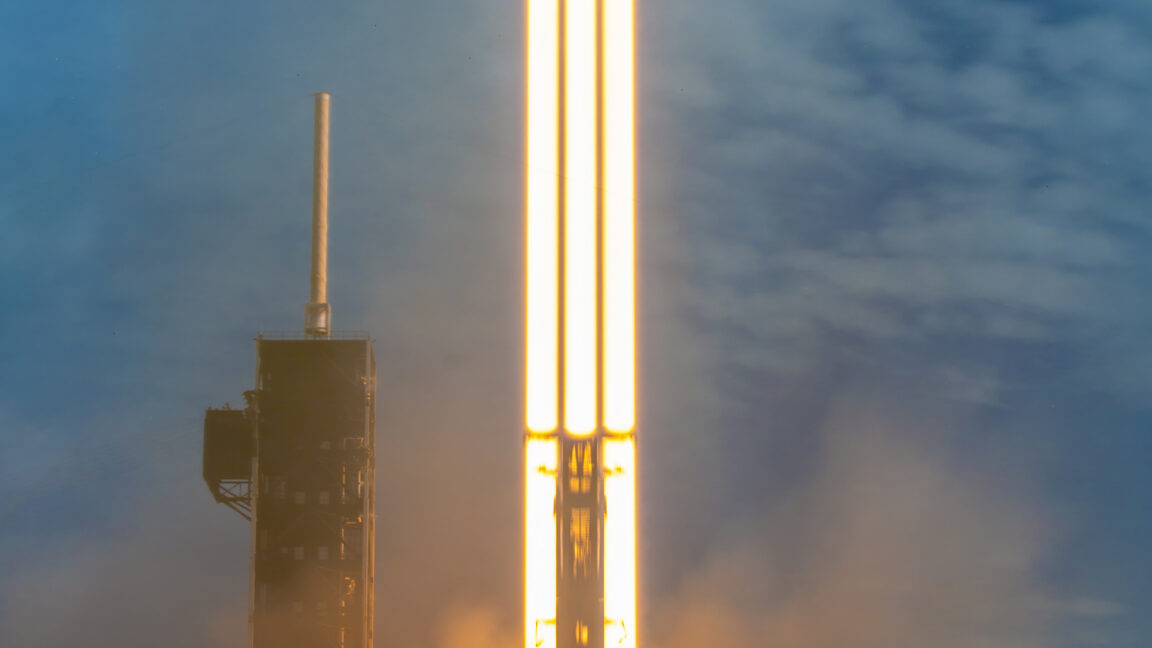
SpaceX successfully launched a Falcon Heavy rocket from Cape Canaveral Space Force Station in Florida on Wednesday, deploying a ViaSat-3 Internet satellite into orbit. This mission marks the vehicle's first flight since October 2024, ending a period of inactivity that followed a previous launch. Both side boosters achieved on-target landings on separate pads at the space station after boosting the payload out of the dense lower atmosphere.
The launch was part of a broader effort to complete a globe-spanning fleet of high-speed broadband relay stations. Despite the long gap between flights, SpaceX maintains a healthy backlog of missions, with at least a dozen more Falcon Heavy flights scheduled through the end of the decade. The next confirmed launch is set to deploy NASA's Nancy Grace Roman Space Telescope in September.
Simultaneously, Russia conducted the maiden flight of its new Soyuz-5 rocket from the Baikonur Cosmodrome in Kazakhstan. The launch was a suborbital test flight carrying a mockup payload, which followed the planned trajectory before reentering over the Pacific Ocean into a previously closed shipping and aviation zone. Roscosmos officials confirmed via Telegram that the first and second stages performed as planned.
The Soyuz-5 represents a significant shift in Russian space capabilities, serving as a domestic replacement for the medium-class Zenit rocket. The Zenit, which last flew in 2017, relied on Ukrainian-manufactured tanks following the 2014 annexation of Crimea. In contrast, the Soyuz-5 utilises fully Russian-built hardware, including tanks and structures, while retaining the same RD-171 engine type used on the Zenit.
Developed since 2017, the Soyuz-5 slots in performance between Russia's smaller legacy Soyuz-2 rocket and the heavy-lift Angara-A5. This new configuration ensures that major components are built within Russia's borders, removing the dependency on foreign manufacturing that previously defined the Zenit program.
The week also saw other notable space activities, including two Atlas V launches and an Ariane 6 launch delivering Amazon Leo satellites. Additionally, Virgin Galactic completed the structural assembly of its new Delta-class spaceship, moving the vehicle to a facility in Arizona to begin ground tests in preparation for resuming commercial suborbital flights later this year.
