SpaceX delays Starship V3 debut after hydraulic fault grounds launch
The 12th full-scale test of the redesigned rocket, scheduled to debut from a new launch pad, is set for a potential retry on Friday evening.
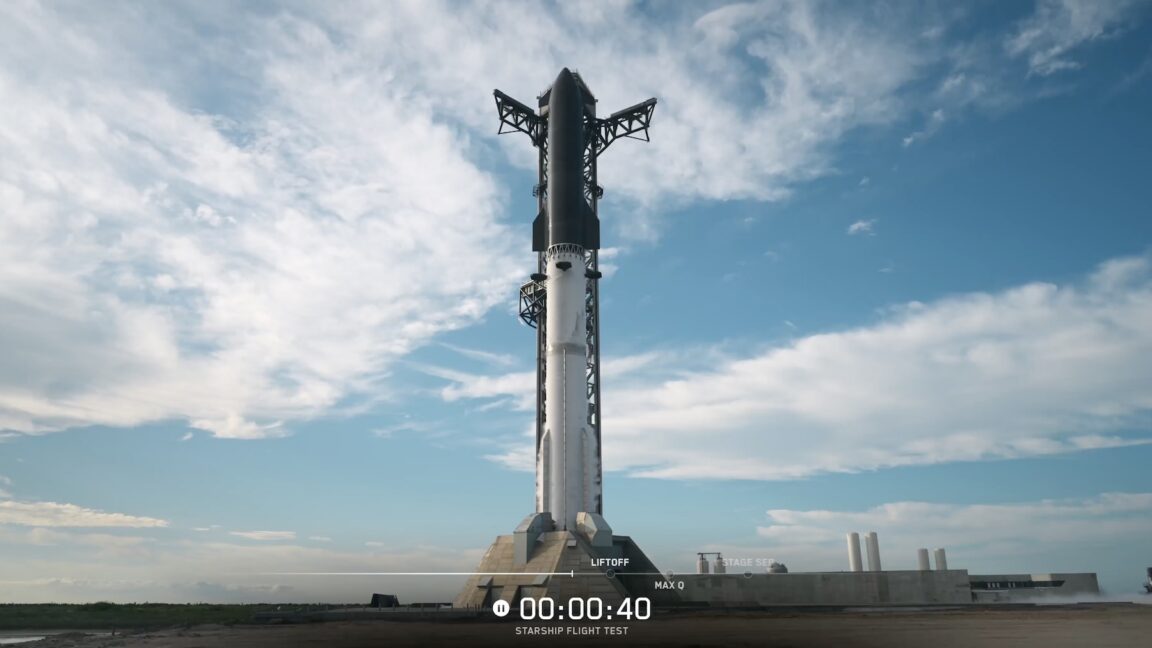
SpaceX has scrubbed the initial launch attempt of its Starship Version 3 rocket on Thursday, halting the countdown 40 seconds before scheduled liftoff due to a ground system fault. The issue originated from a hydraulic pin that failed to retract on an umbilical arm connecting the launch tower to the vehicle, a critical component for separation. The fault triggered five separate countdown holds before the team called off the attempt.
Dan Huot, a SpaceX official hosting the company’s live broadcast, confirmed that the vehicle was fully loaded with propellants prior to the scrub. The launch team had successfully pumped more than 11 million pounds of methane and liquid oxygen into the rocket in under 40 minutes, demonstrating a faster loading procedure than previous iterations. However, the computer controlling the launch sequence repeatedly paused the clock as engineers worked to resolve the mechanical issue.
Elon Musk, SpaceX’s founder and chief executive officer, stated that engineers may attempt another launch on Friday evening if the problem is resolved. The next potential launch window opens at 5:30 pm CDT (22:30 UTC). Musk noted on X that if the hydraulic pin can be fixed overnight, a second attempt would proceed, adding that the company maintains a large pipeline of V3 ships and boosters in its factory to ensure rapid recovery from setbacks.
This flight, designated as the 12th full-scale test, marks the first liftoff from a brand new launch pad at Starbase, Texas. It will debut the redesigned Starship Version 3, which features 39 Raptor engines, a redesigned propulsion system, three larger grid fins, and a reusable hot staging ring. The mission aims to demonstrate these new architectural elements in flight, incorporating learnings from years of development to enable full and rapid reuse.
During the flight, the rocket will release 20 mock-ups of next-generation Starlink satellites and two deployable Starlinks equipped with cameras. The upper stage is targeted for a splashdown northwest of Australia approximately 48 minutes after liftoff. While the primary goal is to test the hardware, the launch carries significant weight for SpaceX’s broader ambitions, including its upcoming initial public offering and contracts with NASA for lunar missions.
