Solar Car Challenge marks 30th anniversary with new cruiser division
The annual Solar Car Challenge celebrates three decades of STEM education with a new category focused on practical passenger transport, as students compete in a five-day trek from Fort Worth to Fort Stockton.
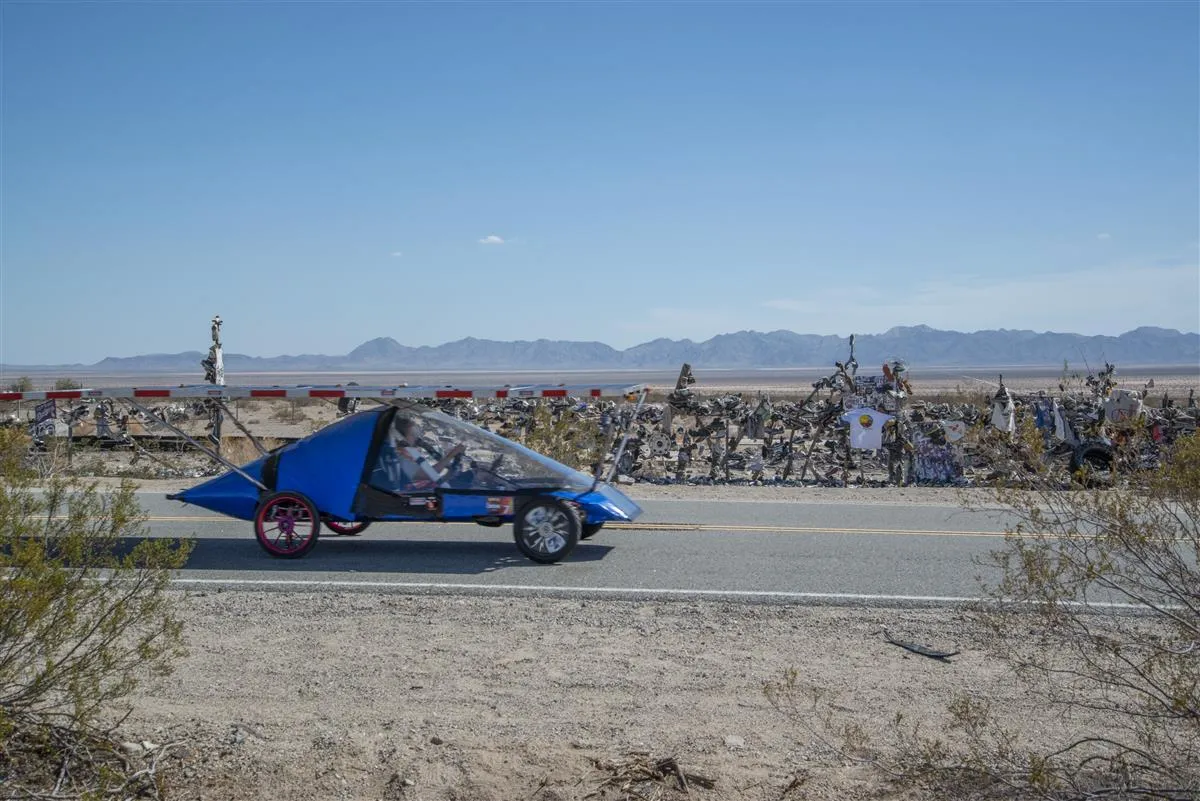
The annual Solar Car Challenge is marking its 30th anniversary with a 630-mile cross-country race across Texas, beginning on July 19. Dozens of high school student teams will compete in a five-day trek from Fort Worth to Fort Stockton, navigating through Palestine, Round Rock, Fredericksburg, and San Angelo. The event, which alternates between on-track and cross-country formats, requires participants to design and build their own vehicles using off-the-shelf parts and 3D printed materials.
This year’s competition introduces a new cruiser division, a category designed to address long-standing questions about the practicality of solar-powered transport. Teams in this division must construct four-seater vehicles with solar arrays integrated directly into the bodywork, featuring four doors and a trunk. The format aims to demonstrate that solar-assisted passenger cars can resemble real automobiles rather than the flat, highly aerodynamic prototypes typical of previous years.
Founded in 1993 by Dr Lehman Marks, the Solar Car Challenge was established to address disengagement in traditional STEM education. Marks, a Texas educator, observed that students were uninspired by textbook learning and sought to spark their interest through hands-on engineering. The first national competition was held in 1995, after Marks determined that high school teams lacked the resources to compete fairly against university teams.
The program has since engaged over 85,000 students across 39 US states and multiple international countries, including Canada, Mexico, Costa Rica, Spain, and Singapore. There are currently more than 260 active high school solar projects participating in the initiative. The event focuses on workforce development, teaching students skills in project management, budgeting, fundraising, and engineering, rather than commercial vehicle viability.
Blake Wood, a 17-year-old captain from the Old Rip Racing team comprising students from three different schools, described the year-long planning process that began with paper sketches and progressed to computer-aided design. While battery-electric vehicles have become mainstream, solar cars remain largely experimental, with some startups pivoting or failing. However, Wood and Marks remain optimistic that educational competitions will continue to develop the expertise needed for future commercial solar transportation.
