Skyroot Aerospace achieves historic orbital debut with Vikram-1 launch
The successful launch of the Vikram-1 rocket marks a significant milestone for the nation’s commercial space sector, validating Skyroot’s $1.1 billion valuation and accelerating government targets for increased launch cadence.
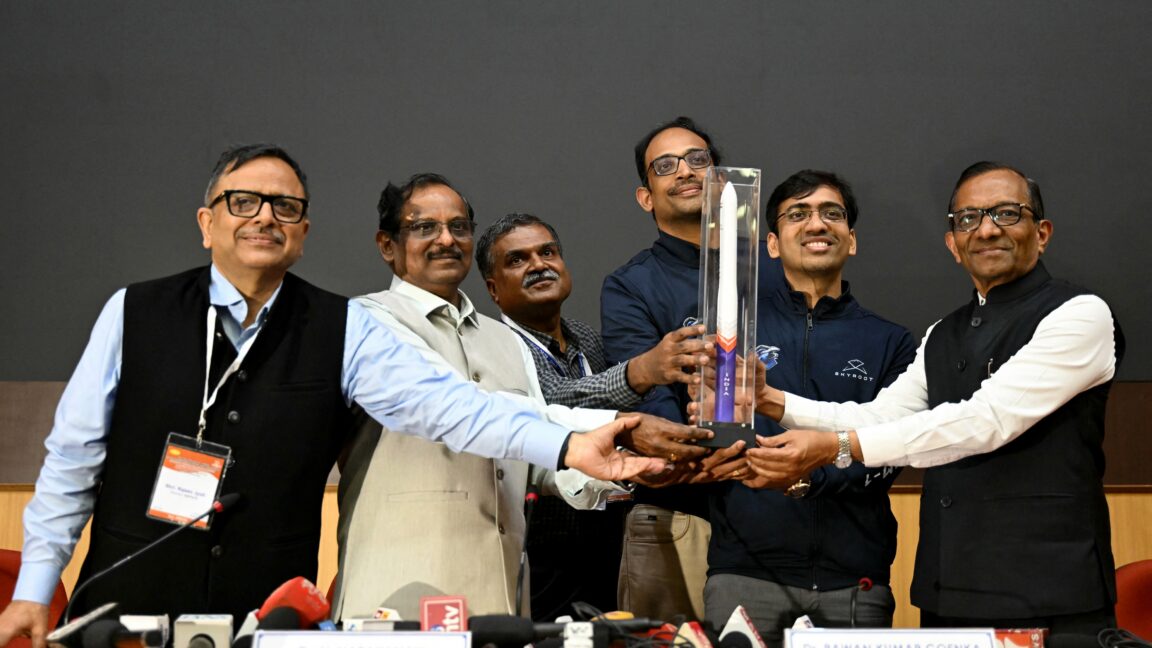
Skyroot Aerospace has successfully placed its Vikram-1 rocket into orbit during its debut flight, marking the first time a privately-developed Indian rocket has reached space. The solid-fuelled vehicle lifted off from Sriharikota Island at 06:35 UTC on Saturday, achieving a 280-mile-high orbit at an inclination of 60 degrees. The mission exceeded its primary objectives, which were initially limited to clearing the launch tower, and was confirmed by US military tracking data.
The launch followed a delay of more than half an hour to resolve a last-minute technical issue. Once the countdown resumed, the rocket’s three solid-fuelled motors fired in succession before a small liquid-fuelled fourth stage, equipped with a 3D-printed engine, accelerated the payload to orbital velocity. While live footage showed the spent third stage remaining near the fourth stage during a brief coast phase, the separation did not impact the mission’s success or the deployment of payloads.
Pawan Kumar Chandana, Skyroot’s co-founder and chief executive officer, described the achievement as a defining moment for the company and the broader industry. Chandana, a former engineer at the Indian Space Research Organisation (ISRO), noted that while the first flights of new orbital rockets often face setbacks, his team had optimised the design for speed and cost efficiency. The company, which was founded in 2018, has raised approximately $160 million in capital, bringing its valuation to $1.1 billion with a workforce of over 1,000 employees based in Hyderabad.
The Indian government has played a supportive role in the venture’s development. The government agency IN-SPACe, established in 2020 to promote commercial space activities, noted that the mission’s success far surpassed the initial goal of merely clearing the launch tower. ISRO provided handholding and support, allowing Skyroot access to solid rocket motor casting facilities and one of its active launch pads at Sriharikota. Prime Minister Narendra Modi congratulated the team, stating that the growing participation of the private sector is opening new frontiers and accelerating innovation.
Skyroot’s roadmap includes the development of the Vikram-1U, which will feature strap-on boosters for heavier payloads, and the Vikram-2, which will introduce a cryogenic upper stage. The company aims to increase India’s annual launch total from approximately five to 50 before the end of the decade, a target set by the government to supercharge the space industry. A second Vikram-1 launch could occur before the end of the year as the company builds on the lessons learned from this successful maiden flight.
