Skyports launches one-year drone delivery pilot across New York City East River
Daily flights between Manhattan and Brooklyn authorised by the Port Authority and NYC Economic Development Corporation; noise and speed to be measured against ground transport
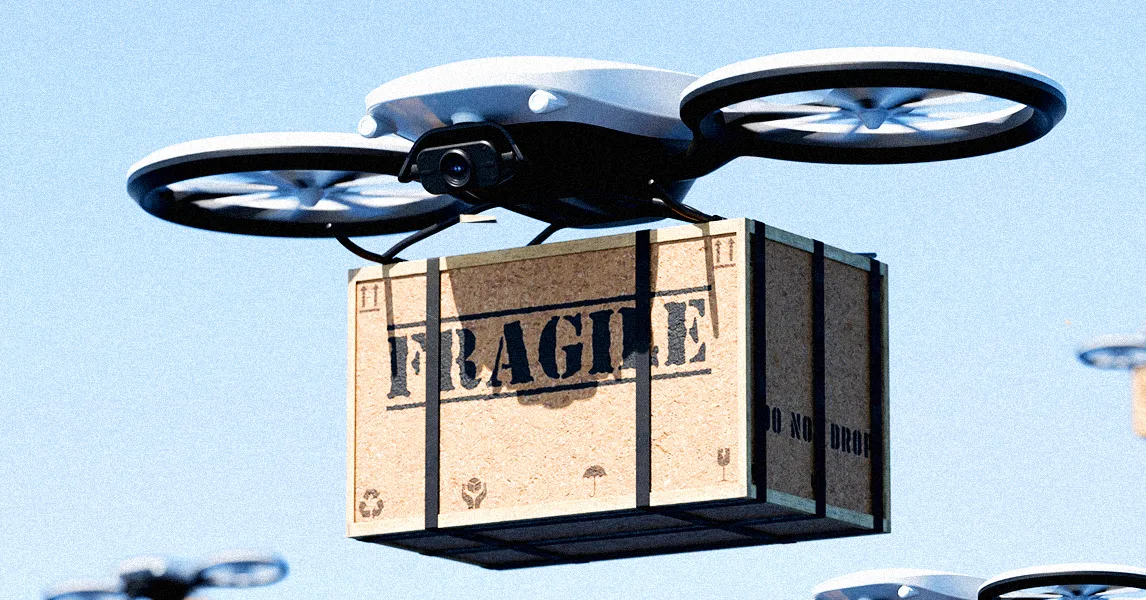
Skyports, a British drone manufacturer, has commenced a one-year pilot programme operating delivery drones across New York City's East River. The operation, which began in early May, transports light cargo between the tip of Manhattan and a pier in Brooklyn on a daily weekday basis. The trial is being conducted for a New York City healthcare system, though the specific name has been withheld for contractual reasons.
The initiative is authorised by the Port Authority of New York and New Jersey and the New York City Economic Development Corporation. The primary objective is to assess the viability of urban drone delivery within a dense airspace, specifically evaluating whether regular flight frequencies provide true value to the healthcare client. Officials aim to determine if the deliveries are faster and more cost-effective than current ground carriers while maintaining safety standards.
Currently, the cargo consists of light paper, but the scope may expand to include non-hazardous, non-biological items such as light pharmaceuticals once the system proves reliable. Each flight is supervised by a certified drone pilot and follows a fixed route designed to keep the aircraft away from residential buildings. The project requires weekly permits from the New York Police Department and involved prior consultations with three local community boards before launch.
Noise levels for Skyports' drones are estimated between 60 and 100 decibels, a volume comparable to a lawnmower. To manage public concern, a dedicated 311 web page has been established for residents to submit complaints. The Port Authority emphasises that while the test drones are flying in the city, this does not grant permission for hobbyist residents to operate their own aircraft in the same airspace.
Globally, drone delivery remains largely in an experimental phase, with existing projects often focusing on rural or suburban areas where road networks are less dense. In the United States, companies such as Alphabet's Wing and Amazon's Prime Air are expanding services in suburban regions around Houston, Austin, and Dallas. This New York trial seeks to answer whether the technology can successfully adapt to the unique challenges of a major metropolis with packed airspace and multiple international airports.
The Port Authority notes that rules currently being finalised by the Federal Aviation Administration could reduce permit times for professional drone services operating beyond visual sight lines. However, the agency insists that the success of this year's experiment will inform future regulations and operational understanding of how the first corridor shapes up in a hectic urban environment.
