Skydweller Aero’s Solar Drone Ends Record Flight in Controlled Sea Ditching
The modified Solar Impulse 2 aircraft, which broke the solar-powered flight record, was lost to severe weather during US Southern Command exercises.
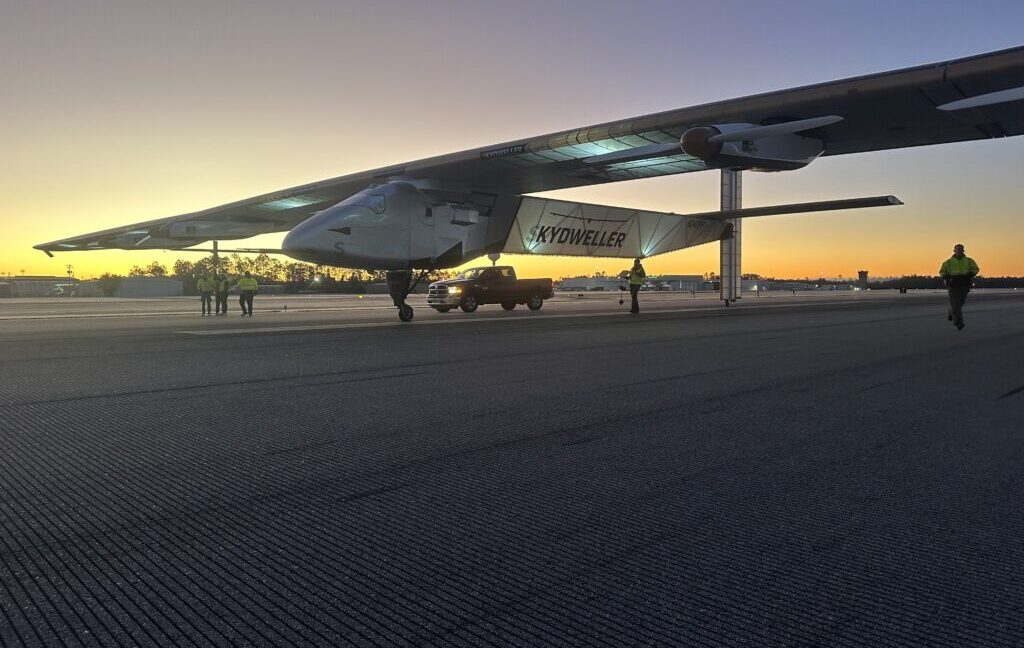
A solar-powered drone operated by Skydweller Aero has been lost at sea following an eight-day, 14-minute flight that set a new endurance record for both unmanned and crewed aircraft. The aircraft, a modified version of the historic Solar Impulse 2, performed a controlled ditching on May 4 after encountering severe weather conditions south of Cuba and north of the Cayman Islands. The loss marks the end of the operational life of the pioneering carbon-fibre aircraft, which featured a 72-metre wingspan comparable to a Boeing 747.
The drone departed from Stennis International Airport in Mississippi on April 26 to participate in the US Navy’s annual Fleet Experimentation (FLEX) exercises near Key West, Florida. During the maritime patrol scenarios, the aircraft utilised radar, visual, and thermal imaging to observe targets while acting as a communications hub for Navy assets. The exercise also demonstrated a sophisticated kill chain involving commercial drones, crewed helicopters, and the littoral combat ship USS Wichita, resulting in the destruction of several captured drug boats in simulated engagements.
Following the conclusion of the formal naval exercises on April 30, the drone continued operations within the US Southern Command area of responsibility, flying between Cuba and Mexico’s Yucatan Peninsula. Skydweller Aero reported that all aircraft systems remained nominal throughout the mission. However, the company stated that a lack of energy reserves to cope with extreme vertical air mass variability, which exceeded typical climb and descent rates by more than ten times, ultimately forced the controlled water landing.
The aircraft sank due to its non-buoyant composite structure, preventing recovery. This outcome disrupts an original agreement for the Swiss Museum of Transport in Lucerne to display the historic aircraft, which previously achieved the first solar-powered circumnavigation of the globe between 2015 and 2016. Skydweller Aero confirmed it has no immediate replacement prototypes ready, though the company plans to implement upgrades using existing technology to enhance future durability against extreme weather.
The incident occurs against a backdrop of increased military investment in unmanned systems, with the Pentagon proposing at least $54 billion in funding for drone warfare platforms. While the Skydweller drone validated the military utility of persistent, medium-altitude solar aircraft, its loss highlights the technical challenges of sustaining long-duration flights in volatile maritime environments. The aircraft’s legacy as a technological pioneer remains, even as its physical presence is lost to the sea.