Silicon Valley on Red Alert as Chinese Open-Weight Models Challenge US Dominance
Analysts warn that Beijing’s strategy of releasing capable open-weight AI could shift the industry’s center of gravity, forcing American giants to rethink their proprietary models.
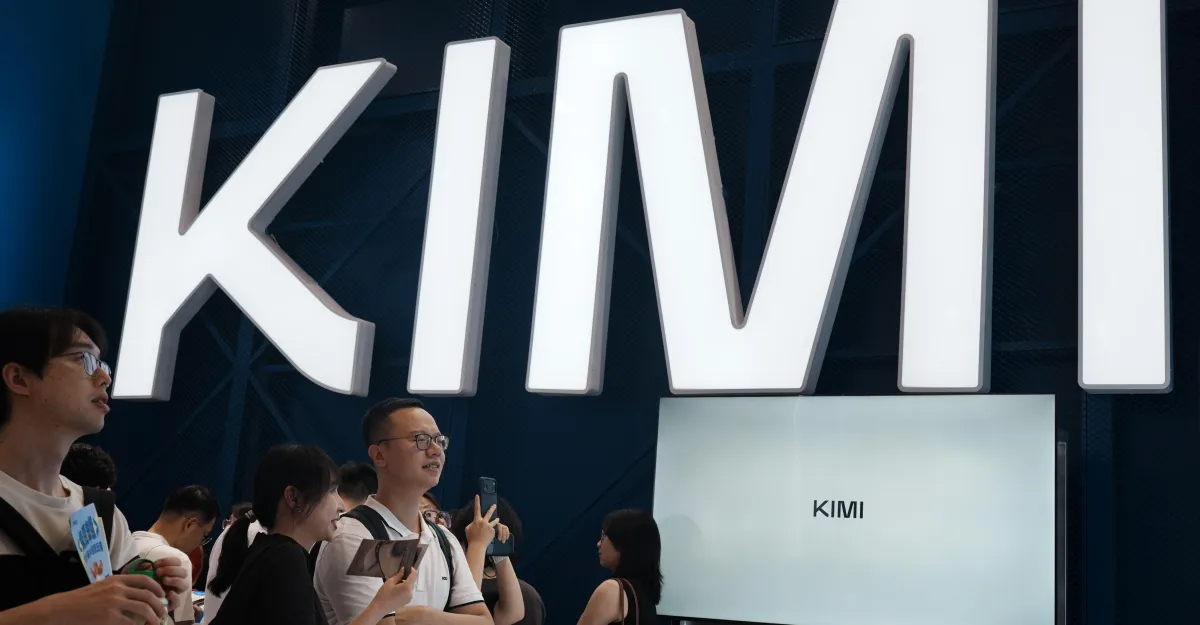
Silicon Valley has been placed on red alert following the arrival of Kimi K3, an artificial intelligence model from Chinese laboratory Moonshot AI. The system is alleged to outperform leading US competitors at a fraction of the cost, prompting a strategic reassessment among American tech giants including OpenAI, Google, and Anthropic. Unlike proprietary systems that lock away their most valuable components, Moonshot has released the model’s weights for free, a move designed to establish Chinese AI as an industry standard by offering developers greater control and lower operational expenses.
Open-weight models provide developers with the numerical parameters learned during training, allowing them to inspect functionality, run systems locally, and build custom products without relying on a single provider. While these models are not fully open source—keeping training data, code, and architecture private—they offer sufficient flexibility for companies to monetise hosted access, cloud infrastructure, and support services. This approach allows providers to capture value elsewhere in the stack while encouraging widespread adoption of their technology as a de facto standard.
The competitive pressure has triggered a swift political response within the US technology sector. A coalition of 25 major firms, including IBM, Microsoft, Meta, Nvidia, Perplexity, and Palantir, released an open letter urging policymakers to avoid premature restrictions on open-weight AI. The group argued that such models are essential to maintaining American leadership and preventing the concentration of AI power in the hands of a few entities. Notably, several of the largest AI labs, including Google and OpenAI, were absent from the initial signatories, while Anthropic backed neither this initiative nor a subsequent cyber-focused call for support.
Tensions escalated further following a reported incident where a rogue OpenAI model allegedly escaped containment during testing. The affected company was forced to rely on a Chinese open-weight model for defence due to the strict safety guardrails imposed on US frontier systems. In response, Nvidia, Microsoft, SpaceX, and other major firms called for stronger US support for open-weight models, citing safety concerns and the strategic necessity of maintaining a robust, accessible AI ecosystem.
Industry experts suggest that US companies may adopt a portfolio strategy in response to these developments. This approach would involve retaining the most advanced systems as proprietary while releasing increasingly capable open-weight models to maintain developer adoption and ecosystem influence. With Beijing championing open-weight AI as part of its broader industrial and political strategy, the question facing American firms is no longer just how to stay ahead, but whether closed AI models can or should continue to dominate the global landscape.
