Shipping tycoon backs $200,000 Hormuz toll over closure risk
As US and Chinese leaders meet in Beijing to discuss trade and Iran tensions, a shipping magnate highlights the economic logic of paying for passage through the Strait of Hormuz.
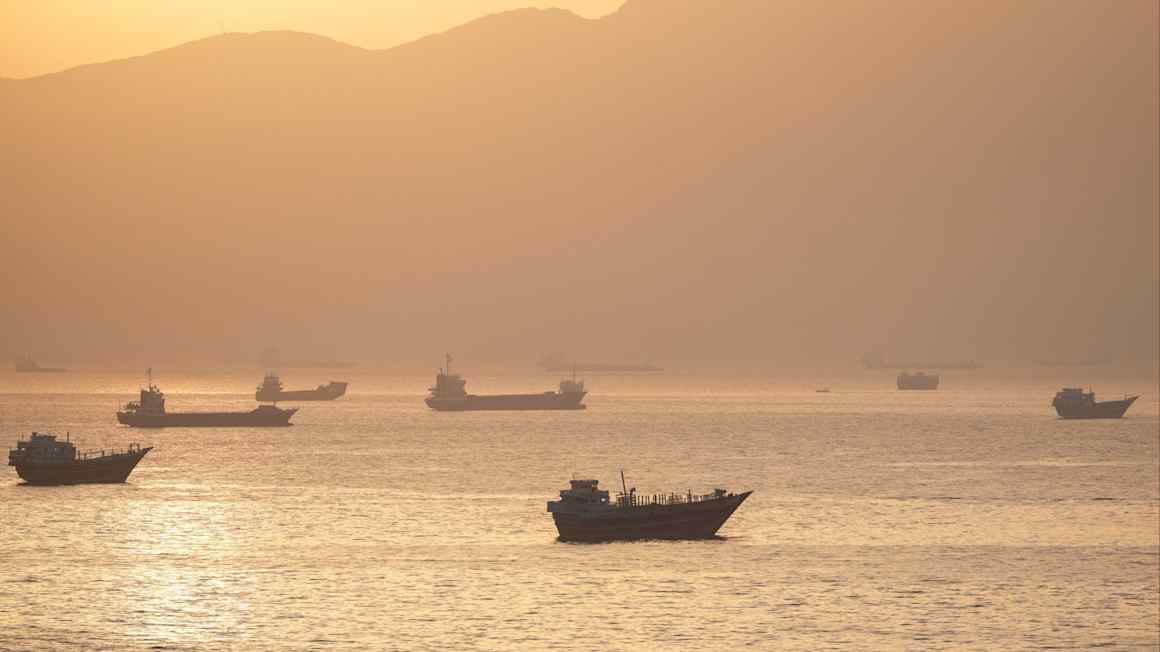
A billionaire football club owner and shipping tycoon has argued that paying a $200,000 toll to navigate the Strait of Hormuz would be preferable to the strategic waterway remaining closed, the Financial Times reported. The comment underscores the growing economic pressure on global trade routes as geopolitical tensions in the Middle East intensify.
The shipping magnate described the current conditions as a significant hassle, suggesting that a fixed fee for passage is a more predictable and manageable cost than the operational paralysis caused by a closure. The specific figure of $200,000 was cited as the threshold where paying becomes a rational business decision compared to the alternative of halted transit.
This perspective emerges against the backdrop of a high-stakes summit in Beijing between US President Donald Trump and Chinese President Xi Jinping. The leaders are engaged in discussions covering trade, artificial intelligence, and rising tensions regarding Iran, with the Strait of Hormuz explicitly placed on the agenda.
The summit has drawn major technology executives, including Elon Musk, Tim Cook, and Jensen Huang, highlighting the intersection of tech, trade, and geopolitics. The presence of these industry leaders signals the broad economic stakes involved in the diplomatic talks, particularly as supply chain stability remains a critical concern for global markets.
While the Financial Times report identifies the speaker as a billionaire football club owner, the exact identity of the individual was not explicitly named in the source material. The comment reflects a pragmatic view from the shipping industry, where certainty of cost is often valued over the uncertainty of political disruptions.
The remark comes as markets weigh the potential impact of Iranian tensions on energy flows and maritime insurance. The Strait of Hormuz remains a vital chokepoint for global oil and gas shipments, and any threat to its open status has immediate implications for commodity prices and logistics costs.
As the Trump-Xi summit continues, the focus on Iran and the Strait of Hormuz indicates that these issues are central to the broader dialogue between the world’s two largest economies. The shipping tycoon’s preference for a toll highlights the commercial reality that businesses are increasingly willing to pay for security and access in an unstable geopolitical environment.