Sharpest Solar Image Confirms Century-Old Plasma Vortex Theory
New visible-light photography resolves structures predicted more than 100 years ago, marking a milestone in solar observation.
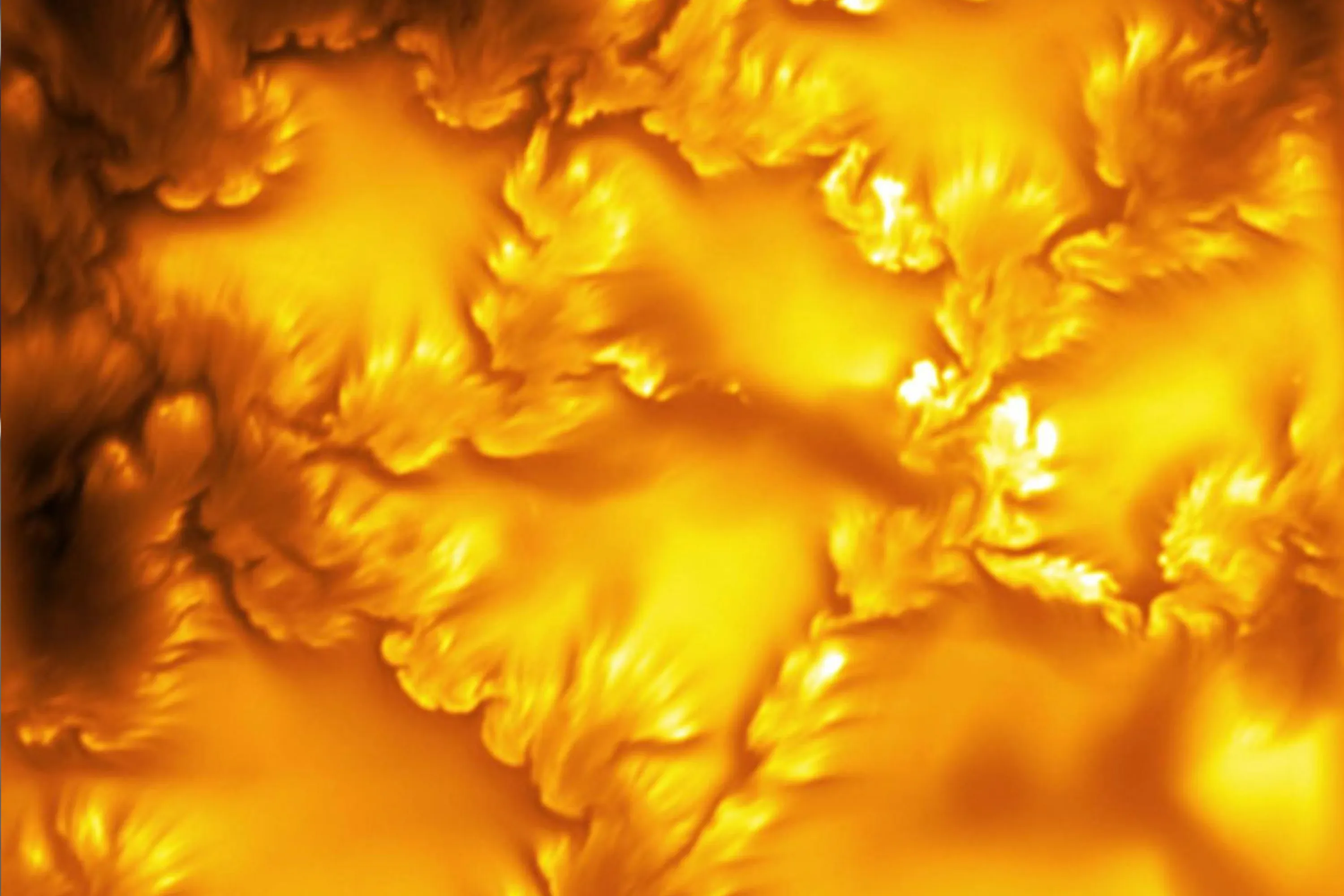
A recent photograph taken in visible light has produced the sharpest image of the Sun to date, achieving a resolution that allows for the first direct visualisation of tiny plasma vortices on the solar surface. This breakthrough observation confirms a theoretical prediction in astrophysics that has existed for more than a century, providing empirical evidence for long-held theories regarding solar plasma dynamics.
The high resolution of the new image was critical in resolving these minute structures, which previous imaging technology was unable to capture. While the existence of such vortices had been theorised for over 100 years, the technological limitations of earlier instruments meant they remained unseen. The clarity of this latest photograph has finally bridged the gap between theoretical models and observable reality.
According to reports from WIRED, the photograph was captured using visible light, a standard but challenging medium for resolving such fine details on the Sun’s surface. The successful capture of this image marks a significant advancement in solar observation, enabling scientists to study the complex fluid dynamics of the Sun’s plasma with unprecedented clarity.
The discovery of these plasma vortices validates predictions made by astrophysicists in the early 20th century. For decades, these structures were understood only through mathematical models and indirect detection methods. The ability to now see them directly offers a new avenue for understanding the turbulent nature of solar activity and the behaviour of plasma under extreme conditions.
While the specific dimensions or scale of the observed vortices are not detailed in the current reports, the visual confirmation itself is a substantial scientific achievement. The image serves as a testament to the progress in astronomical instrumentation, demonstrating that even well-studied objects like the Sun still hold hidden complexities waiting to be revealed.
This observation does not specify the name of the telescope or instrument used to capture the image, focusing instead on the quality of the resulting photograph. The achievement is noted as the sharpest image of the Sun taken to date, although such claims are subject to verification against the latest astronomical records as new instruments are deployed globally.
The confirmation of these century-old predictions underscores the iterative nature of scientific discovery. It highlights how advancements in imaging technology can validate long-standing theories, opening new questions about solar physics and potentially influencing future research into space weather and its impact on Earth.
