Scout AI secures $100 million Series A to train autonomous military systems
Scout AI has raised significant capital to advance its Fury AI model and Ox command software, with the US Army's 1st Cavalry Division expected to field the technology in the coming years.
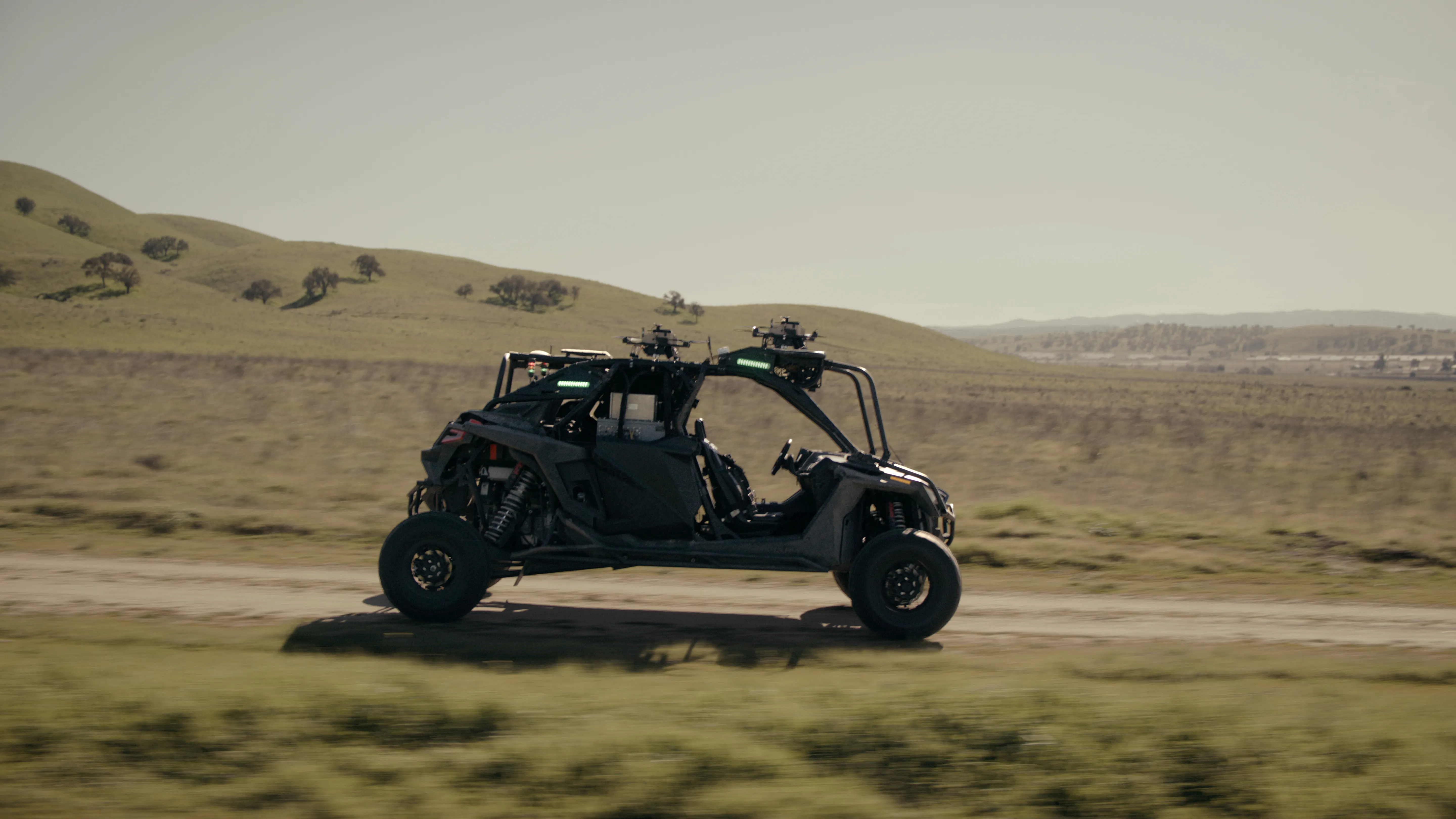
Scout AI, a defence technology startup founded by Coby Adcock and Collin Otis, has announced the completion of a $100 million Series A funding round. The capital injection is led by Align Ventures and Draper Associates, marking a significant expansion for the company following a $15 million seed round secured in January 2025. The funds will primarily support the development of autonomous military systems and the training of advanced artificial intelligence models designed to operate in complex conflict zones.
The company is currently utilising military bases in California and Texas to train its proprietary 'Fury' AI model and 'Ox' command software. This training focuses on enabling soldiers to control fleets of autonomous vehicles and drones within unpredictable off-road environments. Scout employs Vision Language Action (VLA) models, a technology variant of large language models, to allow AI agents to navigate rough terrain and execute missions such as autonomous resupply or strikes without constant human oversight.
Field testing for the initiative is underway at a classified location, where the company operates four-seater all-terrain vehicles (ATVs) on unmarked, hilly trails. These exercises simulate the chaotic conditions of a battlefield, training the AI to handle steep gradients, loose sand, and disappearing tracks. The operations team, led by former soldiers, logs human intervention points during these shifts to refine the reinforcement learning systems and improve the AI's ability to manage complex scenarios.
The US Army's 1st Cavalry Division is already integrating autonomy technologies from Scout and 19 other companies into its regular training cycles at Fort Hood in Texas. The division is expected to deploy Scout's specific systems during its next operational cycle in 2027. This timeline aligns with the company's goal to prove the efficacy of its technology in real-world conditions before wider adoption.
Beyond ground vehicles, Scout is developing a 'quarterback' platform that provides compute resources to command groups of munition drones. This system aims to allow drones to search for and attack enemy targets, potentially without direct human intervention. While autonomous weapons remain a subject of ethical debate, the company notes that such concepts are not new, citing decades of use for heat-seeking missiles and mines, and emphasises that their systems can be programmed to require human confirmation before firing.
Scout AI views itself primarily as a software provider, building an intelligence layer atop existing military hardware rather than manufacturing the vehicles themselves. The company has secured $11 million in military technology development contracts from entities including DARPA and the Army Applications Laboratory. With this new funding, the startup intends to continue building its own foundation models to reduce reliance on external hyperscalers and accelerate its path toward artificial general intelligence.
