Scorpions evolve metal-reinforced weapons to suit hunting strategies
A study by the University of Queensland and the Smithsonian National Museum of Natural History maps the biological metallurgy behind scorpion predation.
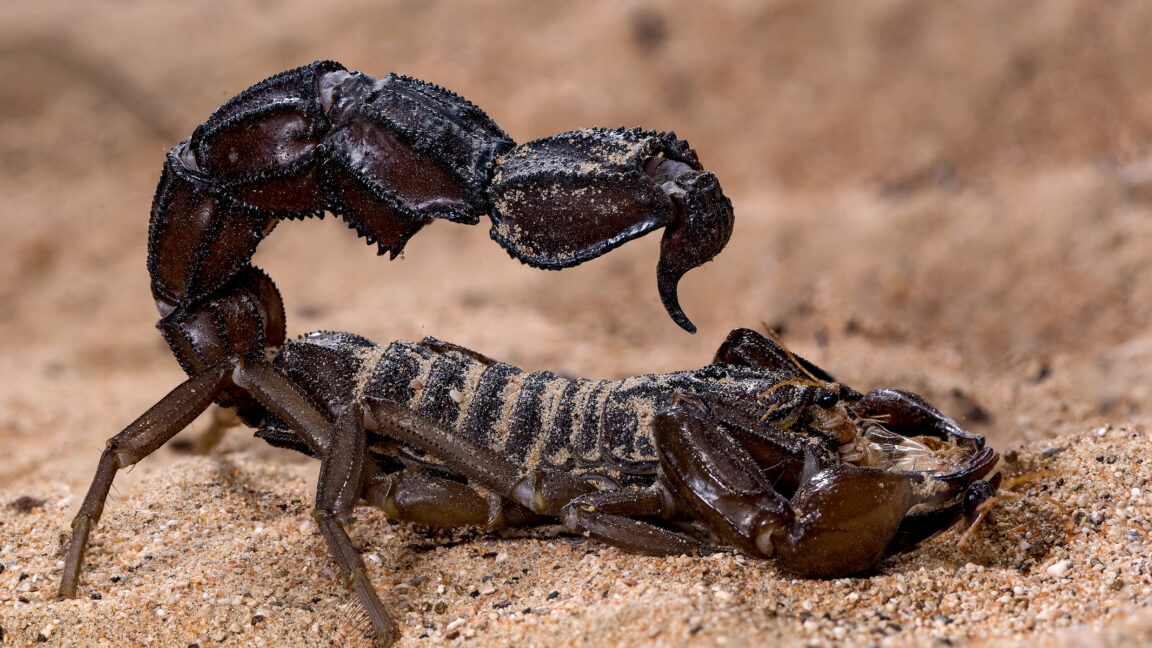
Scorpions have long been known to contain metals within their weaponry, but new research confirms that this accumulation is a deliberate evolutionary adaptation rather than a random environmental occurrence. A collaborative study led by Sam Campbell from the University of Queensland, published in the Journal of The Royal Society Interface, utilised high-resolution scanning electron microscopy and micro-X-ray fluorescence imaging to map metal distributions across 18 scorpion taxa housed at the Smithsonian National Museum of Natural History.
The analysis revealed that specific metals are concentrated in distinct regions of the chelae and telson to optimise performance for different hunting behaviours. Zinc is heavily fortified at the extreme tips of the stinger to ensure hardness and force, while manganese is found in the lower regions to improve flexibility and absorb vibrations. This arrangement effectively turns the stinger into a biological spear capable of penetrating tough prey exoskeletons without snapping under the strain of aggressive strikes.
In the pincers, iron and zinc are enriched specifically within the jagged, tooth-like denticles on the movable outer segment, resembling the cutting edge of a samurai sword. While iron provides abrasion resistance to aid species that must hold onto struggling prey for extended periods, zinc enrichment in the claws is inversely correlated with stinger zinc levels. The researchers suggest this trade-off reflects an evolutionary drive to reinforce the weapon used most frequently, with species relying on crushing claws showing higher zinc in their pincers to compensate for reduced stinger utility.
The study also identified that metal enrichment is not present at birth but begins to appear in the second instar, following the first molt. This developmental timeline indicates that the biological machinery for metal uptake is activated as the scorpion grows, allowing the exoskeleton to be reinforced progressively as the animal transitions into new life stages.
Despite these sophisticated adaptations, the research highlights that evolution has not solved every design flaw. The team noted that stingers often snap at the transition zone where zinc enrichment abruptly ends and manganese begins, a weakness that remains unexplained. Furthermore, the study relied on museum specimens, meaning it did not capture individual variations or account for sexual dimorphism, which is significant in scorpion populations.
Campbell and his colleagues acknowledge that true correlations between wild behaviour and exoskeletal composition remain difficult to establish due to the nocturnal and burrowing nature of scorpions. Future work aims to bridge the gap between laboratory findings and field observations to fully understand how environmental interactions influence the biological metallurgy of these ancient hunters.
