Scaloni and De La Fuente signal end of 'super coach' era in World Cup final
As Argentina and Spain prepare for the 19 July final, the managerial approach of Lionel Scaloni and Luis de la Fuente highlights a shift toward adaptability over rigid club-style control.
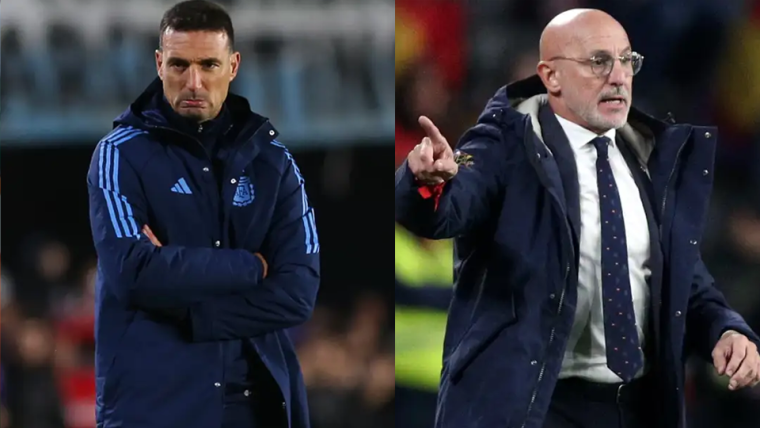
The 2026 World Cup final between Argentina and Spain marks a definitive departure from the era of high-profile 'super coaches' who dominated the club game but faltered on the international stage. Lionel Scaloni, who has led Argentina since 2018, and Luis de la Fuente, appointed Spain’s head coach in 2022, are set to contest the title, contrasting sharply with the earlier elimination of club-bound tacticians such as Thomas Tuchel, Carlo Ancelotti, and Mauricio Pochettino.
Spain enter the match as favourites for their second World Cup title, while Argentina seek to secure a fourth consecutive major tournament victory. The final is scheduled for 19 July at MetLife Stadium in New Jersey, a venue that recently saw Spain’s final training session cancelled due to heavy thunderstorms in adherence to US storm safety protocols.
The tournament has underscored the limitations of rigid, club-style management in international football. Tuchel, Ancelotti, and Pochettino were all high-profile appointments ahead of the tournament, yet their teams were eliminated in the knockout stages. Tuchel’s England, for instance, reached the semifinals but were defeated by Argentina in a match that raised questions about tactical flexibility. Ancelotti’s Brazil and Pochettino’s United States were also eliminated in the Round of 16.
Scaloni and de la Fuente have succeeded by prioritising adaptability and trust-based management. De la Fuente, an internal appointment who last coached a senior club side in 2011, has adjusted Spain’s playing style to accommodate injuries to key players like Nico Williams and Lamine Yamal. Similarly, Scaloni, who took over after the shambolic 2018 World Cup, has fostered an environment where players feel free to perform without the intense pressure often associated with elite club coaching.
This approach stands in contrast to the methods of their predecessors. Tuchel’s England struggled with player availability, with Bukayo Saka and Declan Rice playing through injury, leading to exhaustion in the semifinal. Scaloni, conversely, utilised his squad depth effectively, with Giuliano Simeone starting against England and Messi and Rodrigo De Paul exploiting defensive weaknesses. The contrast highlights a broader trend where international success now relies on emotional clarity and tactical nimbleness rather than just high-profile credentials.
The final will also feature the first-ever World Cup final half-time show, curated by Coldplay’s Chris Martin and headlined by Madonna, Shakira, and BTS. The event aims to support FIFA’s Global Citizen Education Fund, targeting $100 million for children worldwide. As the tournament concludes, the performances of Scaloni and de la Fuente suggest that the era of the 'super coach' has been replaced by a new model of international leadership.