Samsung Unveils Galaxy Z Fold 8 Ultra with Silicon-Carbon Battery and Premium Pricing
New specifications include a 5,000mAh battery, a 200-megapixel main camera, and improved displays, though the device omits S Pen support and an IP68 rating.
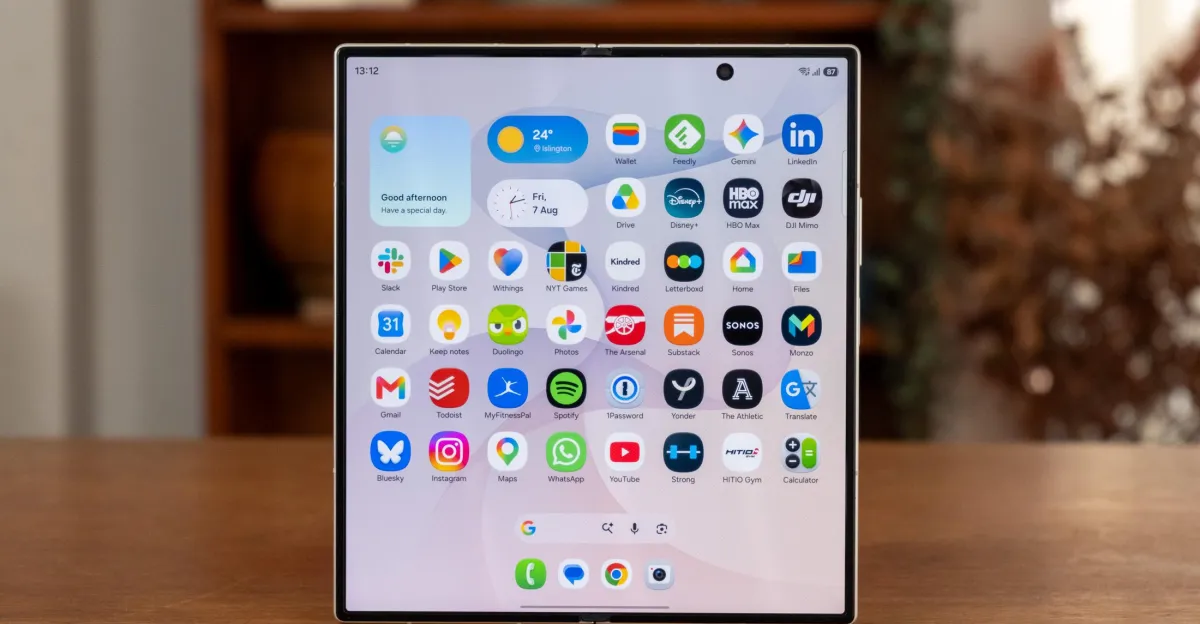
Samsung has officially released the Galaxy Z Fold 8 Ultra, marking the company’s first foldable smartphone to bear the 'Ultra' designation. While the device retains the physical form factor of the preceding Z Fold 7, it introduces substantial internal enhancements, including a 5,000mAh silicon-carbon battery, a 200-megapixel main camera system, and a 3x telephoto lens. The release comes at a price point $100 higher than its predecessor, positioning the device as a premium iteration in Samsung’s foldable lineup.
The hardware upgrades are anchored by a shift to silicon-carbon battery chemistry, which allows for increased capacity without increasing the device’s footprint. The battery has grown from 4,400mAh in the Z Fold 7 to 5,000mAh, despite the new model being fractionally thinner at 4.1mm when open. Charging speeds have also been boosted to 45W wired and 20W wireless. However, the phone is only Qi2 Ready and lacks internal magnets, meaning users must purchase a specific case to achieve top-tier wireless charging speeds.
Display technology has seen a notable refresh, with both the 6.5-inch outer cover screen and the 8-inch inner flexible panel now reaching a peak brightness of 3,000 nits. Samsung has incorporated a new titanium alloy film and a flexible titanium plate to make the foldable screen thinner and more durable. These structural changes, combined with an anti-reflective coating, have significantly reduced the visibility of the hinge crease, although it remains visible at certain angles.
The camera array represents a key differentiator from the standard Z Fold 8 model. The Ultra variant features a superior 200-megapixel main sensor and a 10-megapixel 3x telephoto lens, offering greater versatility than the standard model which lacks a telephoto lens. The ultrawide lens remains a 50-megapixel unit shared with the non-Ultra version. While low-light performance is reported as good, reviewers note occasional issues with sky lightening and flare around bright lights.
Despite the upgrades, the device omits features found in Samsung’s non-foldable S-series Ultra models. There is no support for the S Pen stylus, and the device lacks the Privacy Display technology introduced in the Galaxy S26 Ultra. Furthermore, water and dust resistance has been downgraded from the previous IP68 rating to IP48, offering good water protection but limited guarantees against dust and sand. The phone is priced $100 above the Z Fold 7, a hike justified by the larger battery and camera improvements.
Samsung’s software updates include 'My FanCam', an AI-powered video editing tool, and 'Nudge', which suggests contextual actions in split-screen mode. Google’s Gemini Intelligence is supported but is not yet available in the UK. The device also requires users to agree to seven mandatory and over nine optional terms and conditions before use. The release positions Samsung to compete against rivals such as Oppo and Honor, while also preparing for potential entry by Apple into the foldable market.
